Tamil Affairs

Tamil News

Latest news from and about the homeland

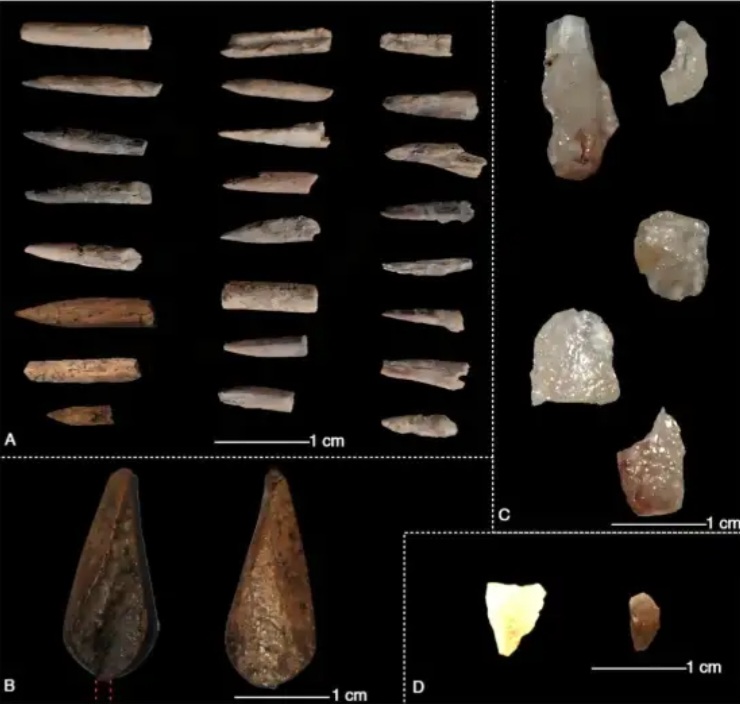
A newly published study has identified the earliest scientifically confirmed evidence of prehistoric human settlement on Velanai Island in the Jaffna Peninsula, dating back around 3,460 years and overturning an erroneous long-held Sri Lankan assumption that the region was largely uninhabited until much later. The study, published in the Journal of Island and Coastal Archaeology and led by…

Sri Lanka's election could change everything... and nothing' – Callum Macrae

The ongoing repression of the Tamil people will continue regardless of which candidate wins the upcoming Sri Lankan presidential election, said documentary maker Callum Macrae in an opinion piece on Wednesday.

Writing for Channel 4 News, Macrae said,
“[Rajapaksa's] message to the Sinhala majority is designed to reinforce their conviction that Sri Lanka is a Sinhala nation, indivisible - and that the Tamils of the north and east must accept that, or have that forced upon them.”

Military deny election involvement in Tamil areas

Sri Lanka's military on Wednesday denied any involvement in election activities amid reports of soldiers being deployed to deter Tamils from voting.

"At the request of Returning Officers the votes of the citizens living in islands off the mainland will be transported by the Navy, and if due to some constraint that an aerial assistance be needed, then the Air Force will be utilised," the military spokesperson, Brigadier Ruwan Wanigasooriya said, reports Colombo Page.

Amnesty condemns death threats against opposition campaigners

Amnesty International, in a statement released a day before Sri Lanka's presidential election on January 8, condemned death threats issued to three prominent opposition campaigners.

"The Sri Lankan authorities must hold to account those who threatened three prominent opposition activists with death today and ensure that tomorrow’s presidential election passes without further violence," Amnesty International said, noting that the threats came after severed heads of dogs were placed outside the homes of the campaigners earlier this week, in an apparent warning to them.

Amnesty International’s Deputy Asia Pacific Director David Griffiths said:
“These death threats against activists who have been peacefully defending human rights are utterly deplorable.

HRW: serious concerns of post-election violence, esp in Tamil areas

The New York based rights group, Human Rights Watch, called on Sri Lankan authorities to ensure the presidential election on Thursday occurs without voter intimidation or violence, warning of the possibility of violence continuing after the election, particularly in the Tamil areas.

"There are also serious concerns about violence after the elections, regardless of the outcome. The Election Commission and other relevant authorities need to ensure that police and other security forces act in an impartial manner and respect the human rights of the population. This is especially true in the ethnic-Tamil dominated north and east of the country and other minority areas," HRW added in a statement.


No faith election will bring about political change for us - Jaffna Uni Students' Union

The Jaffna University Students' Union said in a statement on Tuesday, the Sri Lankan presidential election on January 8, will in no way help to bring about a permanent political solution for the Tamils.

“We do not have a drop of faith that this election will bring about a permanent political solution for us, the Tamil people” since both of the main candidates were “proponents of Sinhala Buddhist chauvinism," JUSU said.

“Today in this country, the Tamil people are living in a dark age, without good, stable political leadership, without freedom, and without rights,” the Union added.

Future president must address Tamil issue first - BJP

The winner of Sri Lanka's presidential election must first address the Tamil issue, stressed the BJP's global convener of overseas affairs, Vijay Jolly.

"Whoever wins in Sri Lanka should first address the Tamil issue," he was quoted by IANS as saying on Wednesday.

War affected women demand future president demilitarises North-East

Over a hundred war affected women and several women's organisation predominantly from the North-East, listed their key demands of the new president following the election on January 8, including addressing the issue of enforced disappearances,  demilitarisation of the North-East, repeal of the Prevention of Terrorism Act (PTA) and prosecution of those responsible for torture and sexual violence.

"The forthcoming election is the second Presidential election after the war. Since then, the North and East of Sri Lanka has undergone heightened militarisation. Around 89,000 women headed households in the former war areas struggle to address livelihood needs, look after their remaining family and in many cases also look for their missing loved ones."

“Despite numerous promises, no independent investigation into serious human rights violations has resulted in a successful prosecution and conviction of alleged perpetrators, a sign of the culture of impunity pervasive in post war Sri Lanka."

UN Sec General urges election to be inclusive of minorities

The UN Secretary General, Ban Ki Moon, urged Sri Lanka to ensure that the upcoming presidential elections on January 8 was "inclusive, including for minorities".

"Obviously, we've seen the recent events in Sri Lanka, even those today and I think it makes the Secretary‑General's call for reconciliation and political dialogue that much more important and also his call to the Government to ensure that the elections are peaceful and that they're inclusive, including for minorities,” Ban Ki Moon's spokesperson Stéphane Dujarric was quoted by the Daily Mirror as saying to a press briefing this week.

Ensure people can vote without fear says Amnesty

Amnesty International urged officials in Sri Lanka to ensure that people could vote in the presidential election on January 8 "without fear", amid what it described as a "surge in election-related harassment and violence".

“The growing harassment and violence against those campaigning in the coming elections is deeply troubling – the authorities have a responsibility to ensure that all people in Sri Lanka can exercise their rights to political participation and freedom of expression without facing threats or violence, and that on election day they can vote without fear,” said David Griffiths, Amnesty International’s Deputy Asia Pacific Director.

Challenges Ahead: Sri Lanka's mass atrocities and international justice

Detailing the difficulties faced by Tamil voters in the North-East during Sri Lanka's presidential election on January 8, the exiled journalist Nirmanusan Balasundaram, called for a strong international justice mechanism to be set up, stating that regardless of who wins the election, Tamils could not expect justice through a domestic process.

"A gruelling battle is taking place in Sri Lanka between both leading presidential candidates despite certain factors which keep them united, such as ‘war victory’, denial of mass atrocities and rejection of an international investigation into such atrocities. Disturbingly all leading figures in the presidential debate are in competition with each other for self-proclamation and self-promotion in terms of credibility for the war victory, and complete denial of responsibility or acknowledgement of mass atrocities during the war," Mr Balasundaram wrote.

"Regardless of which leading candidate is to win Sri Lanka’s seventh presidential election, victims and survivors of mass atrocities will find it difficult to expect justice or a genuine and credible domestic mechanism into these heinous crimes. Considering Sri Lanka’s political dynamics, the culture of impunity in Sri Lanka will remain unchanged regardless of the outcome of the election. The colour may change but the cage will remain the same," he added.