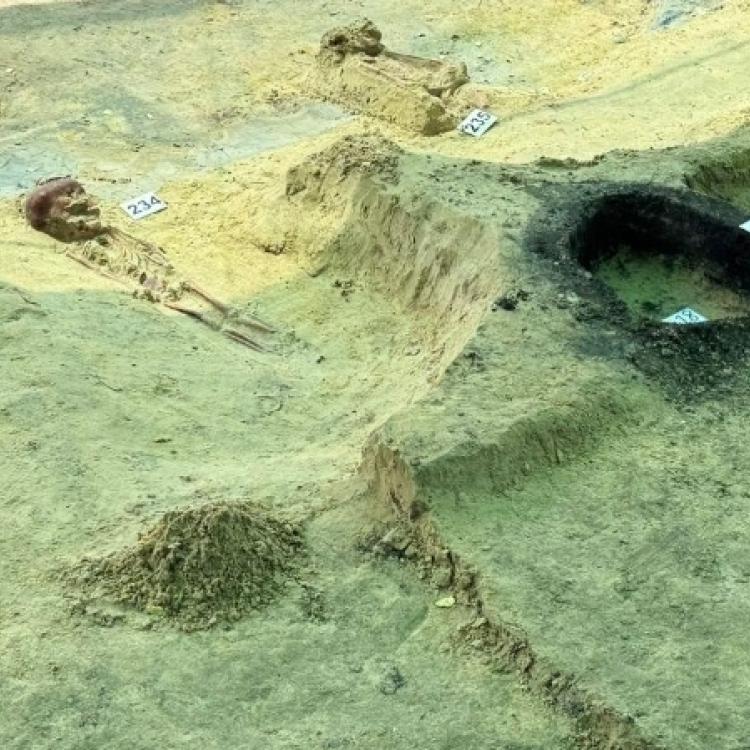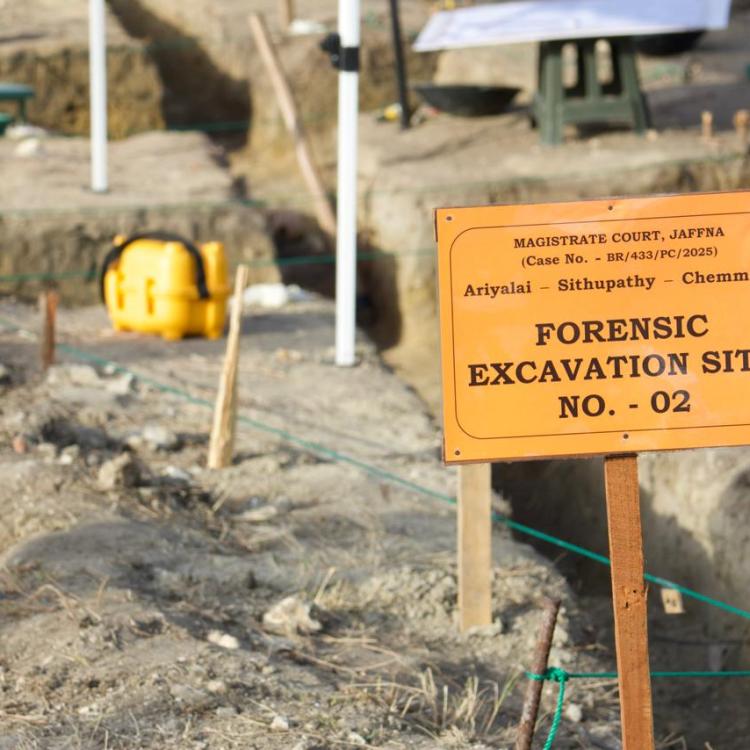
A newly published study has identified the earliest scientifically confirmed evidence of prehistoric human settlement on Velanai Island in the Jaffna Peninsula, dating back around 3,460 years and overturning an erroneous long-held Sri Lankan assumption that the region was largely uninhabited until much later.
The study, published in the Journal of Island and Coastal Archaeology and led by Thilanka Siriwardana of Rajarata University of Sri Lanka and the University of Groningen, examined an extensive shell midden, designated CB/Ex1, around a kilometre south of Velanai beach. Its earliest marine deposits date to between roughly 6,300 and 5,970 years ago, while the earliest confirmed human occupation is placed at about 3,460 years ago, the oldest yet established anywhere in northern Sri Lanka.
The Jaffna Peninsula has been argued by Sri Lankan scholars as unlikely setting for early habitation, with its dry climate, scarce freshwater and shortage of stone for toolmaking, with academics claiming the north remained largely unoccupied until agro-pastoralist communities arrived from India around the fifth century BCE.
While Sri Lankan archaeologists had evidence of human presence on the island at southern sites such as Pathirajawela, and shell-midden settlements are well documented in the wetter south between about 5,300 and 3,400 years ago, comparable evidence from the north had been missing until now.
The midden shows that Velanai's foragers depended heavily on the sea. The mollusc Gafrarium pectinatum made up nearly 60 per cent of the shell remains, with their diet supplemented by sea bream, deer, wild boar, dugongs and dolphins, an adaptable strategy combining marine harvesting with hunting and gathering on land. One phase of occupation showed signs of intensive exploitation, with shells reduced in size, pointing either to heavy harvesting or to a shift in the local environment.
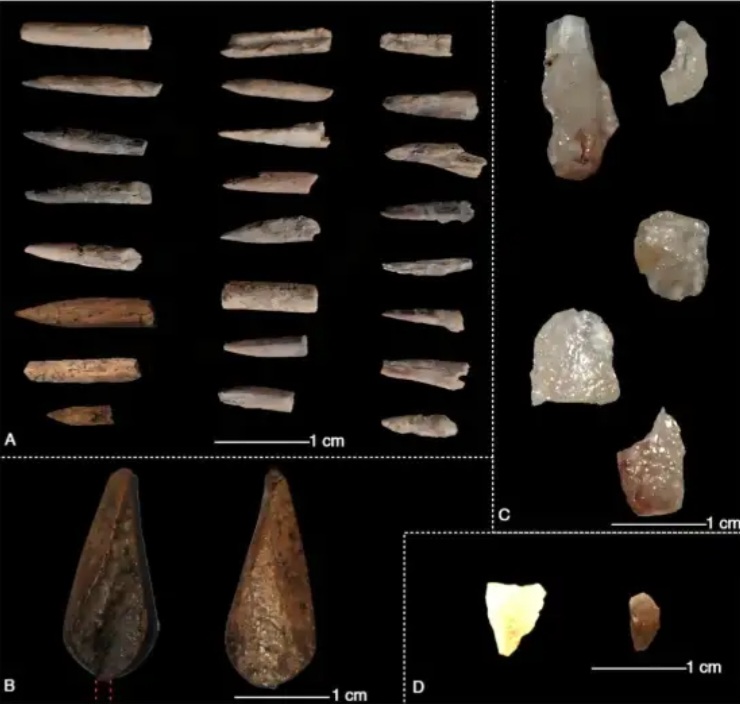
The community's toolkit is among the most telling findings. Alongside locally available limestone and an array of bone tools, including bone points and a bone arrowhead, the excavators recovered quartz and chert flakes originating nearly 60 kilometres away on the mainland. With Velanai separated from the mainland by more than five kilometres of sea, the researchers argue that the transport of this stone reflects deliberate movement of raw materials and a capacity for short-distance seafaring.
Siriwardana said the apparent absence of older evidence in the north was more likely a matter of preservation than of the land being uninhabitable.
"During the Late Pleistocene, lower sea levels would have exposed extensive coastal plains. In semi-arid northern Sri Lanka, populations likely settled closer to these then-active shorelines. As sea levels rose during the Holocene, these landscapes were progressively submerged, effectively removing earlier sites from the visible archaeological record.
"What we see at Velanai, therefore, likely represents post-submergence settlement along newly established shorelines, rather than the initial phases of human occupation in the region."
With no further excavation planned at the site for now, the team intends to turn to submerged coastal landscapes, particularly lagoons and sheltered shorelines where older evidence may survive, and to inland sites that may carry marine-derived materials indicating past coastal reliance. Siriwardana noted that a gradual reduction in the size of Gafrarium pectinatum shells over time, seen at Velanai and again at Punguduthivu, could serve as a proxy for the pressure early communities placed on their environment, with similar effects possibly extending to dugongs and rays.
For Tamils, Velanai's significance runs deeper than the academic.
The history of the North-East has long been contested ground, with the Sri Lankan state's archaeological establishment accused of bending the island's past to a Sinhala-Buddhist script, treating the Tamil homeland as a frontier to be claimed. Evidence that the islands off Jaffna sustained settled, seafaring communities more than three millennia ago, living off the same reefs and shores that Tamils work to this day, affirms that human life in the North reaches back into deep antiquity.