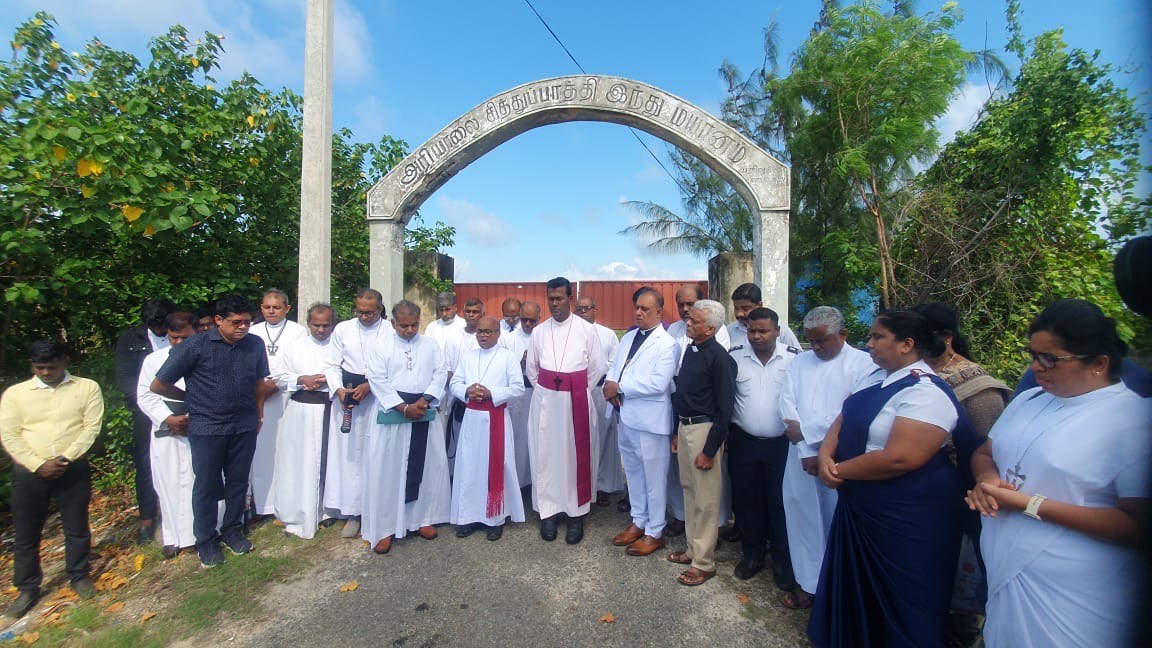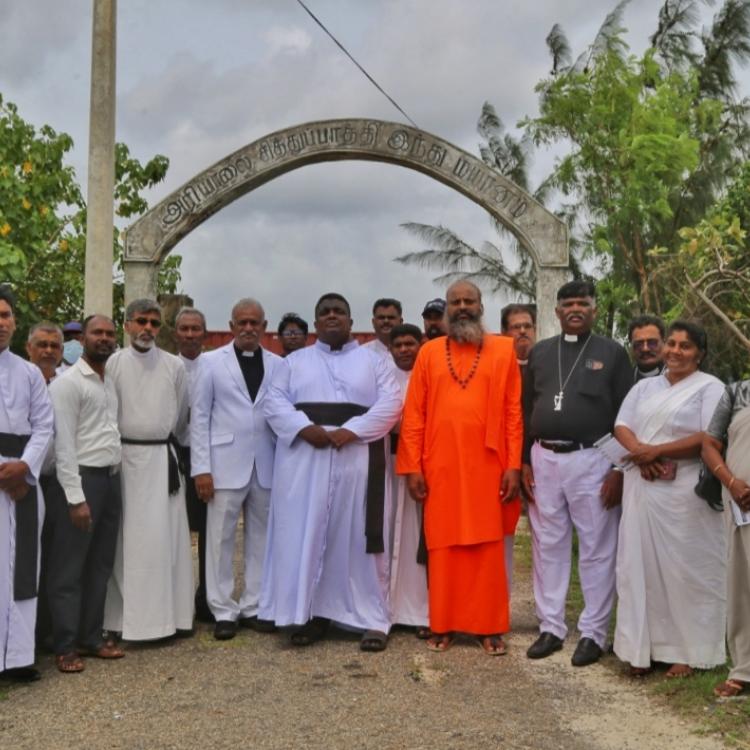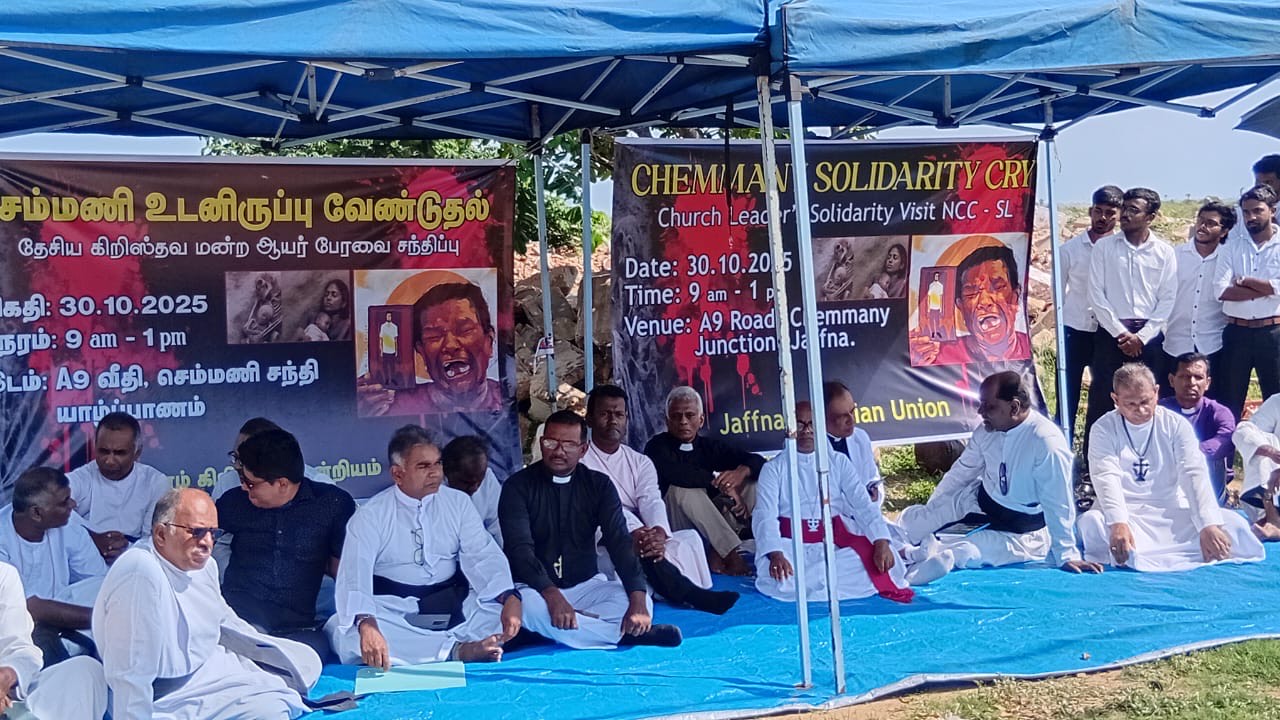
Christian clergy and bishops from across the North-East gathered in Jaffna on Thursday for a symbolic protest titled “Chemmani Solidarity Cry”, calling for justice for the victims of genocide.
Organised by the National Christian Council of Bishops, the event began near the Jaffna Arch at the Eternal Flame protest test and drew participation from Catholic dignitaries and clergy representing multiple dioceses across the island.
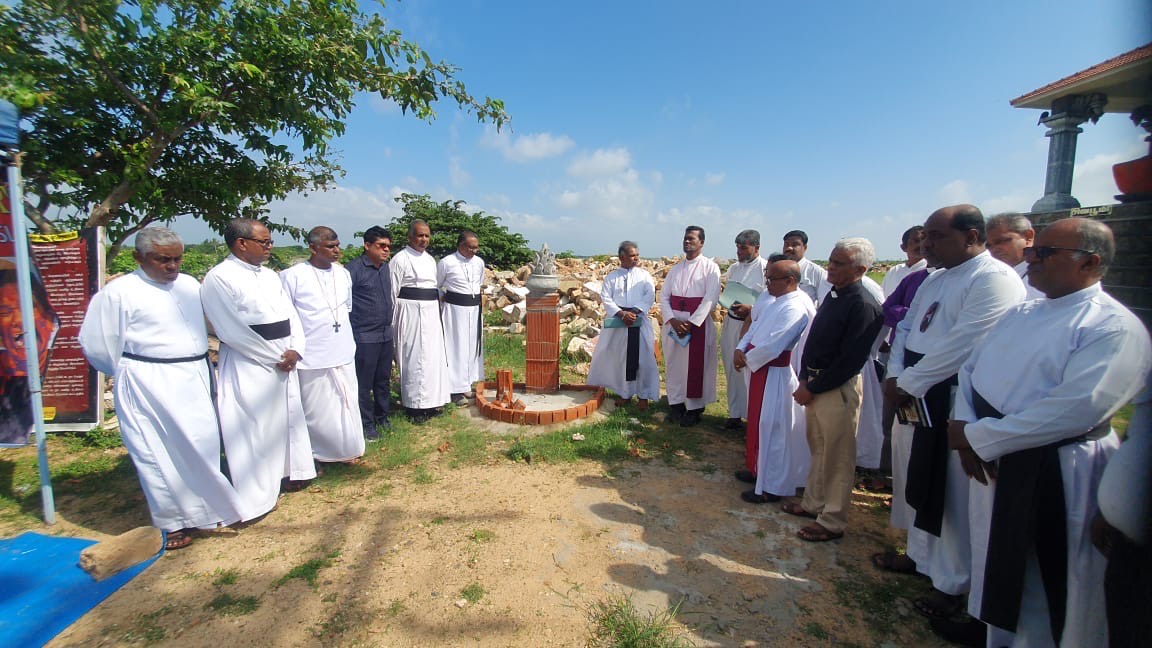
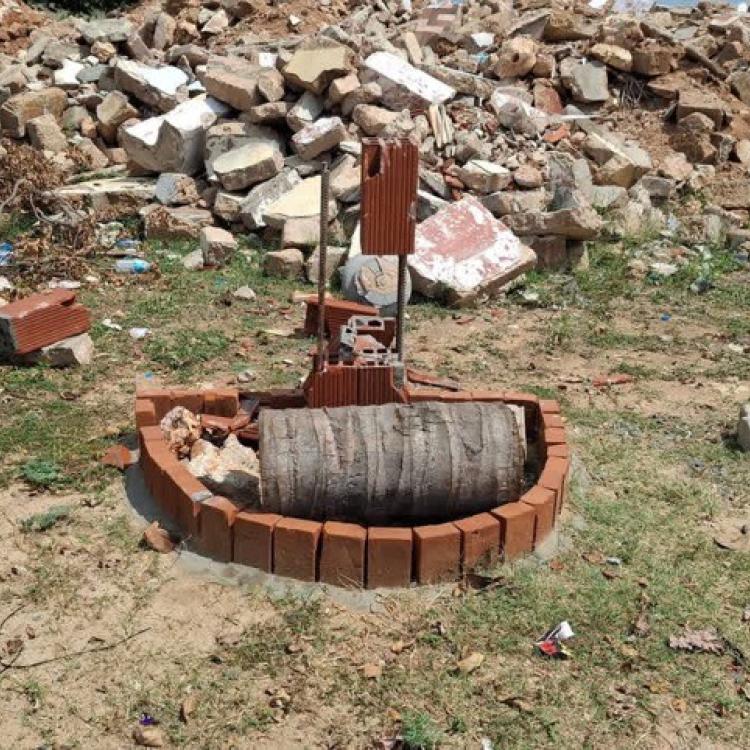
Before the protest, the delegation paid floral tributes at the Eternal Flame memorial, honouring the victims of Sri Lanka’s genocide of Tamils. Participants then proceeded in a silent procession to the entrance of the Hindu cremation grounds at Sindubathi, where the Chemmani mass grave is located, to pay their respects to those who were killed and buried there.
The gathering marked one of the most high-profile interfaith expressions of solidarity in the North in recent years. The clergy described their action as a moral and spiritual call for truth and accountability, urging the Sri Lankan state to deliver justice for the atrocities committed during and after the war.
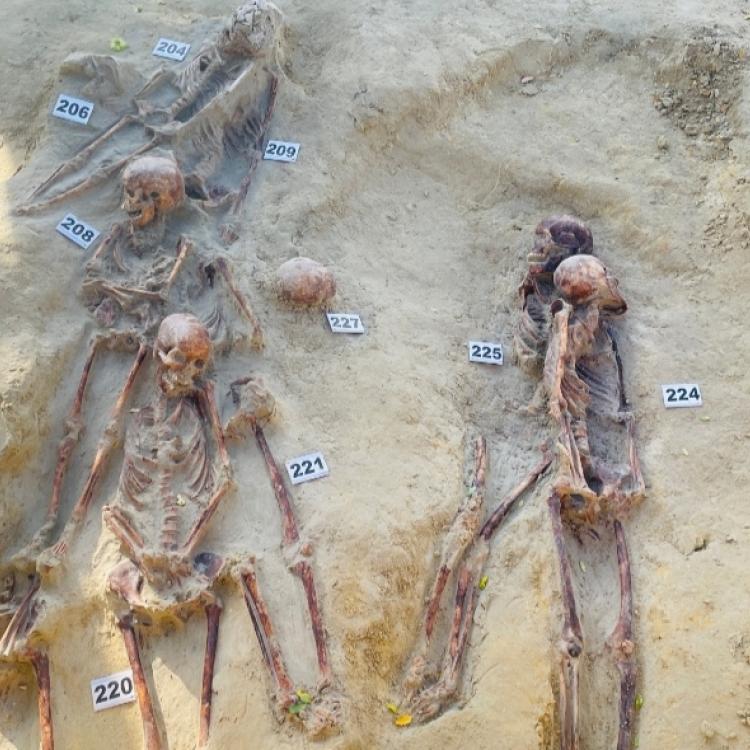
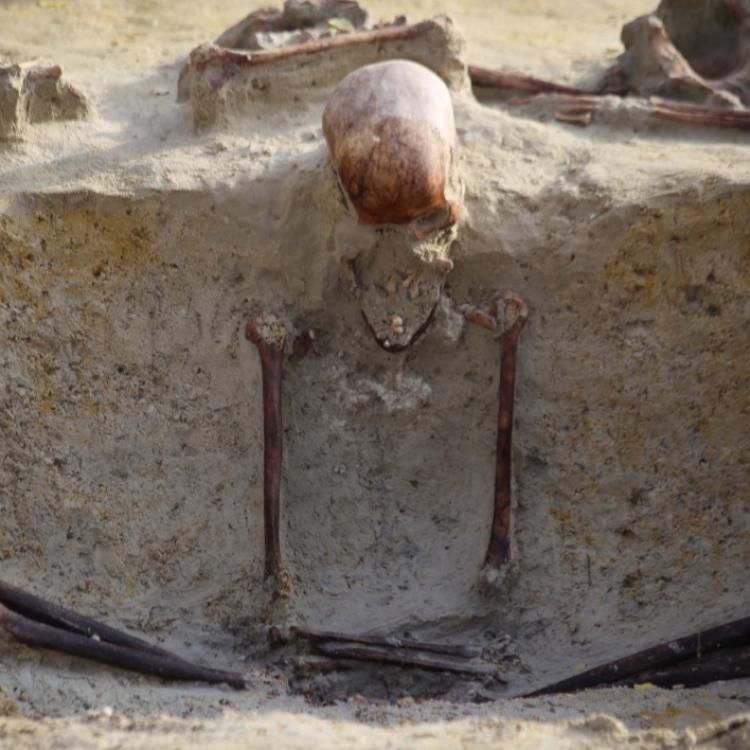
The Chemmani mass graves came to light in 1998, when a Sri Lankan soldier on trial for the rape and murder of a Tamil schoolgirl testified in court that hundreds of Tamils who had disappeared following the army’s capture of Jaffna in 1995 were buried in the area. Subsequent excavations uncovered several bodies, though families and rights groups continue to demand a full, independent investigation into the scale of the killings.
For years, survivors and relatives of the disappeared have accused the Sri Lankan military of concealing evidence and obstructing exhumations. Despite repeated calls from local and international human rights organisations, no one has been held accountable for the mass graves or the broader campaign of disappearances in the North-East.