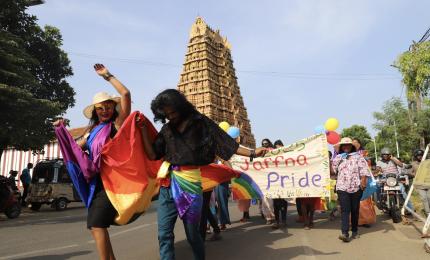
Members of the LGBTQ+ community in Jaffna organised the annual Pride Walk this week, drawing participants from across the Northern Province to call for equality, dignity, and an end to discrimination.
Amnesty International has urged Sri Lankan authorities to ensure transparency, adequate resourcing, and international standards in the ongoing excavations at the Chemmani-Sindubathi mass grave site in Jaffna, warning that without proper oversight, the process risks failing victims and survivors once again.
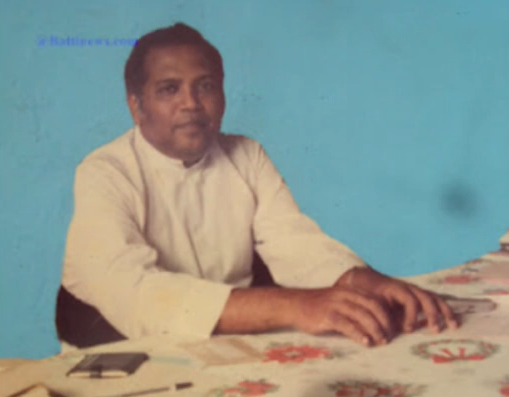
Father Chandra Fernando, an outspoken Catholic priest and human rights activist, was gunned down on June 6, 1988 by suspected paramilitaries working with Indian military intelligence.
Sri Lanka's Ministry of Public Security has announced plans to recruit 10,000 retired military personnel into its police force.
The move comes amid revelations linking former soldiers to a growing wave of gun violence, organised crime, and even overseas mercenary activity.
SriLankan Airlines is under fire after a flight bound for Singapore was forced to make an emergency landing in Indonesia due to a technical fault, just days after the financially troubled carrier added a new aircraft to its fleet at a reported cost of USD 360,000 per month.
As the world marked World Environment Day this week with a united call to #BeatPlasticPollution, Tamil environmental activists condemned Sri Lanka’s continued neglect of the North-East’s deepening ecological crises.
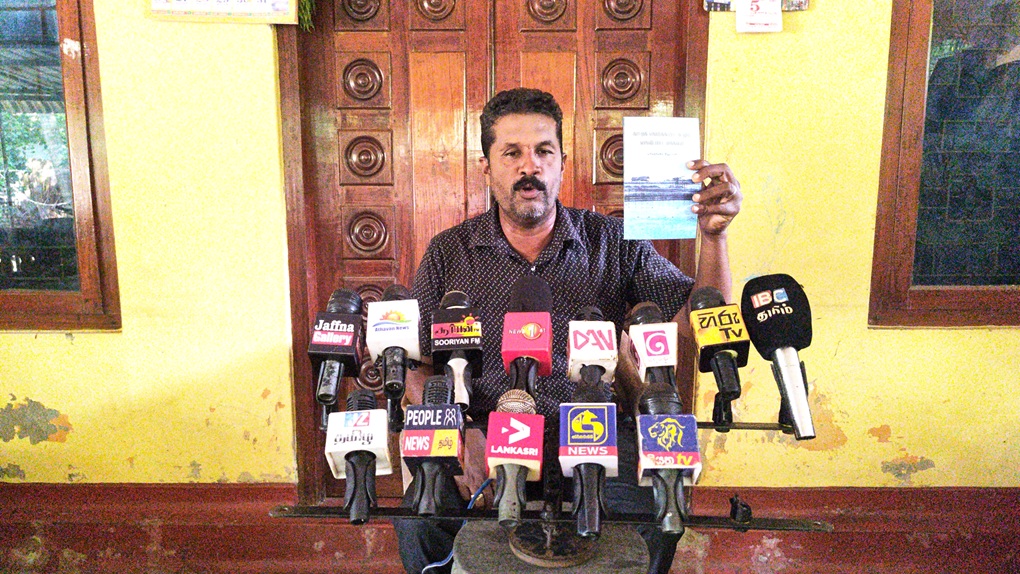
Batticaloa social activist E. Premnath has condemned the actions of Sri Lankan police officers after he was arrested without a warrant at his workplace and subjected to physical and mental abuse, an incident he says has caused significant mental distress.
Volker Türk is no stranger to Sri Lanka. There is little prospect of progress for the High Commissioner in Colombo. Instead, it is the Tamil North-East, and Mullivaikkal in particular, where he must go.
Nineteen human skeletal assemblages have been uncovered so far during excavations at the Sindhubathi Hindu cremation grounds in Jaffna, which concluded its first phase yesterday.
As the UN High Commissioner for Human Rights, Volker Türk, prepares to visit Sri Lanka this month, the question is not what Tamil survivors will say — they have been saying it for over a decade. The question is whether the High Commissioner and the United Nations will listen and act.
In May 2025, the Sri Lankan military escalated its occupation of the Tamil homeland under the guise of civil outreach—ranging from church renovations and aid distributions to military-run golf tournaments held on seized Tamil land. These highly publicised activities, led by infantry divisions accused of war crimes, serve to normalise the military’s entrenched dominance while deflecting scrutiny over its role in crimes against humanity.

.jpeg)