India in Sri Lanka: Rajapaksa’s regional ally or aspirant global power?
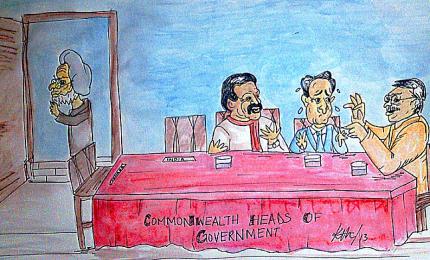
As India’s External Affairs Minister arrived for the CHOGM summit today, he sought to underplay the significance of the Indian Prime Minister’s absence. Manmohan Singh was forced to withdraw in response to concerted political pressure from Tamil Nadu where the State Assembly has unanimously passed two resolutions demanding an Indian boycott. Whilst Tamil Nadu insists that India must make justice for the Tamils central to its policy in Sri Lanka, Delhi thinks otherwise. Wedded to an out of date Cold War framework in which great power interests are calibrated by spheres of influence, and subsequently driven by paranoia about Chinese investments in the region, it desperately seeks influence in Sri Lanka and is willing to collude with Colombo’s crimes to that end. But this conciliatory approach is bound to fail. The central obstacle to Indian interests on the island is the Sinhala Buddhist majoritarian order that produced the Rajapaksa presidency. Until India works to undermine and contain this, it will not be able to realise any of its commercial, political or diplomatic objectives on the island.