
Excavation work at the Chemmani mass grave, the largest uncovered on the island, has once again been temporarily halted, with officials planning to resume around 15 July.
The dig has so far yielded 412 sets of skeletal remains, of which 409 have been exhumed, yet the work of identifying any of the dead has still not begun.
The excavation has unfolded in stages over more than a year. The first phase began on 15 May last year and ran for nine days, recovering 19 sets of remains. The second, which started on 26 June and continued for 45 days until 3 September, brought the total identified to 240. A third phase, authorised for 53 days, began on 27 April this year and ran for 12 days until 9 May, recovering a further 21 sets of remains and lifting the total to 261 before work was suspended. The second part of that phase resumed in June and continued for 22 days until Tuesday, 23 June, when excavations were halted once more.
More than 100 artefacts and other items of evidentiary value have been recovered over the course of the work. Many of the remains have been found in clusters, and a substantial number are believed to be those of infants and children, though officials say they have not yet released a breakdown of the men, women and children among the dead, as the necessary examinations have not been carried out. Nor have the authorities begun the process of identifying the exhumed remains.
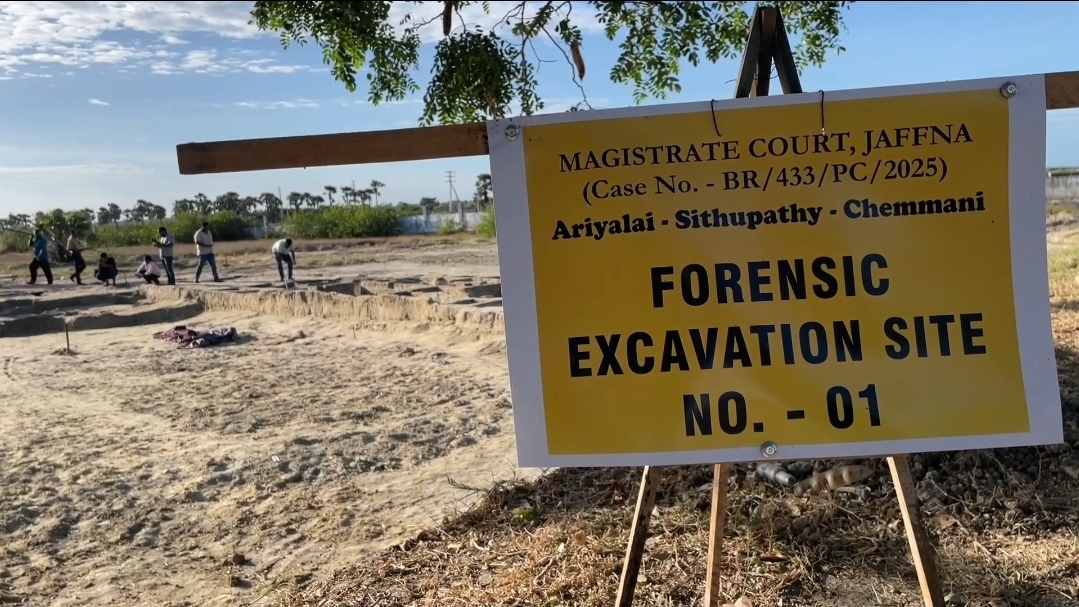
Chemmani became the largest mass grave ever uncovered earlier this month, surpassing the 376 remains recovered at the Mannar Sathosa site.
It first drew international attention in 1998, when a Sri Lankan soldier testified that hundreds of Tamils forcibly disappeared during the military's occupation of Jaffna had been buried there.
Tamil families of the disappeared have repeatedly demanded that the excavation be placed under international supervision, citing the failure of Sri Lanka's domestic processes to deliver them either truth or justice.