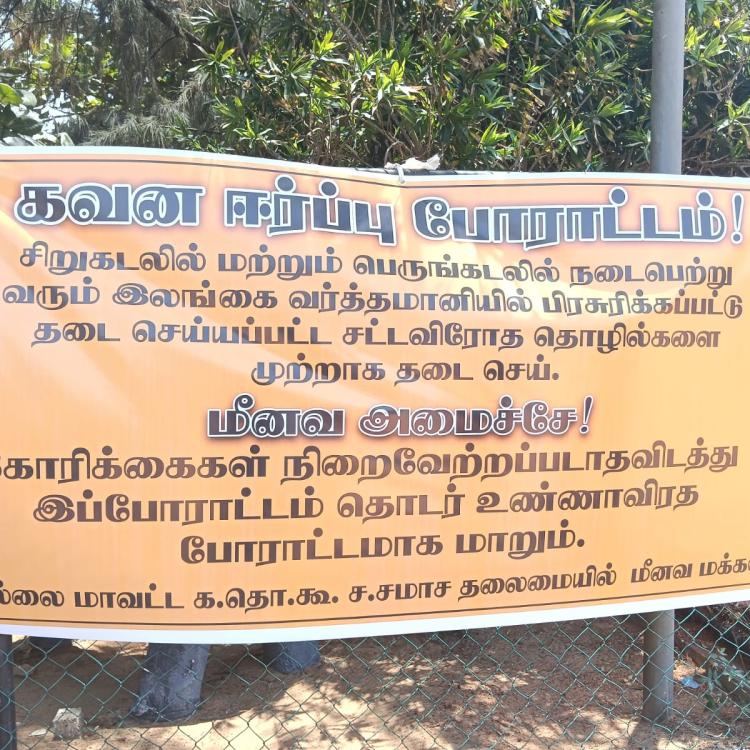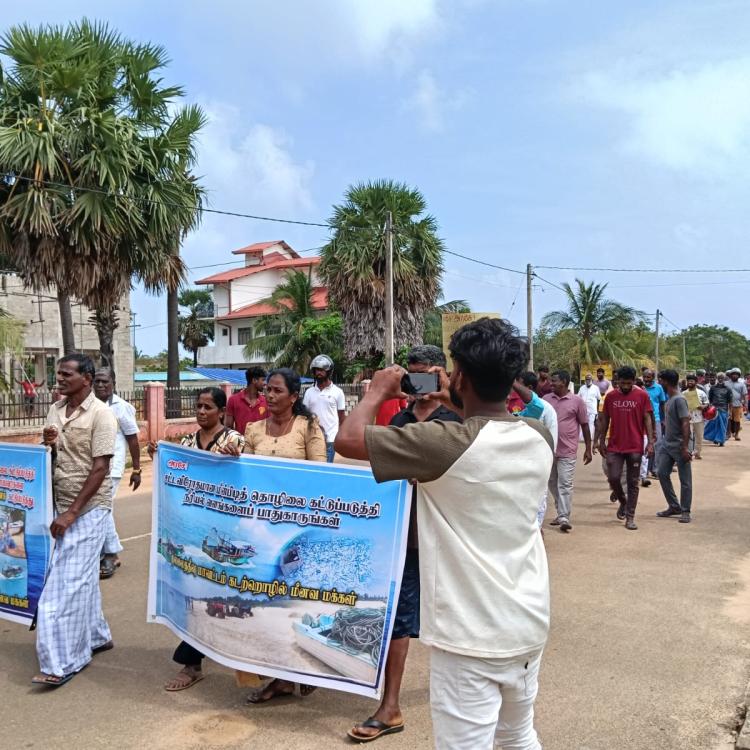
The maritime borders of the North-East continue to be a site of escalating crisis, as Eelam Tamil fishermen raised renewed concerns over the escalating presence of Indian trawlers and what they describe as the Sri Lankan Navy’s selective enforcement in the waters.
Despite periodic announcements of arrests, Tamil fishing communities argue that state responses remain inconsistent and inadequate in the face of large-scale incursions that threaten both livelihoods and marine ecosystems.
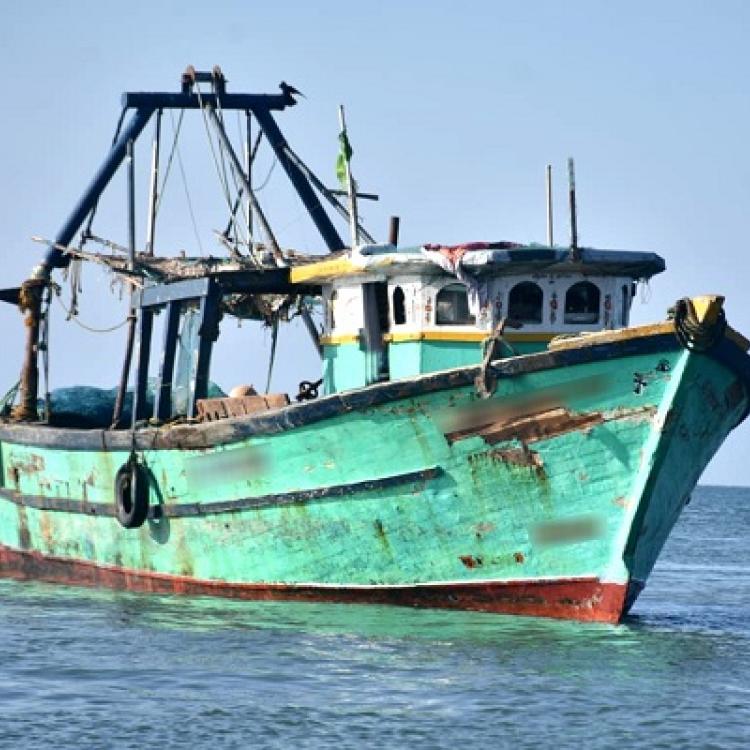
Tensions intensified last week following two contrasting developments. The Sri Lankan Navy reported the seizure of an Indian vessel and the arrest of 12 Indian fishermen off the coast of Karainagar. Yet, local fishermen in Vadamarachchi described a markedly different reality, reporting the presence of a large fleet of Indian trawlers operating just 16 kilometres from shore without any apparent intervention.
According to local fishermen, many of these vessels were engaged in light-course fishing, an illegal and highly destructive method that uses powerful lights to attract and deplete fish stocks. Alongside bottom trawling, another prohibited practice that damages seabeds and marine habitats, these activities have had a devastating impact on the region’s fishing grounds.
“If we used these same methods, our equipment would be seized immediately,” said a fisherman from Point Pedro. “But when hundreds of Indian trawlers cross the maritime boundary, there is no comparable response.”
Fishing representatives argue that such disparities have contributed to a severe decline in income across coastal communities in the North-East, where thousands of families depend on small-scale fishing.
Fishermen’s unions have repeatedly questioned why a heavily militarised naval presence along the northern coastline appears unable, or unwilling, to deter large groups of foreign vessels.
“The Navy’s role here seems focused on monitoring the local population rather than protecting our waters,” said a representative from a regional Fishermen’s Cooperative Society. “If similar incursions took place elsewhere, the response would likely be far more immediate.”