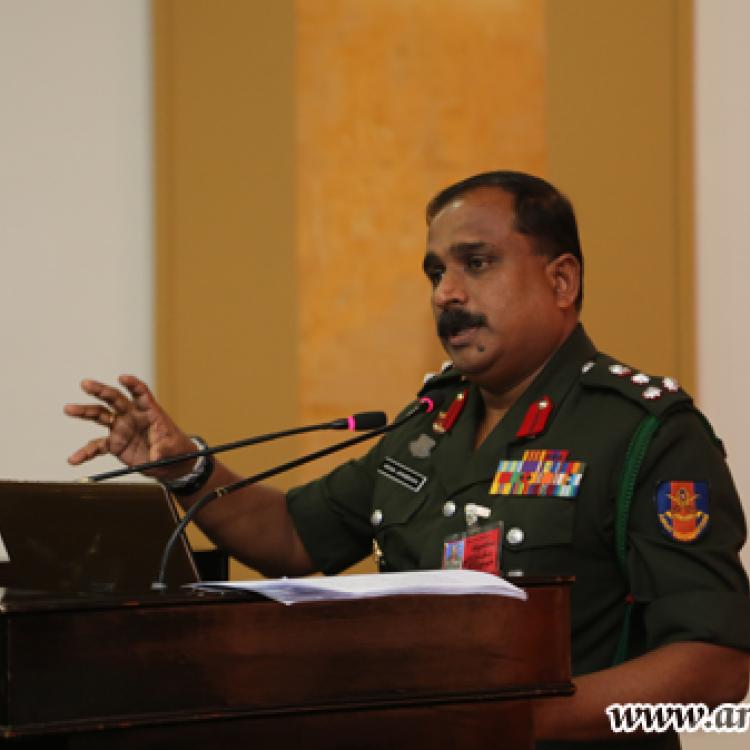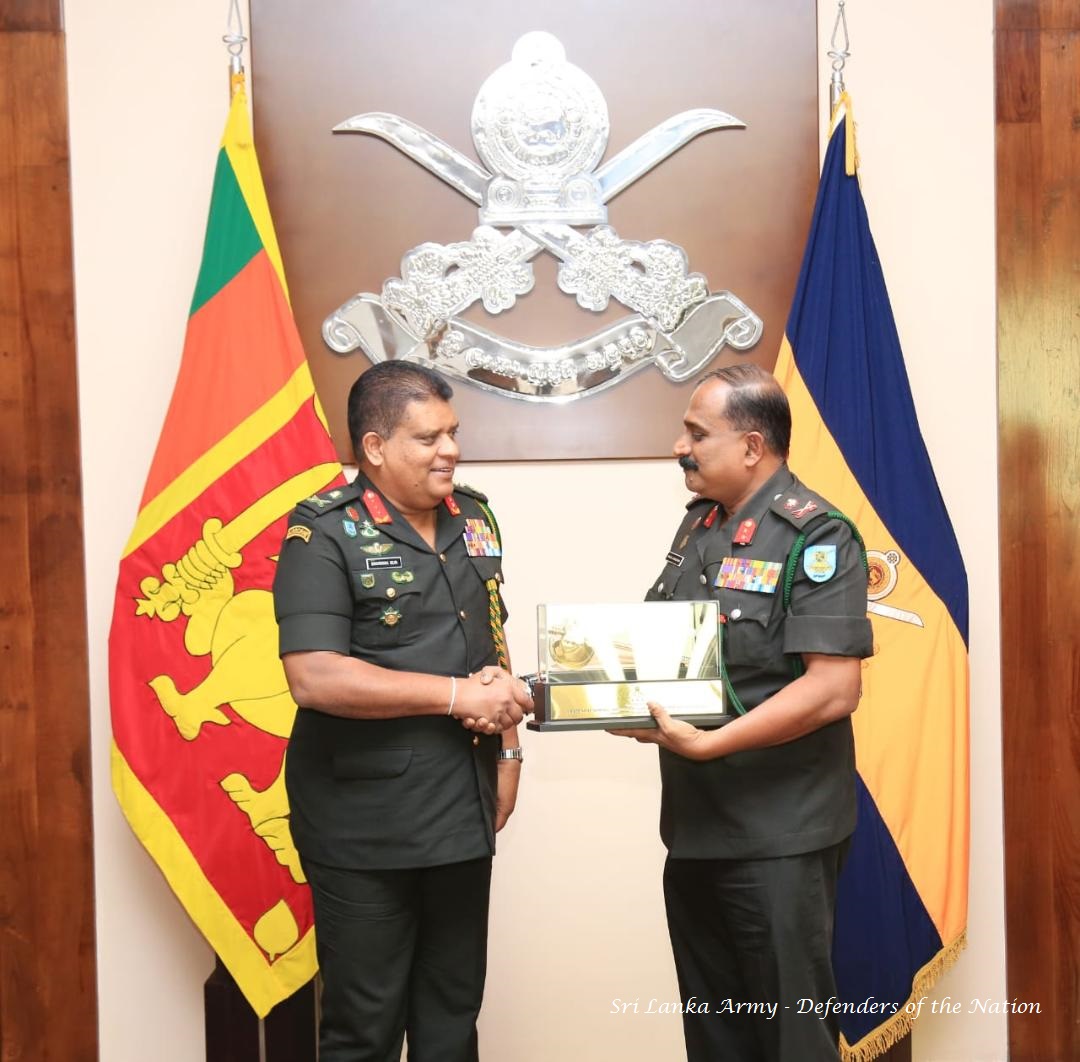
Aruna Jayasekara shakes hands with sanctioned Sri Lankan war criminal Shavendra Silva.
Sri Lanka’s Deputy Defence Minister Aruna Jayasekara wants you to believe that the genocide against Tamils consisted of just “unfortunate incidents.” A few massacres here, a mass grave there. Mere accidents, really. The kind of thing that just happens when your military shells hospitals, rapes civilians, and executes prisoners.
But Jayasekara is no bumbling politician who misspoke. He is an illustration of Colombo’s culture of impunity: a man with blood on his hands elevated to high office, instead of being hauled before a tribunal.
This is, after all, the same Jayasekara who commanded troops during the state’s offensive against the Tamil liberation movement, when countless Tamils were slaughtered. Then he went on to represent Sri Lanka in Haiti, where a UN investigation revealed his contingent was running a child sex trafficking ring. Children as young as nine were abused by the very men sent to keep the peace.
Jayasekara’s career trajectory? He did not face any investigation into his conduct. He did not end up at The Hague or even a Sri Lankan prison. Instead, he is sat at Colombo’s cabinet table. And this under Anura Kumara Dissanayake’s supposedly “new” government — the one that promised a break from the past. The only thing broken is any lingering illusion that Colombo is serious about accountability.
International observers may swoon over rhetoric about “reform,” but the reality is stark: war criminals get promotions, while the families of their victims dig through mass graves hoping to find answers about their loved ones.
Even now, Chemmani is coughing up its dead. More than 240 skeletal remains have already been exhumed, including children’s toys, baby bottles, and schoolbags scattered among the bones. Evidence of execution, torture, and disappearance is laid bare. And yet, in Jayasekara’s world, these are not atrocities. They are “unfortunate incidents.”
Let’s call this what it is. Jayasekara’s words are a statement of intent. Even under the National People’s Power (NPP) Sri Lanka will not prosecute its generals. It will not dismantle its machinery of impunity. And that is despite Jayasekara himself leading a battalion that massacred Sinhalese during the Janatha Vimukthi Peramuna (JVP) insurgency of 1987. Even this new regime will rebrand war criminals, reward them, and seat them in government.
Tamils have been saying this for decades. From Rajapaksa to Wickremesinghe to Dissanayake, the faces change, but the script remains the same. Domestic “processes” are just whitewash commissions with new stationery. The victims are still dead. The perpetrators are still in power.
Jayasekara’s words should end the charade once and for all. If the international community truly believes in justice, it must stop applauding Colombo’s empty pledges and start acting. Chemmani, Mullivaikkal, and even the children of Haiti cry out for something more than “unfortunate incident” status. They demand international prosecutions.
Because if Sri Lanka is left in charge, the only thing “unfortunate” will be how long impunity lasts.
_____
Theepan is a staff writer at the Tamil Guardian.