OPINION

Opinion

Latest news from and about the homeland

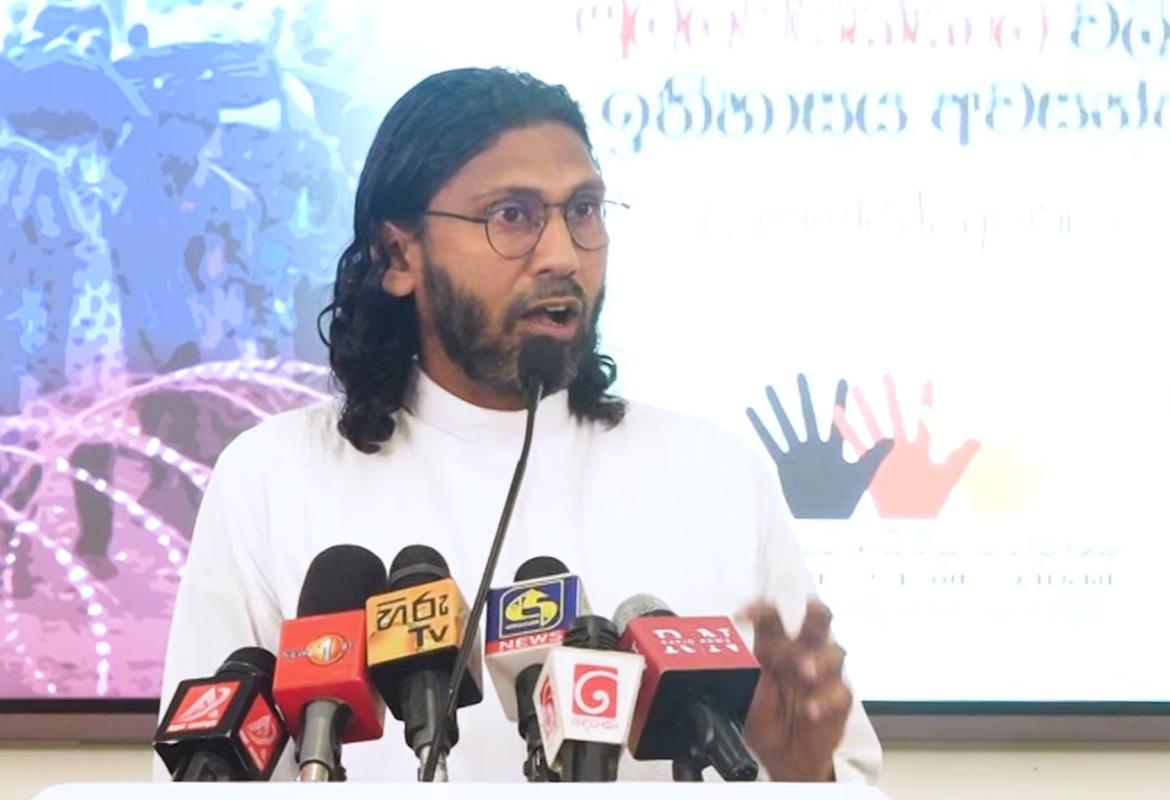
The full text of a speech delivered by Father Jeewantha Peiris on May 16, 2026, at the SEDEC Caritas Hall, at an event organised by the Movement for Equal Rights. _____ I think it is very important that in this evening’s discussion we ask the question of whether Mullivaikkal marks the end of history, because what we are still reading is history written by someone. Most of the time, we…

An open letter to ‘Shooty’

"Dear 'Shooty',

I've just watched our Prime Minister talking about shared Commonwealth values in Perth. My mind turned at once to you and your solitary, late-night death in Villawood detention centre last week.”

Lost opportunities at the Commonwealth

"The second major issue for the meeting concerned the civil war in Sri Lanka and whether both the government and the Tamils had committed war crimes in the conflict's final years. The question, however, was virtually ignored."

"Indeed, there is now sufficient evidence to justify a full international inquiry into the actions of both sides, potentially leading to indictments before the International Criminal Court."

No place for politics in crimes against humanity

“Last week Attorney-General Robert McClelland halted the possibility of the arrest and charging of Sri Lankan President Mahinda Rajapaksa and in my view undermined similar ''citizens arrests'' of individuals against whom it could be said there is a prima facie case of crimes against humanity.”

Don’t see Libya as a model for success in every conflict

Writing in the Times, former commander of British Forces in Afghanistan Colonel Richard Kemp argued that while military intervention in Libyan by NATO is being hailed as a success, it should not form the basis for the same model to be applied in other conflicts.

Examining the Libya campaign and the inital NATO-lead drive in Afghanistan in 2001, Kemp commented that while they were successful, the military option may not always be the best path to follow.

"The best form of intervention in a foreign country is non-intervention. Or, at least, intervention that is so discreet as to be almost invisible to the naked eye — funding of rebel forces, covert supply of weapons, behind-the-scenes “advice” to opposition leaders.

Even this carries risk. But the greatest risk comes from deploying conventional forces in strength. As we saw with such horrific consequences in Iraq and later in Afghanistan, however benign the intention, boots on the ground will inevitably come to be seen as occupying forces and will be attacked from all quarters."

Commonwealth at crossroads

Peter Kellner, chairman of the Royal Commonwealth Society, writing in the Trinidad Express on Monday.

Commonwealth conferences used to matter. Their decisions helped to end Apartheid in South Africa and white rule in Zimbabwe. Their debates, especially during the Thatcher era, made big news.

Doing the right thing

Writing in the Canberra Times, retired Australian diplomat Bruce Haigh called on Australia to reject the Sri Lankan High Commissioner to Australia Admiral Thisara Samarasinghe.

Haigh, who has served as the Australian Deputy High Commissioner in Colombo, wrote as Admiral Samarasinghe, along with Sri Lanka's ambassador to the UN Palita Kohona and Sri Lankan President Mahinda Rajapakse are being investigated by the Australian Federal Police (AFP) for allegations of war crimes.

Extracts have been reproduced below.

The Times slams Liam Fox’s 'rotten' ties to Sri Lanka

These are extracts of The Times’ editorial on Wednesday Oct 12:

“Liam Fox has many questions to answer about the role of a personal friend at the Ministry of Defence. But one aspect of this imbroglio is already clear: in his dealings in a particular part of the world, Dr Fox exceeded the bounds of his ministerial remit.

The Road North' - Charles Haviland

Writing in Himal, the BBC's South Asia foreign correspondent, Charles Haviland, shares his recent experiences in the North-East.

Extracts reproduced below, see full article here.

"In Kilinochchi, right by the road, half a dozen soldiers, supervised by an officer, scrupulously tended to a huge monument (see photo) to the government’s war victory. One soldier snipped at the grass with scissors.

Why Sri Lanka matters

Edward Mortimer, director of communications to UN Secretary-General Kofi Annan from 1998 to 2006, writes in New World magazine's 2011 Autumn edition:

Extracts reproduced below, see article in full here.

Terror on cue

Sri Lankan security forces have an overbearing presence in many Tamil-speaking areas where 'grease devils' - night prowlers - are terrorising villages.

Until very recently, the term ‘grease devil’ had not appeared in international reportage on Sri Lanka. However in the past few weeks it has been associated with an epidemic of terrifying attacks and attempted attacks by night prowlers on women, largely in Tamil-speaking areas. Wearing masks or face paint, they either break into female-only houses and residences, or loiter in areas frequented by women.

The incidents have not only caused panic amongst residents in Tamil, Muslim and Upcountry Tamil villages (mainly, but not exclusively), but also anger - which has been directed, tellingly, at the security forces who are seen to be protecting the prowlers.

Sri Lanka has been making much of supposed local superstitions. But people are terrorised by the attacks themselves, not paranormal readings of the perpetrators. Indeed, they have often chased after - and sometimes apprehended - the prowlers when they encounter them.

It is no coincidence the wave of attacks comes as Sri Lanka’s authorities are under international pressure to repeal draconian Emergency Regulations and reduce the overbearing military presence in the war-shattered Tamil areas. In short, the ‘grease devil’ phenomenon has emerged as an all too convenient justification for Sri Lanka’s security establishment to continue its massive deployment in Tamil areas.