OPINION

Opinion

Latest news from and about the homeland

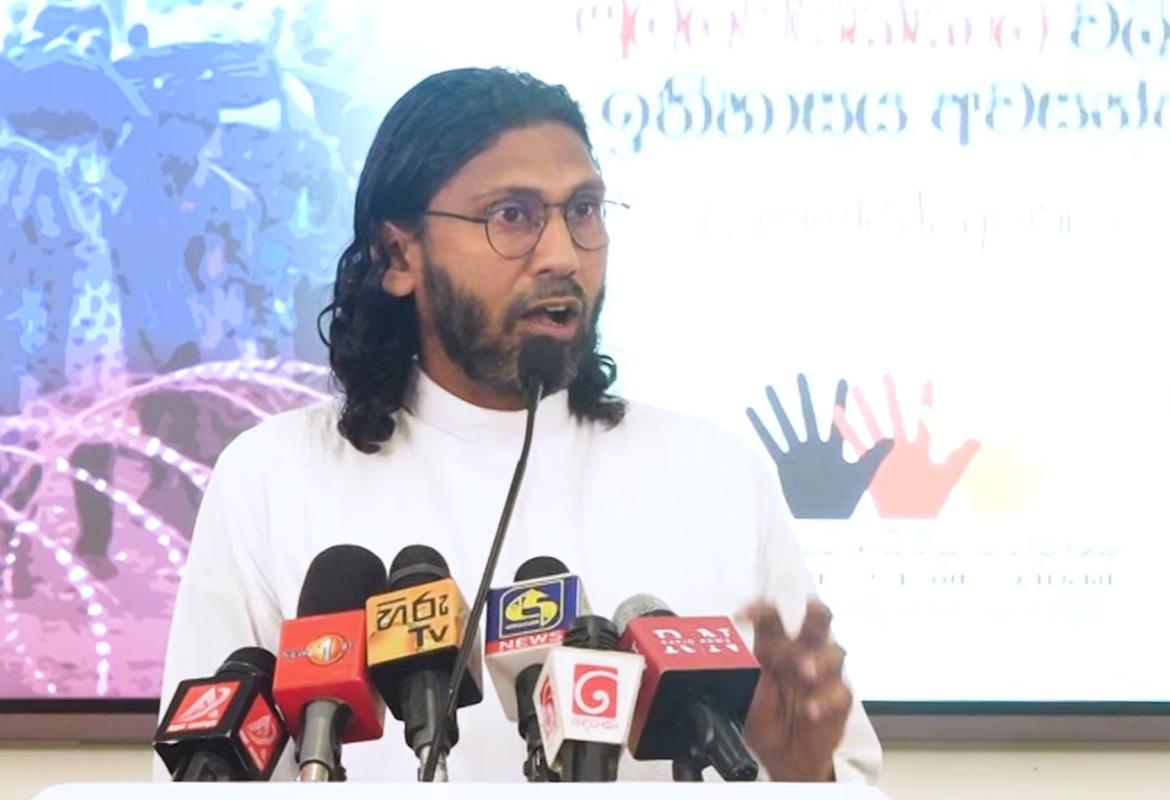
The full text of a speech delivered by Father Jeewantha Peiris on May 16, 2026, at the SEDEC Caritas Hall, at an event organised by the Movement for Equal Rights. _____ I think it is very important that in this evening’s discussion we ask the question of whether Mullivaikkal marks the end of history, because what we are still reading is history written by someone. Most of the time, we…

TAG: Black July - 30 Years On

Marking the 30 year anniversary of the anti-Tamil pogrom of Black July, Tamils Against Genocide (TAG) released the following statement. Extracts reproduced below, full statement can be found here.

Australia's 'stop the boats' policy is cynical and lawless

Writing in The Guardian, John Pilger, a war correspondent and film-maker, slammed Australia's policy on stopping boats carrying asylum seekers as "cynical and lawless".

See here for full opinion. Extract reproduced below:

"If a thousand Australians drowned in sinking boats in Sydney harbour, it would be a national tragedy. The prime minister would lead the nation in mourning; the world would offer condolences. By one measure, 1,376 refugees have drowned trying to reach Australia since 1998, many within range of rescue.

The policy in Canberra, known as "stop the boats", evokes the hysteria and cynicism of more than a century ago when the "yellow peril" was said to be about to fall down on Australia as if by the force of gravity. Last week the prime minister, Kevin Rudd, reached back to this era when he declared that no refugees in boats would be permitted to land in Australia. Instead, they are to be sent to concentration camps in impoverished Papua New Guinea, whose government has been suitably bribed.

Australia's practice of returning Sri Lankans is reckless'

Writing in the Guardian's 'Comment is free' section, Emily Howie - a lawyer with the Human Rights Law Centre and a leebron fellow at Columbia university - said the new 'enhanced screening' is jeopardising Sri Lankan asylum claims, and described Australia's deportation of asylum seekers from Sri Lanka as "reckless".

See here for full opinion. Extract published below:

"Australia's practice of returning Sri Lankans is reckless. Not only does the country turn a blind eye to the harm that the they may face on return, it does so on the basis of a diminished understanding of individuals' claims for asylum and without adequate monitoring back in Sri Lanka."

How Samantha Power could change US diplomacy

This opinion by Suzanne Nozzel was published in Foreign Affairs on 5th June 2013. 


As the first red-headed U.S. Ambassador to the United Nations, Samantha Power will cut a distinctive figure in the organization’s staid meeting rooms and endless cocktail receptions. But she will also stand out in ways that go well beyond appearance. By virtue of her youth, professional background, philosophical commitments, and direct personal style, Power has the potential to be a uniquely effective U.S. envoy. By raising the UN’s visibility and cache, and by doubling down on its role as a force for human rights and the mediation of violent conflict, Power could be just what the United Nations needs to help galvanize it for the twenty-first century.

Reflections on Sivakumaran's sacrifice

Ponnuthurai Sivakumaran is remembered as the first in a relentless stream of politically active Tamil youth who gave their lives to the struggle, exasperated at the ineffectual politics taking place at the time.

The deaths of Tamils at the World Tamil Research conference, and the Sri Lankan state’s brutality at the event, only exacerbated the prevailing dissatisfaction amongst Tamil youth, that saw political negotiations with a state intent on ruthlessly destroying the Tamil identity as pointless. As the state's violence against Tamils escalated over the subsequent years, the overwhelming growth of Tamil armed resistance was all but inevitable.

Remembrance and reconciliation in Sri Lanka

The ethnic divide in Sri Lanka is ingrained in all aspects of life, even mourning the dead. The conflict between Tamils and the Sri Lankan state has cost over 100,000 lives, the vast majority of which are Tamil. The 18th of May, the day the armed conflict ended, has become one of the most important days in the Tamil calendar. Tamils across the world, including relatives of the tens of thousands of those that died, commemorate this day, in private or in public gatherings. However the rest of Sri Lanka celebrates this day, as the day the ‘terrorists’ were vanquished and Sinhala Buddhist rule securely extended throughout the entire island.

‘One more step by Sri Lanka’s chauvinist Sinhala-Buddhists’

Commenting on the recent self-immolation by a Buddhist monk, who was protesting against the Halal slaughter of cattle and alleged conversion of Buddhists, Tamil journalist J.S. Tissainayagam, labelled the act "one more step by Sri Lanka’s chauvinist Sinhala-Buddhists to undermine the Muslim political base".  

Read his full piece here. Extracts have been reproduced below.

"The suicide by a Buddhist monk who set himself on fire in Sri Lanka to protest the slaughter of cattle has been hailed as an act of great self-sacrifice and compared to acts of self-immolation by Tibetan Buddhist monks protesting China’s repression in Tibet. Nothing could be more ill-informed. In fact, it is one more step by Sri Lanka’s chauvinist Sinhala-Buddhists to undermine the Muslim political base."

"The campaign to stop the slaughter of cattle and instances of violence against Muslims are not isolated events in Sri Lanka. These are steps to politically disempower Muslims are uncannily reminiscent of the way the Sinhala establishment tries to destroy the Tamil power base."

Four years on, genocide continues off the battlefield

Originally published on OpenDemocracy.net/OpenSecurity on 20th May 2013:

In May 2009 as the armed conflict between the Liberation Tigers of Tamil Eelam (LTTE) and the government of Sri Lanka came to a harrowing end, Sri Lanka's genocidal offensive against the Tamil population of the North-East reached a peak. Four years on, as the Tamil nation - scattered worldwide through decades of oppression and armed conflict - remembers the massacre that took place, the prospect of a stable and secure future remains bleak. Sri Lanka has long proven itself both incapable and unwilling to deliver accountability and justice to the Tamil people, yet the international community too has failed to instigate a credible process towards it. But most of all, the systematic destruction of the Tamil identity continues, unchecked.

It is increasingly evident that the mantra of granting Sri Lanka time, space, economic support and international engagement is not leading to a process of accountability, reconciliation or peace for the Tamils. Torture, disappearance, rape and murder prevail; the economic and political fabric of Tamil society is repressed. What the Sri Lankan government celebrated as the defeat of one of the world's largest ‘terrorist' organisations has not brought security to the Tamil nation.

More than just remembering' - TAG

A witness recalls the horrors of her walk towards the Sri Lankan Army controlled territory on the penultimate day of the conflict, the 17th May.

“I walked, following many others, thousands. As I walked I saw the scale of the destruction, there were pools of blood and many wounded or dead. I saw a truck laden with people that had been hit by a shell not long before - the wounds were fresh. There was a mother dead, her baby still alive beside her.”

What then followed was months in an IDP camp, months punctured by torture, and upon release, the constant fear of persecution. This, 4 years on from those final days of death and surrender, is the reality of life for many Tamils in Sri Lanka.

On this anniversary, we remember those who lost their lives and those who survived them and we ask, what progress has been made in the fight for justice? The answer is sobering – far too little. This in spite of incontrovertible evidence of the crimes perpetrated by the Sri Lankan state against its own citizens, this despite the manifest failings of the Sri Lankan state to provide justice, this despite much international condemnation by states, INGOs, and, especially of late, the international legal community.