
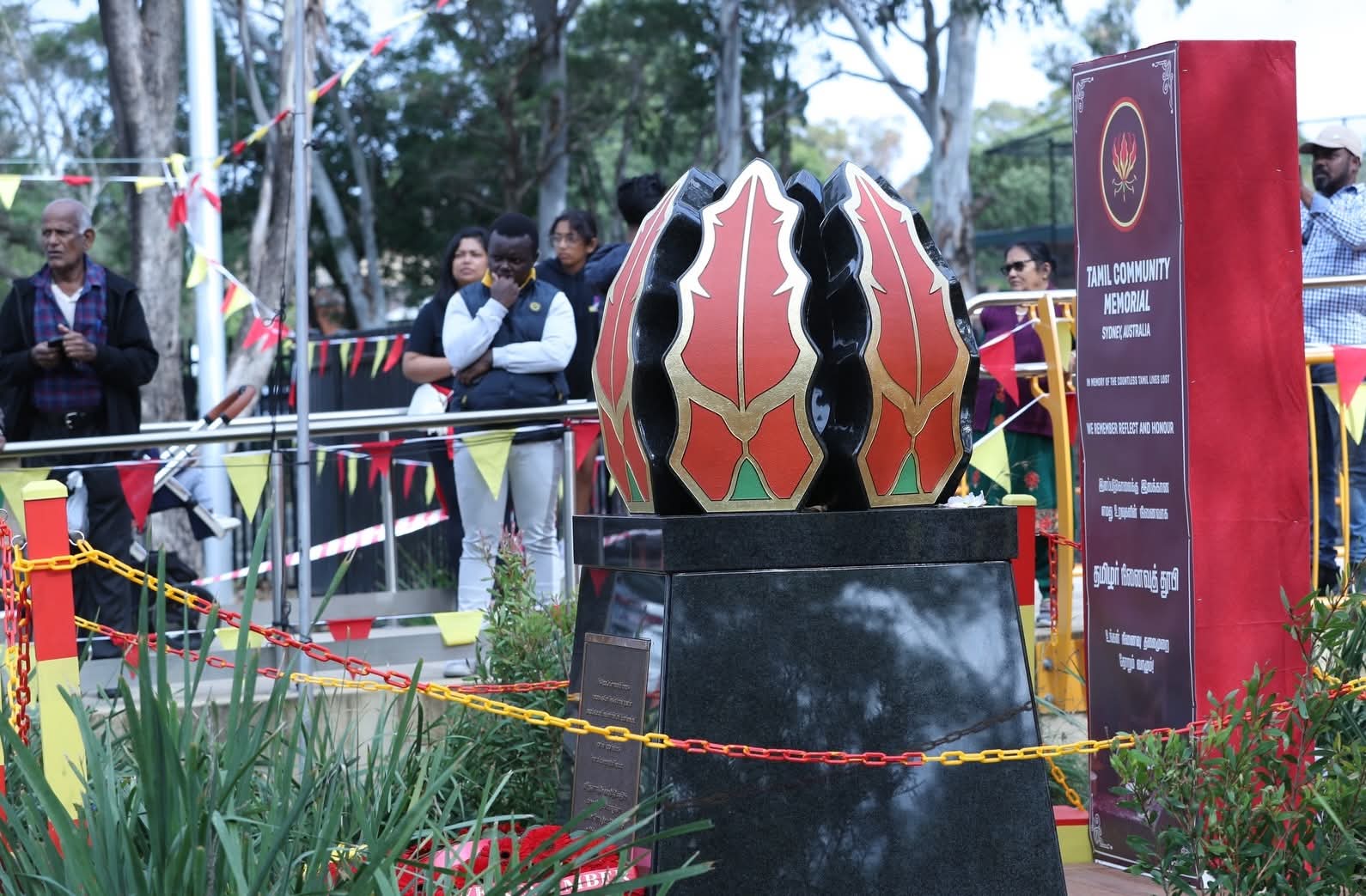
A memorial dedicated to the victims of the Tamil genocide was officially unveiled on Saturday, 16 May, in Sydney, Australia, bringing public recognition to the mass atrocities committed against Tamils during the final stages of the armed conflict.
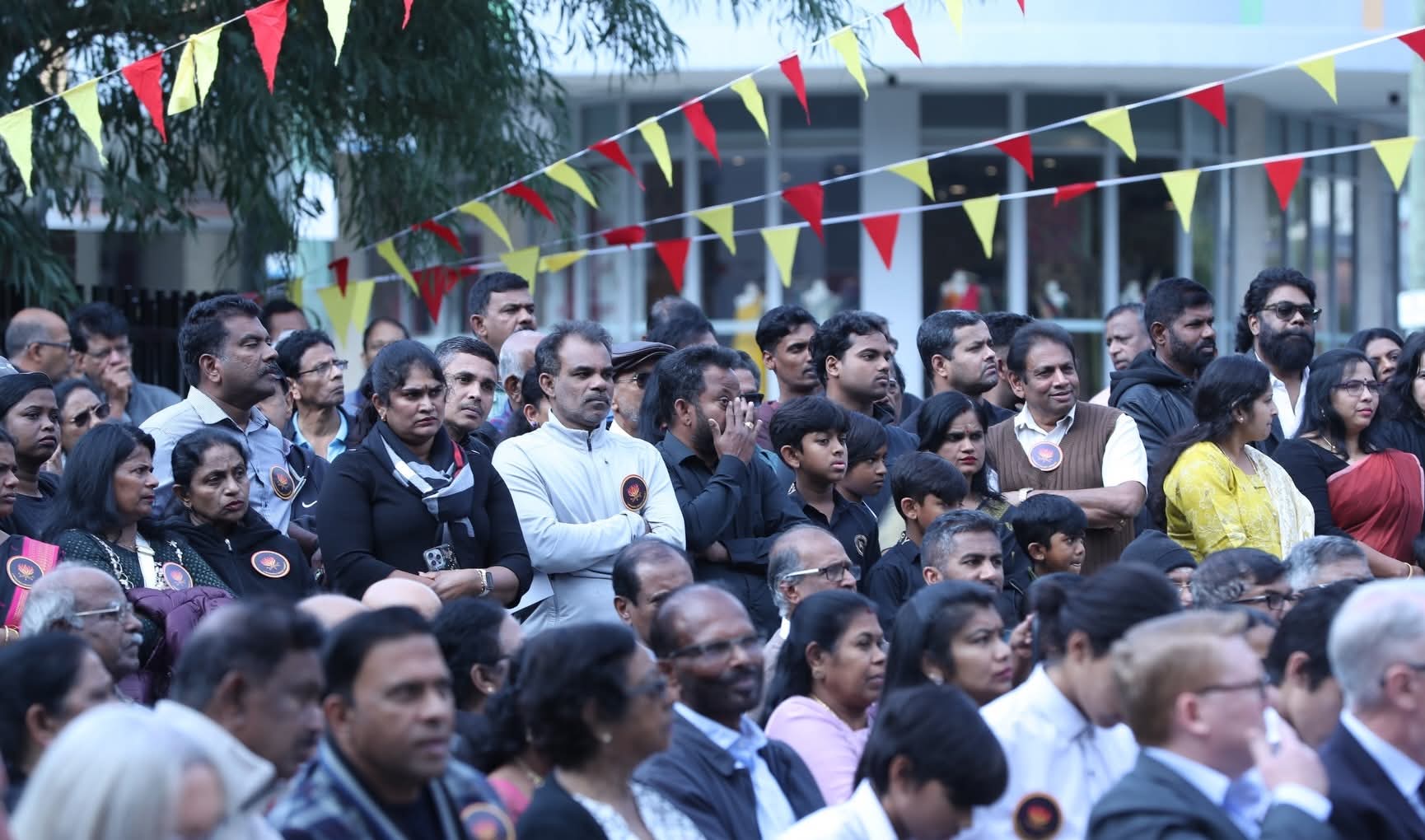
The memorial is located at the Peace Garden in Civic Park, Pendle Hill, and was opened by Ola Hamed, Mayor of Cumberland City Council, alongside local political representatives, community leaders and members of the Tamil diaspora.
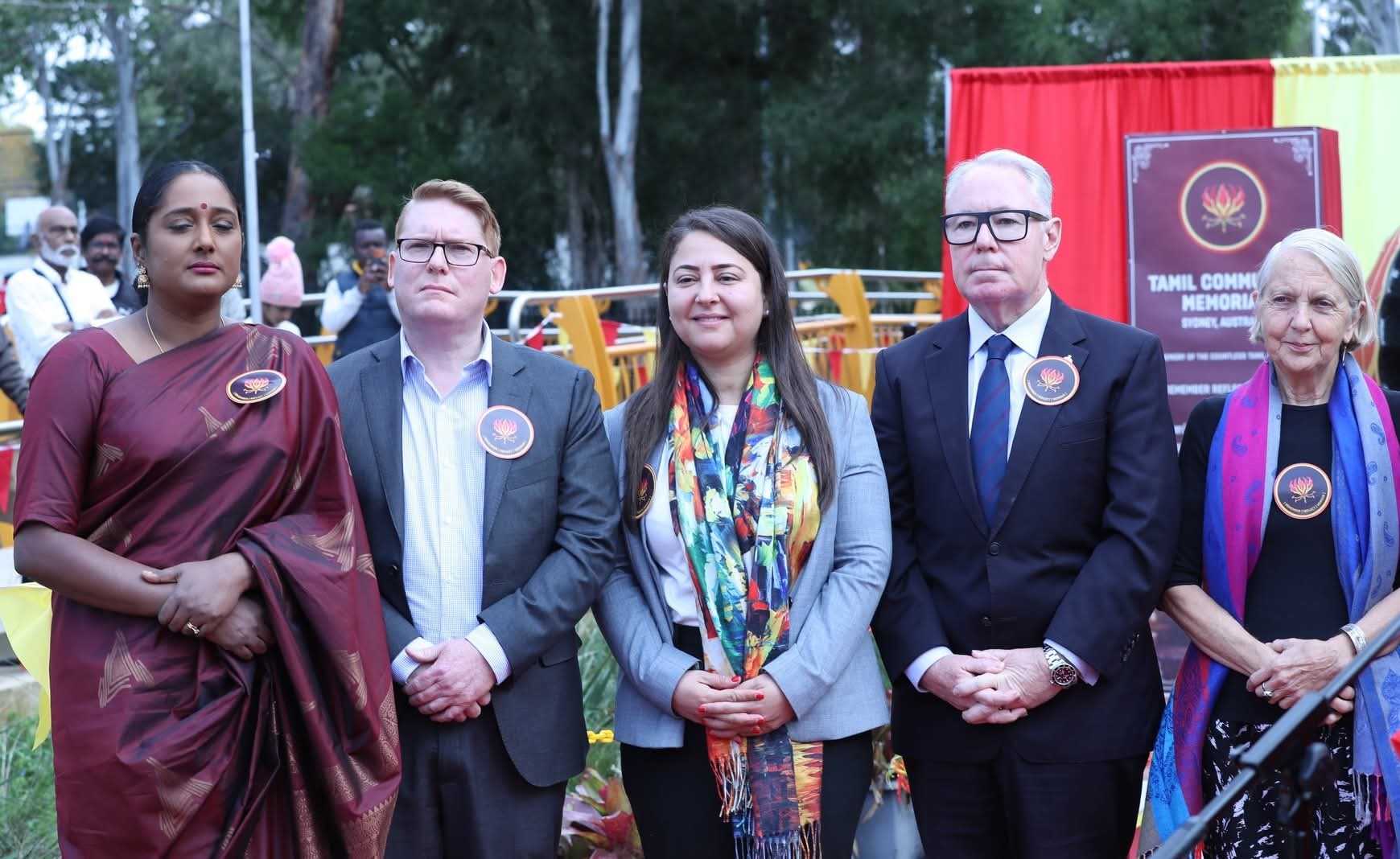
Organisers also paid tribute to the Darug people, the traditional custodians of the land on which the memorial now stands.
The structure itself carries deep symbolic meaning. The memorial was designed in the form of the Karthigaipoo (flame lily), the national flower of Tamil Eelam. Unlike many flowers that bend downward, the Karthigaipoo grows upward and it blooms only once in a year coinciding with the Maaveerar Day observances in November.
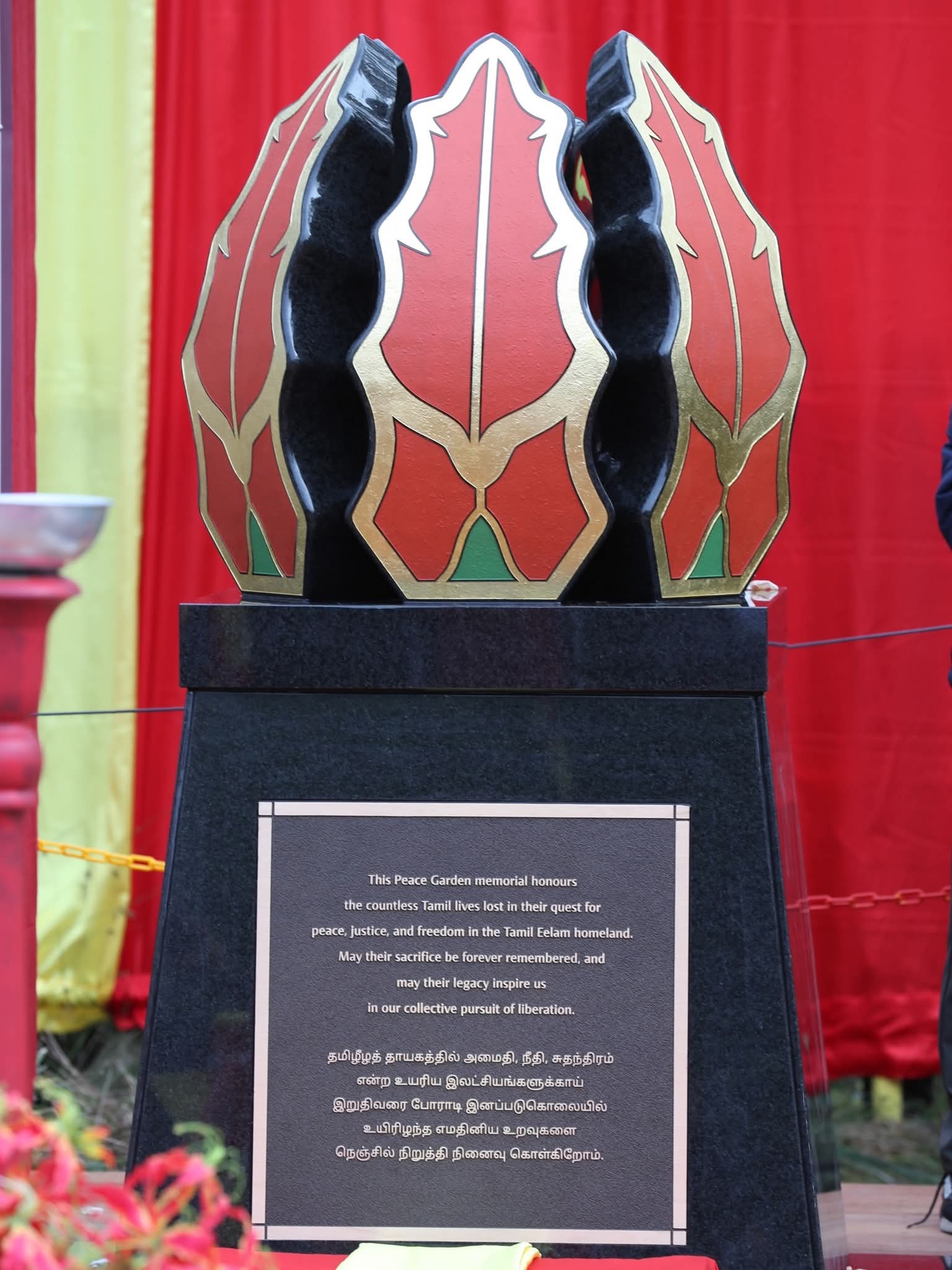
The memorial inscription reads,
“This Peace Garden memorial honours the countless Tamil lives lost in their quest for peace, justice, and freedom in the Tamil Eelam homeland. May their sacrifice be forever remembered, and may their legacy inspire us in our collective pursuit of liberation.”
Speaking at the event, New South Wales MP Hugh McDermott said the memorial stood as a reminder of those killed during the genocide against Tamils.
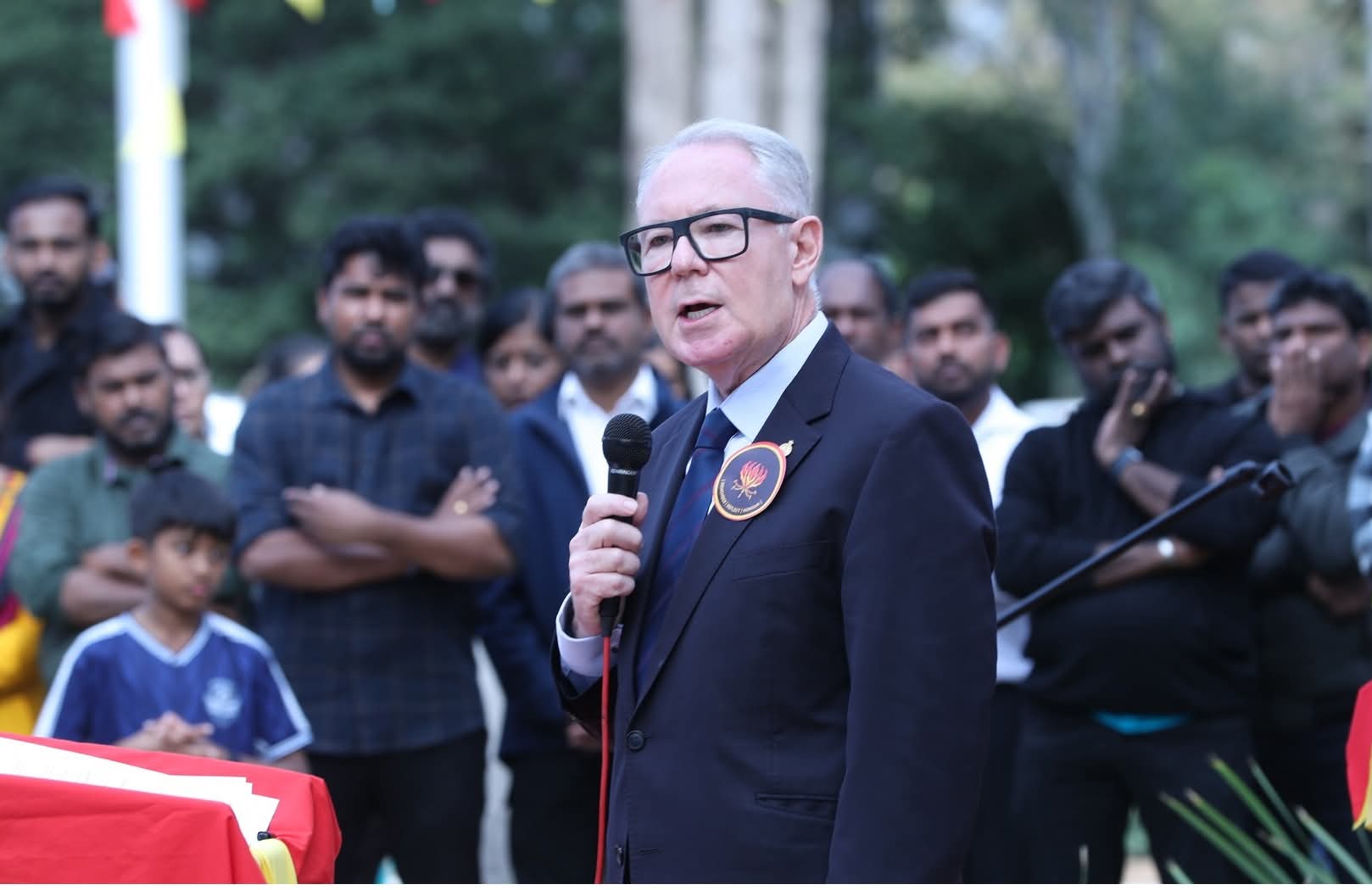
“Today we remember all those lives lost in the Tamil Genocide,” he said. “People who were targeted and discriminated against simply because they were Tamils. They hated the language. They hated the Tamil culture. But it has survived and it has grown strong here in Australia and other parts of the world.”
The establishment of the memorial in suburban Sydney marks one of the most visible public commemorations of the Tamil genocide in Australia, reflecting the continued efforts of the Tamil diaspora to secure recognition, remembrance and justice on the international stage.
Last year, a monument for the Tamil genocide was unveiled in Brampton, Canada. The monument includes a large book-shaped structure, symbolising the education of Tamil genocide history, and features a map of Tamil Eelam, the Tamil homeland. It is inscribed with nine panels—each representing a district of the North-East—that detail the systematic acts of genocide carried out against the Tamil people since 1948.