.jpg)
A protest was held in Britain last week condemning the arrest of five Tamils, including religious leader Velan Swamigal, during protests against the illegal construction of a Buddhist vihara at Thaiyiddy in the Tamil homeland.
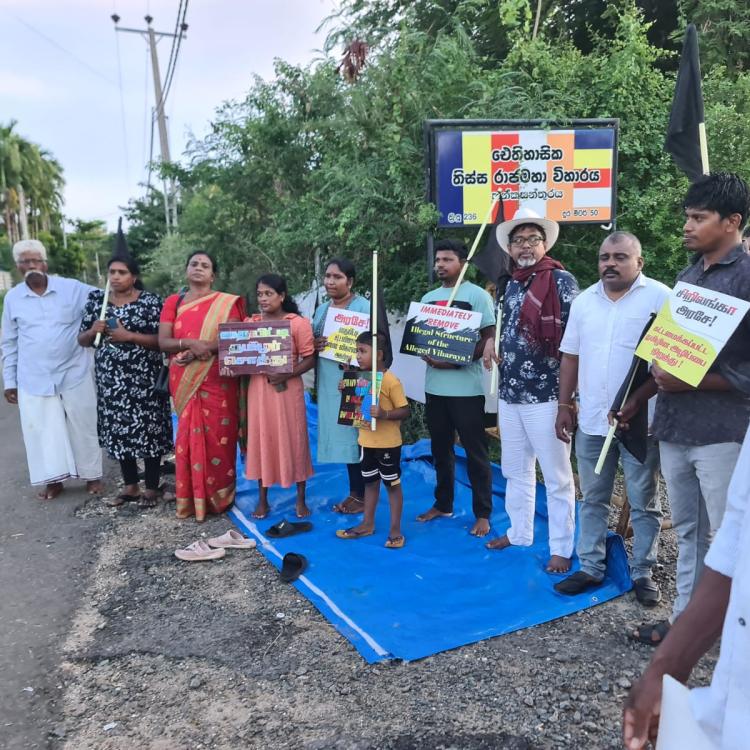
The demonstration took place outside the British prime minister’s office at 10 Downing Street, as Tamil activists and members of the diaspora gathered to denounce Sri Lanka’s repression of peaceful protest and to demand the removal of the Buddhist temple, which was erected on privately owned Tamil land in Jaffna.
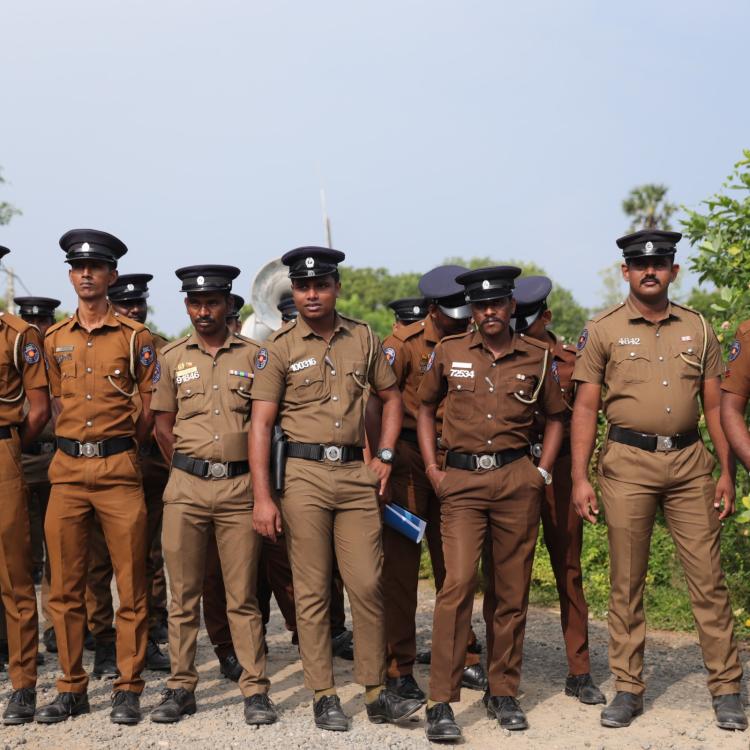
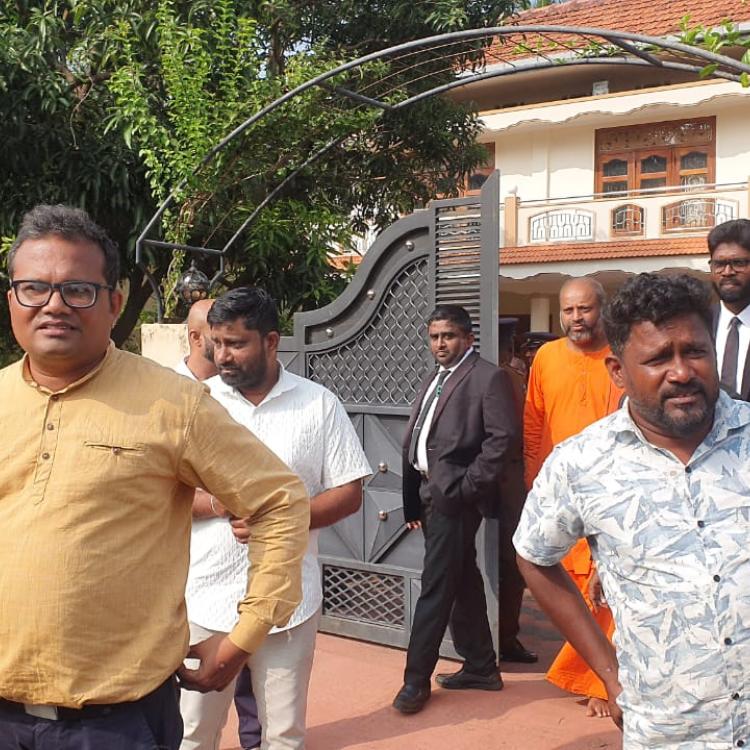
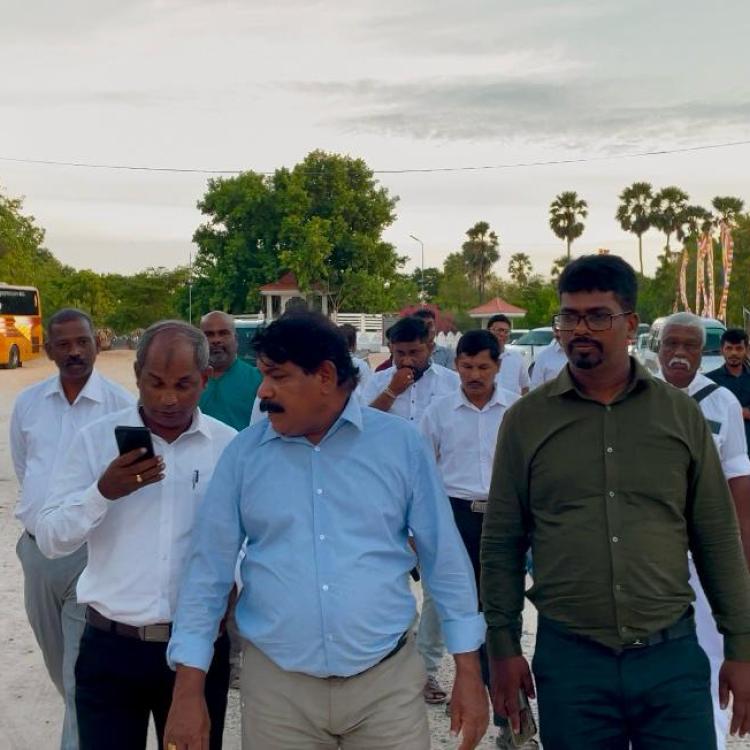
The arrests stem from a protest held in Thaiyiddy on 21 December last year, during an ongoing movement led by local Tamils opposing the construction of the Tissa Raja Maha Vihara. During that protest, Sri Lankan police arrested five individuals, including Velan Swamigal and Valikamam East Divisional Council Chairman Thiyagaraja Nirosh. Witnesses reported that those arrested were violently handled by police before being taken away. They were later released on bail and are due to appear in court on 26 January 2026.
.jpg)
Condemning these arrests and expressing solidarity with the protests in Jaffna, organisers in Britain said the demonstration was intended to internationalise the issue and draw attention to the wider pattern of state-backed land grabs and repression in the Tamil homeland. A petition signed by all participants was sent to the United Nations and to foreign diplomatic missions, calling for international intervention.
The protest was organised amid growing concern over what Tamil groups describe as the systematic militarisation and Buddhisation of the North-East. The construction of the Thaiyiddy vihara has become a flashpoint, widely viewed as part of a broader project of Sinhalisation and demographic engineering, facilitated by the Sri Lankan military and state institutions.
.jpg)
In a statement issued earlier this month, the British Tamils Forum said the Thaiyiddy case “exposes the futility of domestic accountability mechanisms in Sri Lanka” and described the vihara’s construction on land claimed by 18 Tamil families as a clear example of military-backed land dispossession. The group warned that similar patterns have emerged across the Tamil homeland, undermining property rights, freedom of religion, and the rule of law.
The statement also noted that resistance to these land grabs has not been limited to Tamils alone, pointing to rare instances of Buddhist clergy publicly criticising the seizure of private land and the misuse of religion to legitimise militarisation. Such interventions, it said, further expose the state’s narrative and the extent to which Buddhism has been instrumentalised by the Sri Lankan state.
Protesters in London said the arrests at Thaiyiddy and the continued refusal to dismantle the illegal vihara demonstrate how the Sri Lankan government continues to criminalise Tamil dissent while allowing military occupation and demographic erasure to proceed unchecked, as part of a genocidal process.
They reiterated calls for decisive international action through the United Nations and other mechanisms, warning that silence from global actors would only entrench impunity and deepen the repression faced by Tamils in their own homeland.