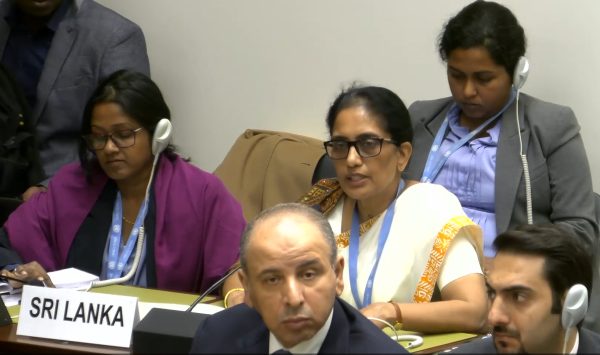
Sri Lanka has once again rejected a United Nations Human Rights Council (UNHRC) resolution on accountability and reconciliation, condemning the continued operation of the Office of the High Commissioner for Human Rights’ (OHCHR) Sri Lanka Accountability Project (OSLAP) as an “unprecedented and ad hoc expansion” of the Council’s mandate.
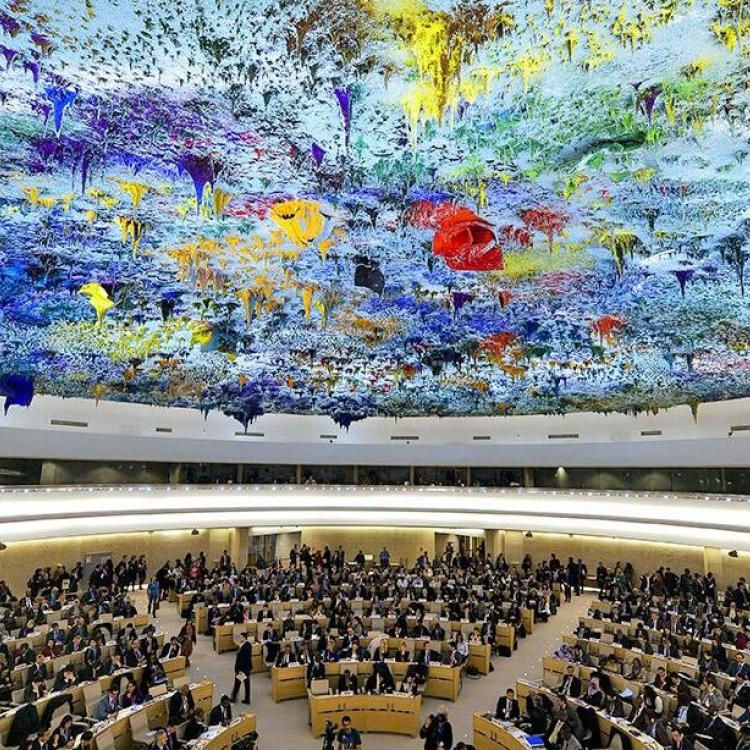
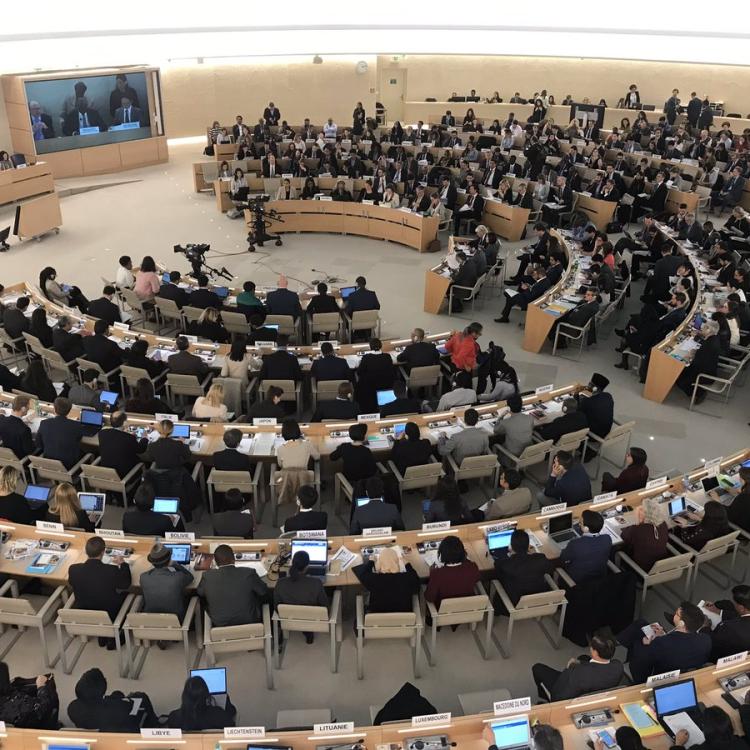
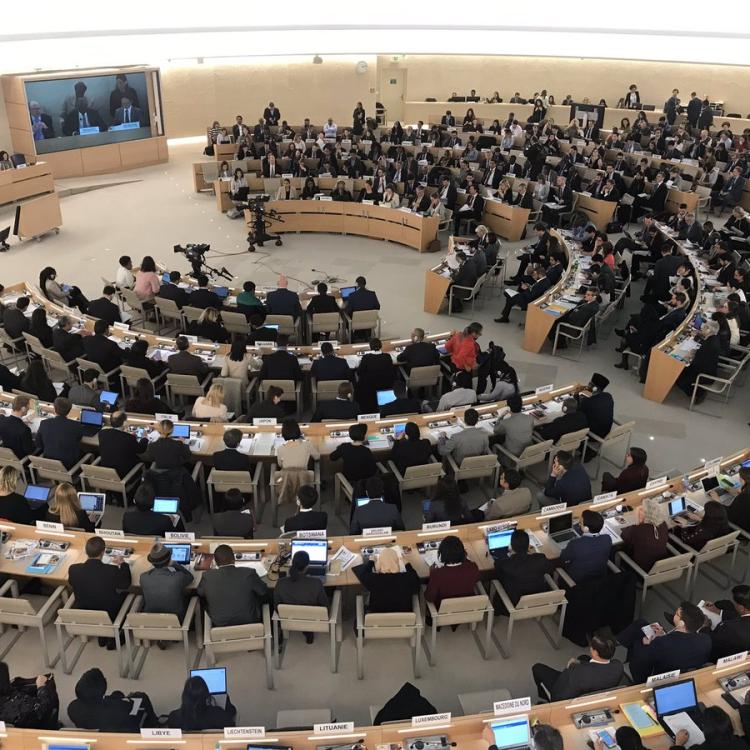
Speaking in Geneva on 6 October 2025, during the 60th session of the UNHRC, the Sri Lankan delegation voiced its opposition to the adoption of resolution HRC/60/L.1/Rev.1, which extends the OHCHR’s mandate on Sri Lanka for a further two years. The resolution, introduced by a core group of states including the United Kingdom and Canada, was adopted without a vote on Monday.
Delivering the statement as the “country concerned,” the Sri Lankan delegation claimed that while Colombo had participated in discussions “in a spirit of open and constructive engagement,” it could not support a text that referenced resolution 51/1 (2022) — the measure that created the OHCHR’s evidence-gathering mechanism on Sri Lanka.
“Our fundamental issue with the text is the reference to resolution 51/1 of 2022 denoting the external evidence-gathering mechanism on Sri Lanka within the OHCHR,” the statement said. “In our view, it is an unprecedented and ad hoc expansion of the Council’s mandate.”
The delegation repeated the government’s long-standing rejection of the Sri Lanka Accountability Project, arguing that the mechanism undermines the country’s “sovereignty” and is unnecessary given Colombo’s so-called domestic reconciliation processes.
“Sri Lanka does not accept the external evidence-gathering mechanism set up by the OHCHR,” it declared, insisting that “genuine nationally owned processes are best placed to address matters relating to human rights.”
The statement cited ongoing government initiatives such as the establishment of a truth and reconciliation commission, the creation of an independent public prosecutor’s office, and reforms to the Offices on Missing Persons and Reparations. However, rights organisations and Tamils have consistently criticised these bodies as ineffective, lacking independence and as a whitewash.
Sri Lanka also accused the UN mechanism of lacking “credibility and transparency,” claiming that four years after its creation, “this Council is yet to see any benefits of this project for the people of Sri Lanka.”
The delegation further claimed that extending the OHCHR’s mandate would “serve the interests of elements with vested interests seeking to create divisions and polarize communities in Sri Lanka,” describing it as “counterproductive” to the government’s purported reconciliation efforts.
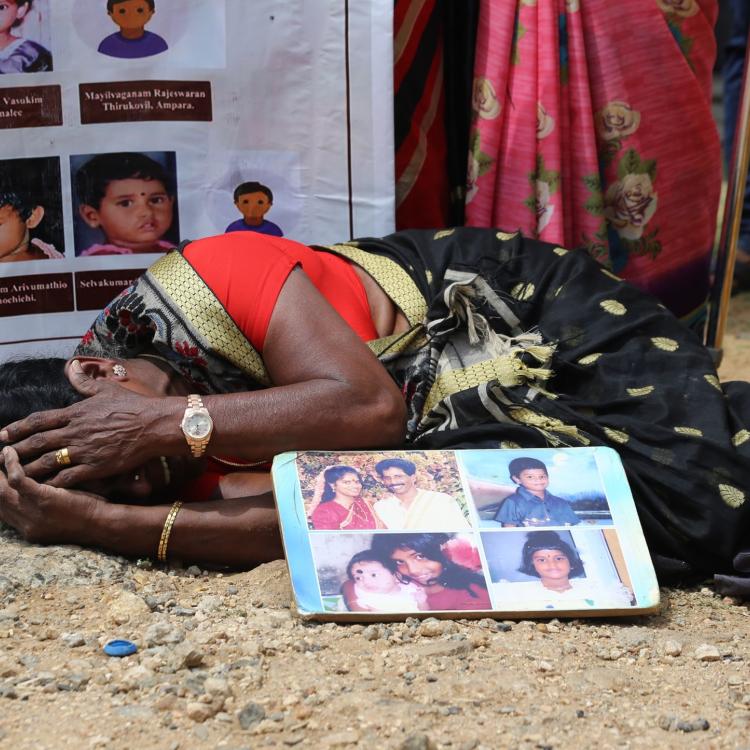
Despite Colombo’s protestations, Tamil organisations have repeatedly stressed that no domestic mechanism in Sri Lanka has ever delivered justice for wartime atrocities. Many Tamils view the government’s renewed opposition to international oversight as further proof of its unwillingness to hold perpetrators, including senior military officials, accountable for war crimes and crimes against humanity and genocide.
Sri Lanka’s foreign ministry claimed that the High Commissioner’s visit to the island in June had reflected a “momentum of change” and “genuine openness” from the government. However, Tamils have dismissed such claims, noting that militarisation, land seizures, and surveillance of activists and families of the disappeared continue unabated across the North-East.
Concluding its remarks, the Sri Lankan delegation rejected the resolution outright:
“For these reasons, we do not agree with coercive international action, and we reject resolution 60/L.1/Rev.1 presented to this Council.”
The resolution’s adoption keeps Sri Lanka under OHCHR scrutiny until 2027, extending the work of the accountability project that continues to collect and preserve evidence of serious human rights violations.