The United Nations Human Rights Council (UNHRC) has adopted a new resolution extending the Office of the High Commissioner for Human Rights’ (OHCHR) mandate on Sri Lanka for a further two years, despite growing Tamil criticism that the text has been diluted and fails to deliver justice.
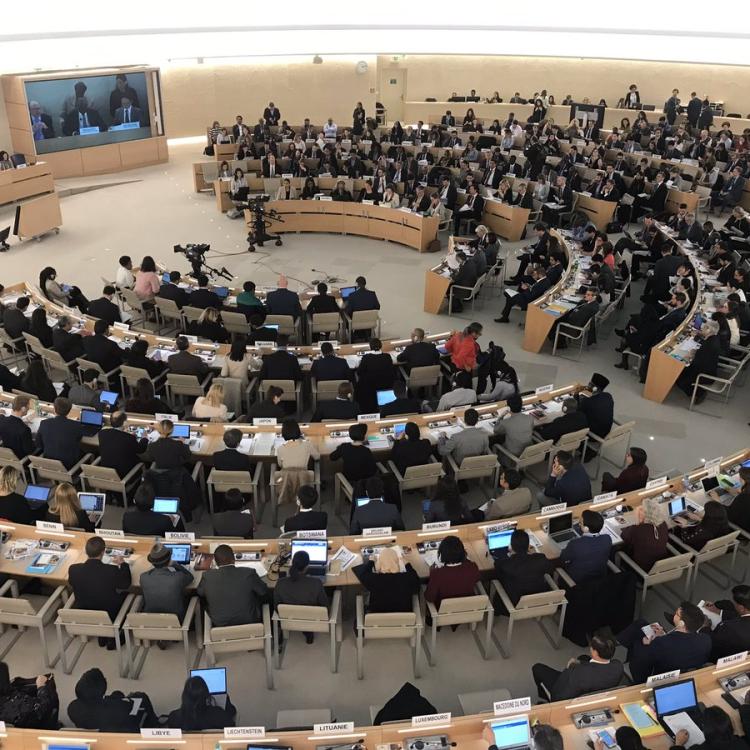
The resolution — A/HRC/60/L.1/Rev.1: Promoting reconciliation, accountability and human rights in Sri Lanka — was adopted in Geneva on Tuesday without a vote. Sponsored by the United Kingdom, Canada, Malawi, Montenegro and North Macedonia, and co-sponsored by 22 other countries including Germany, Switzerland and Ireland, the resolution renews the OHCHR’s evidence-gathering project on Sri Lanka and requests further updates through 2027.
The text “welcomes” the current Sri Lankan government’s stated commitments to reconciliation, devolution and anti-corruption reforms, and acknowledges the High Commissioner’s visit to the island earlier this year. It urges Colombo to repeal the draconian Prevention of Terrorism Act, amend the Online Safety Act and ensure independent investigations into emblematic human rights cases. It also stresses the importance of resourcing exhumations at mass-grave sites and the effective functioning of the Office on Missing Persons.
However, Tamil civil-society groups and activists condemned the resolution for softening its language and praising a government they say continues to deny justice and accountability. The new text, they argue, retreats from earlier UN resolutions by reaffirming Sri Lanka’s “sovereignty and territorial integrity” and commending its “commitments” without evidence of progress. It goes on to endorses a domestic judicial mechanism despite repeated rejections by the Sri Lankan government of any international involvement in accountability.
The language marks a significant retreat from Resolution 30/1, passed in 2015, which affirmed “the importance of participation in a Sri Lankan judicial mechanism… of Commonwealth and other foreign judges, defence lawyers and authorized prosecutors and investigators.”
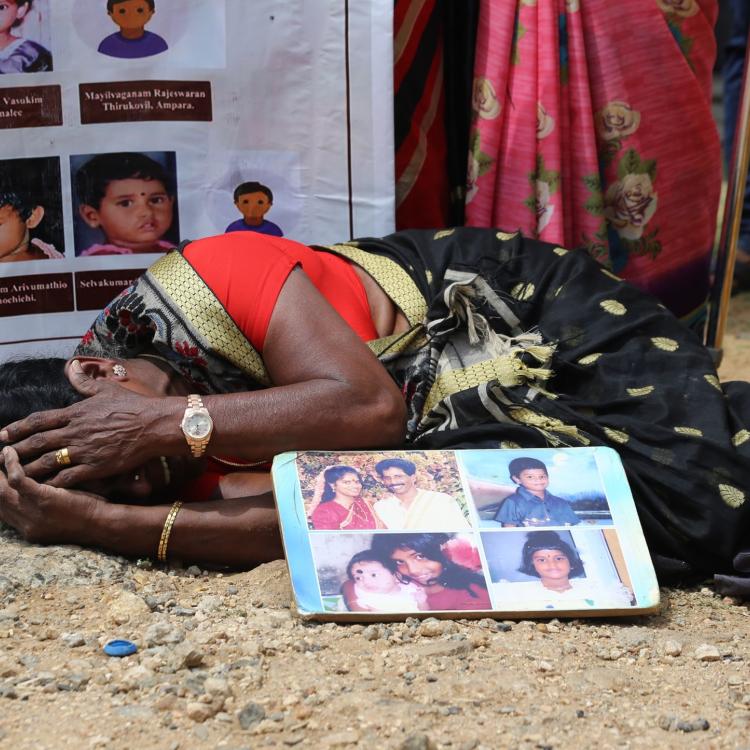
In recent weeks, Tamil families of the disappeared, human-rights organisations and survivor networks in the North-East have rejected what they described as “another hollow resolution,” warning that it fails to address the continued militarisation, land grabs and surveillance of Tamil communities. The Association of Relatives of the Enforced Disappeared burned copies of the draft ahead of the vote, calling instead for a truly international justice process and the arrest of Sri Lankan military leaders accused of war crimes.
.JPG)
Tamil families of the disappeared in Jaffna last week.
Presenting the resolution, the UK’s permanent representative to the UN in Geneva, Kumar Iyer, paid tribute to Dr Kasipillai Manoharan — the father of one of five students killed by Sri Lankan security forces in Trincomalee in 2006 — whose lifelong campaign for accountability became emblematic of Tamil resistance to impunity.
“This draft resolution acknowledges the steps taken and the commendable commitments made by the current Sri Lankan Government,” Iyer said, urging Colombo to turn its promises into action and to end the intimidation of families of the disappeared. He emphasised that the OHCHR’s ongoing role remained “crucial” for advancing accountability.
Under the new mandate, the OHCHR’s Sri Lanka Accountability Project (SLAP) will continue to gather and preserve evidence for possible future prosecutions of war crimes and crimes against humanity. An oral statement from the UN Secretariat confirmed that $3.8 million in annual funding has been allocated to maintain the project’s investigative staff and operations in Geneva.
For Tamils, however, the resolution’s passage without a vote has reinforced scepticism about the UN’s ability to deliver meaningful change.
“This resolution gives Colombo another two years of impunity,” one tamil activist told Tamil Guardian. “It acknowledges the suffering but refuses to name the perpetrators.”