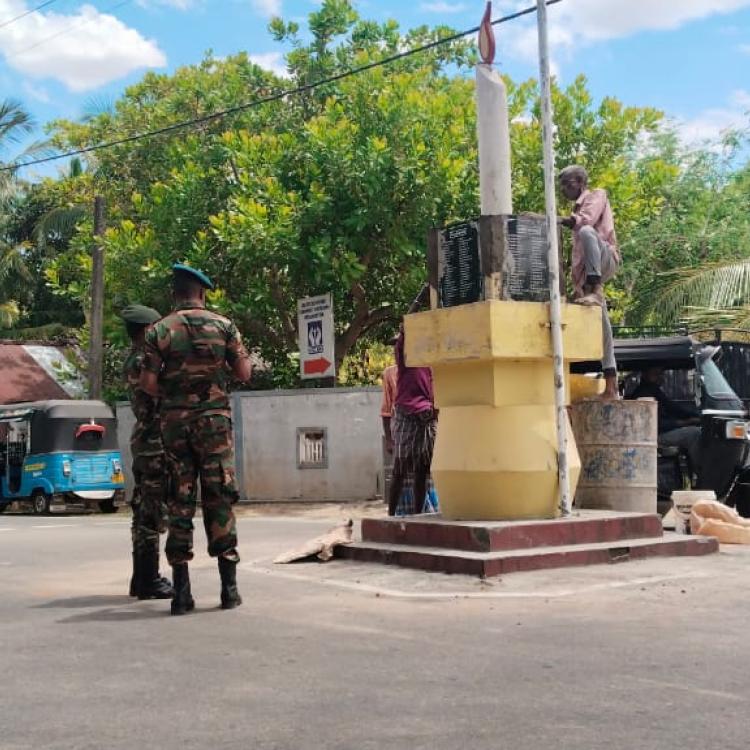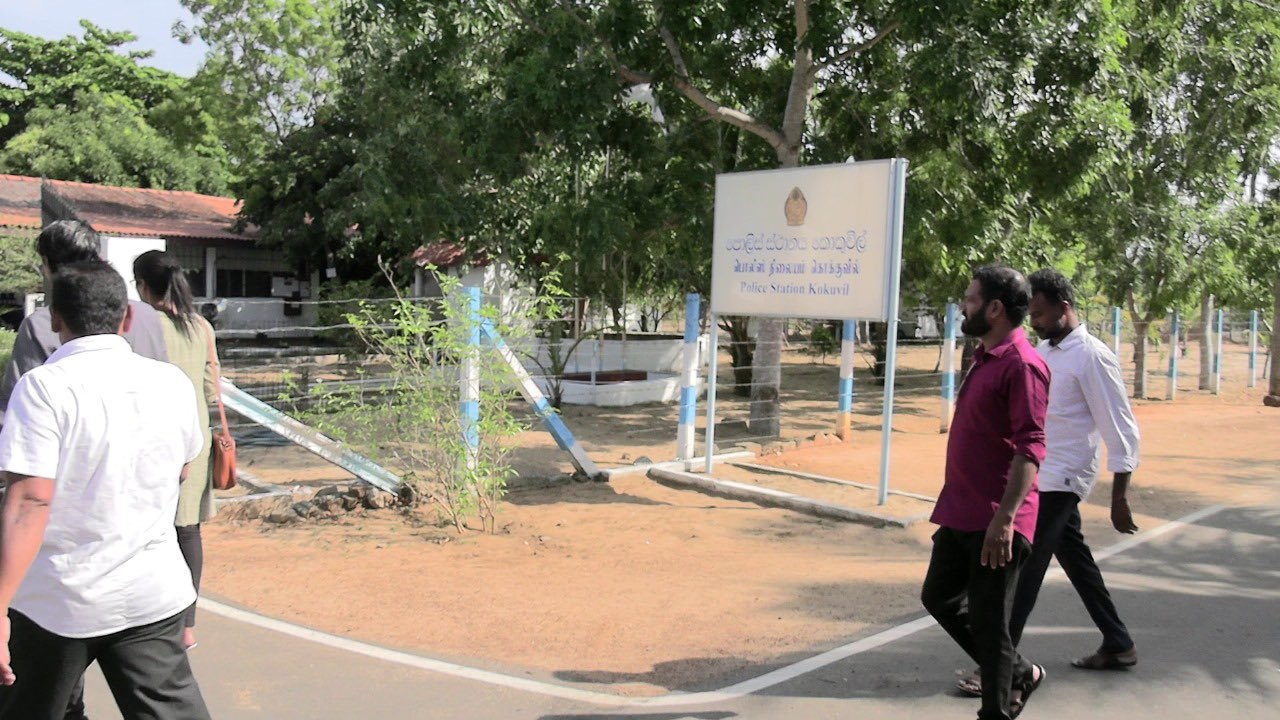
A survivor of the 1990 Sathurukondan massacre, who lost their entire family in the slaughter, lodged a complaint at the occupying Sri Lankan Police Station in Kokkuvil, Batticaloa this month, demanding an investigation into one of the most notorious mass killings of Tamils in the East.
In the complaint, the survivor detailed how, on 9 September 1990 at around 5:30 p.m., Sri Lankan soldiers surrounded Sathurukondan village.
Dozens of residents, including women carrying infants, pregnant mothers, the elderly and children, were rounded up and taken to the nearby Sathurukondan Boys’ Town army camp, where they were massacred by Sri Lankan troops alongside armed Muslim Home Guards.
A total of 186 people from the neighbouring villages of Sathurukondan (38), Panichchayadi (39), Pillaiyaradi (62) and Kokkuvil (47) were killed, many of them hacked to death or shot. Survivors later gave testimony detailing the killings.
Despite evidence presented to a Presidential Commission of Inquiry in 1997 under then-president Chandrika Kumaratunga, which identified three Sri Lankan army officers as responsible for the massacre, no action has ever been taken.
It has long been reported that the victims were killed and buried within the premises of the Sathurukondan Boys’ Town army camp. Families of the disappeared, along with rights groups, have continued to call for excavation and investigation at the site to uncover human remains and establish the truth.
The massacre
On September 9, 1990, the men, women, and children from Saththurukondan and surrounding villages, on the outskirts of Batticaloa, were taken to an army camp by Sri Lankan soldiers, where they were massacred.
The mass killings, which were carried out during the presidency of the UNP's Ranasinghe Premadasa, were investigated in a probe established by then-president Chandrika Kumaratunga in 1997. The probe identified three captains in the Sri Lankan army as being responsible for the killings. The retired judge who led the inquiry, K Palakidnar said that there was strong evidence for the massacre and urged Kumaratunga to hold the perpetrators to account, however, no action was taken by the government.
Amongst those who were killed in the Sathurukondan atrocities, were five children less than a year old, 42 children under 10, 9 pregnant women, and 28 adults over 68 years of age. 38 were from Saththurukondan, 37 from Panichchaiyady, 62 from Pillaiyaradi, and 47 from Kokuvil. Only one man survived the massacre and lived to tell his account to the ICRC and human rights groups.
Speaking to TamilNet in 1997, Mr K Krishnakumar, recounted what happened that day:
"The villages were cordoned off by the Army around 10 a.m. It was almost 7 p.m. by the time the villagers - including infants, women, pregnant mothers and the old - were herded to the Sathurukkondan camp and locked inside. Four masked men walked into the hall and selected me, T. Kumar, C. Sinnaththamby, and K. Jeevaratnam. Our shirts were removed and our hands behind our back with them. Then we were taken to the camp's back yard. We were dragged about fifty meters further, where we saw a pit about 20 ft by 5ft. There was a Cashew tree by the pit and well which was about 10 meters from it.
"In the dim light I saw 25 soldiers armed with long swords and cudgels standing round the pit and the well.
"I was hit with a cudgel and I fell face downward. When the other three screamed the soldiers stripped them and stuffed cloth into their mouths. One by one they were taken to the edge of the pit and hacked with swords and were pushed in.
"A soldier came up to me and slammed me against the Cashew tree, pulled out a long kris knife, and stabbed me through the chest. He then pushed me into the pit. He stabbed me again on my back. Though I was bleeding, I didn't lose consciousness.
"Four more men were brought there, hacked to death and were pushed in to the pit. The soldiers went again and brought two pregnant women. They were stripped naked and their breasts were sliced off. The soldiers then cut open the stomachs of these women with their swords and pushed them into the pit.
"Later they brought many girls stark naked. Sand was stuffed in the girls' mouths and all were raped repeatedly. Then the soldiers cut off their breasts with the swords. Three of these girls were pushed into the well. "As the area was dark, I was able to slowly crawl out while they were busy raping, killing and pushing bodies into the pit. When the soldiers left, I crawled towards the camp fence and hid in shrub jungle behind the camp. Later the soldiers brought tires and set fire to the bodies in the pit. The fires burned till 3 about a.m. in the morning. Once the pyre died out, the pit was filled with sand. With the help of a passer-by I went to the hospital.