UN High Commissioner for Human Rights Volker Türk has responded to letters sent by Tamil political parties and civil society organisations following his recent visit to Sri Lanka, claiming he would “continue to advocate for complementary strategies to provide pathways to advance justice for victims at the international level.”
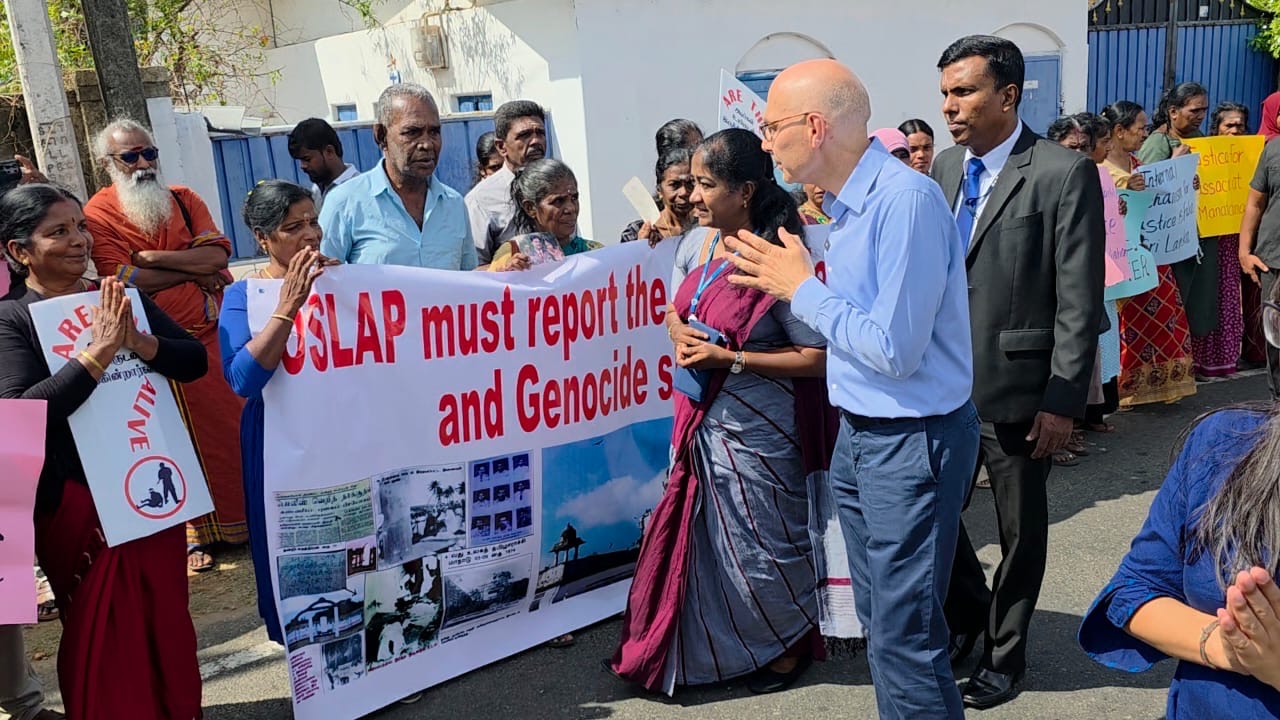
In a letter dated 5 August 2025, Türk thanked the signatories for their correspondence and engagement during his trip, which included a visit to the Chemmani mass grave site in Jaffna. The mass grave, long linked to enforced disappearances during the 1990s Sri Lankan military occupation, has recently come under renewed scrutiny after the exhumation of over 140 human skeletal remains, including those of children.
“The issue of accountability for past and present human rights violations and international crimes was central to my visit and discussions with the Government,” Türk wrote, adding it “will continue to be so going forward.”
The High Commissioner acknowledged that he had emphasised to the Sri Lankan government the long-standing concerns highlighted by his Office in previous reports. These included the need to:
• Release military-occupied land in the North-East;
• Halt ongoing land grabs;
• Release long-term detainees under the Prevention of Terrorism Act;
• End surveillance and harassment of activists;
• Decriminalise and support victims’ memorialisation initiatives.
“Addressing these issues is a critical and necessary step to build confidence and trust with victims and affected communities,” he added.
Türk described his meeting with victim-survivors and his presence at the Chemmani mass grave site as “deeply moving,” particularly witnessing the public vigil held nearby. He stressed the need for “preservation of evidence and thorough and independent investigations,” both for Chemmani and the broader issue of enforced disappearances.
The High Commissioner acknowledged that “successive governments have failed to establish accountability mechanisms that are independent, fair, effective, and meet the full range of international human rights standards.”
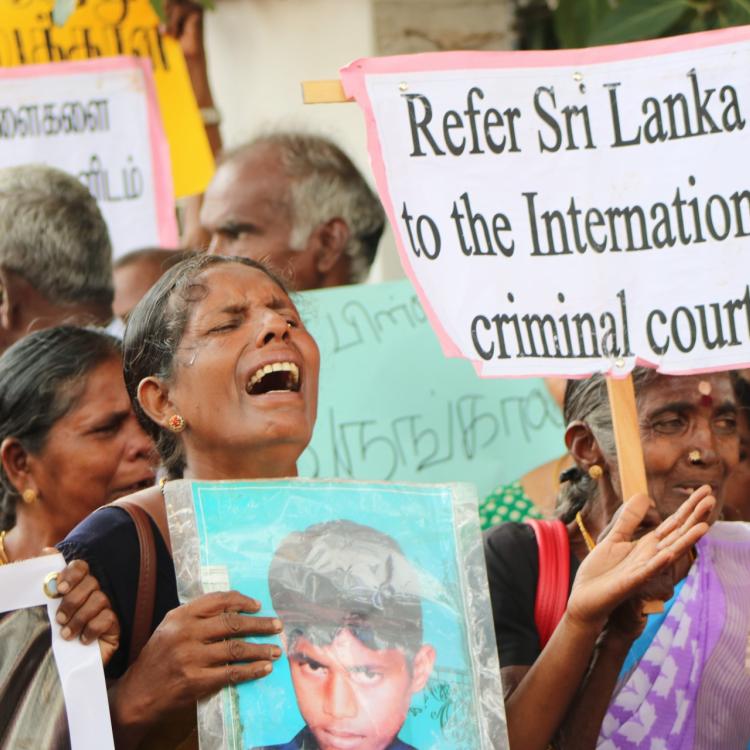
However, he stopped short of responding to demands from Tamils on referring Sri Lanka to the International Criminal Court or enacting a wholly international accountability process.
Türk instead said he encouraged the current administration under Anura Kumara Dissanayake to implement “a comprehensive process to ensure truth, justice, and accountability that enjoys the confidence of victims and the international community”.
“I also will continue to advocate for complementary strategies to provide pathways to advance justice for victims at the international level,” he added.
The letter was addressed to political parties and civil society organisations who had jointly written to the High Commissioner on 14 July and again on 4 August. Among the signatories were the Tamil National People’s Front (TNPF), Tamil Eelam Liberation Organisation (TELO), Democratic Tamil National Alliance (DTNA), Tamil National Green Organisation, and the Tamil National Council.
See the letter here.
Ever since the Mullivaikkal genocide of 2009, Tamils have repeatedly called for an international accountability mechanism, a process that successive governments including the current Sri Lankan regime have vowed never to allow happen