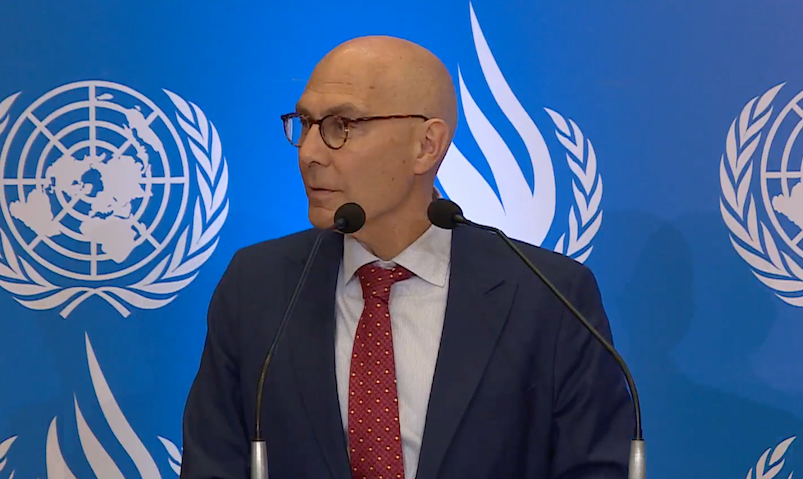
United Nations High Commissioner for Human Rights Volker Türk warned Sri Lanka against falling into the “impunity trap” and urged the government “to hold to account the perpetrators of the most severe crimes” during an address in Colombo on Tuesday.
“In our complex and violent global landscape, there may be lessons for Sri Lanka - and lessons that the world needs to learn from Sri Lanka,” said Türk, as he tackled two main themes in his remarks.
“Today, Sri Lanka is threatened by two traps: the impunity trap, and the inequality trap.”
“Many States have experienced years of war, internal armed conflict or repression,” he said. “Some have been able to achieve genuine reconciliation… A steady, unwavering focus on the voices and rights of victims – and their families – is essential to this work.”
“But it is also vital to hold to account the perpetrators of the most severe crimes,” he continued. “Vital for justice. Vital for deterrence. Vital for the victims who have suffered inconceivable pain and loss. Vital for the future.”
He shared a personal anecdote as an Austrian, noting how his country only fully confronted its role in Nazi atrocities decades later. “I know that coming to terms with the reality of massacres, terrorism, enforced disappearances, torture or sexual violence is a very painful process,” he said, but stressed the danger of ignoring victims’ suffering or allowing “revisionist narratives” to flourish.
He stressed that justice and acknowledgment of past atrocities were not just matters of history, but essential prerequisites for sustainable peace and development.
“Commissions and inquiries that lead nowhere, or whose recommendations are never implemented, will erode public trust and compound the trauma for victims,” the High Commissioner continued. “I want to emphasise this point: an absence of justice will undermine the stability of peace. Conversely, acknowledging the truth creates the space for justice and reparations – and ultimately, healing.”
“Accountability and justice, including full acknowledgment of the truth of what was done to people, shape the path to lasting reconciliation.”
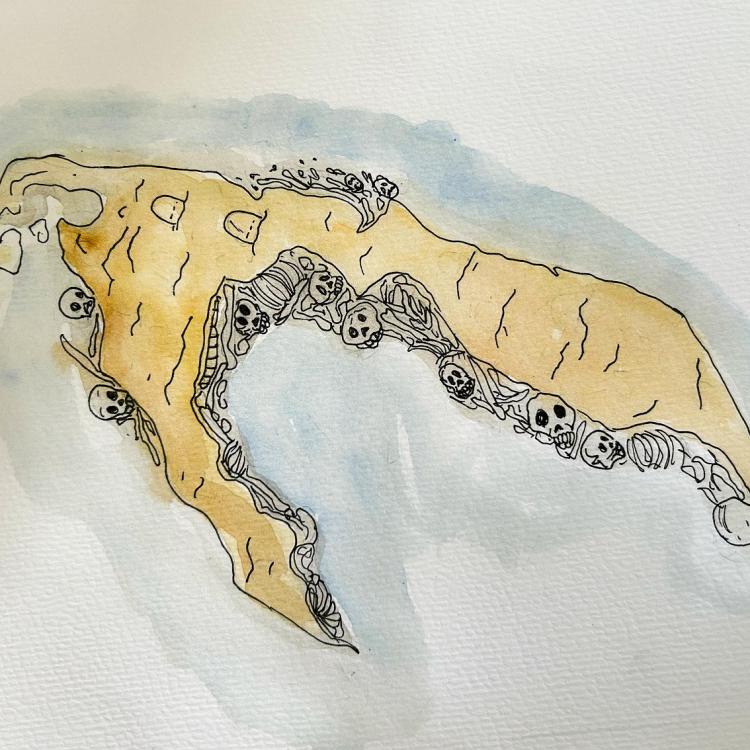
His remarks come amid renewed attention on mass graves in Chemmani, Jaffna, where 19 skeletal remains, including infants, were recently unearthed. Tamil families and rights groups have repeatedly called for international oversight into these investigations, citing decades of stalled or suppressed inquiries. Türk will be travelling to Jaffna on Wednesday.
More than 16 years have also passed since the end of the armed conflict and the Mullivaikkal genocide, which saw tens of thousands of Tamils massacred by Sri Lankan state forces.
The current Sri Lankan regime has, like others before it, rejected UN resolutions on accountability for mass atrocities and refused to co-operate with any international justice mechanisms.
He also warned of growing social and economic inequalities and said “states can make human rights central to all policies relating to the economy and business – investing in people's access to quality education and healthcare; to universal social protection; to decent work; to food, clean water, sanitation and housing; and to a clean, healthy and sustainable environment”.
Reiterating the need for economic policies grounded in human rights, Türk referenced global models for universal social protection and called for reforms to international financial institutions to ease debt burdens.
Reflecting on the 2022 Aragalaya protests, he described them as a collective expression of “aspirations of Sri Lankans for a new, more just society and a more humane social order”.
The UN rights chief concluded by reiterating his commitment to supporting victims of violations and to cooperating with Sri Lankan authorities. He described his office as offering “a mirror” to the country – one that may reflect “an uncomfortable image” but reveals truth.
“Sri Lanka is at a key moment,” he concluded. “This can be a new chapter and a new opportunity… Against a backdrop of deepening global threats, this country can show the world that a society can turn its back on violence, and build a new path towards respect, inclusive prosperity, and peace.”
Read the full text of his address here. Watch his remarks below.
Türk has previously raised alarm over Sri Lanka's continued use of the Prevention of Terrorism Act (PTA), calling for an immediate moratorium on its use. He has also urged the government to ensure that any replacement legislation complies with international human rights standards. Further concerns include the Online Safety Act and the ICCPR Act, which have been criticised for unduly restricting freedoms of opinion, expression, association, and peaceful assembly.
In a report presented to the UN in August last year, prior to Sri Lanka’s presidential and parliamentary elections, Türk called on the incoming government to address the root causes of conflict and undertake deep constitutional and institutional reforms to close the accountability gap and advance reconciliation.
Türk said that in Sri Lanka, "a prevailing sense of impunity impedes meaningful progress and encourages continued violations and more corruption."
"The absence of accountability for past and present violations is a fundamental problem, illustrated by the lack of meaningful progress in emblematic cases," he added.
In March last year, Türk said sustainable peace and reconciliation will not be achieved in Sri Lanka "with regressive laws and authoritarian approaches".
"It is only through addressing the root causes of the country’s conflict and economic crisis, and ensuring accountability, that Sri Lanka will be able to enhance its prospects of achieving genuine reconciliation and sustainable peace and development," he said.
Türk went on to note that May 2024 will mark 15 years since the Mullivaikkal genocide in which tens of thousands of Tamils were killed by Sri Lanka's brutal military offensive in the final phase of the armed conflict. He highlighted that whilst 15 years have passed since the genocide, "violations of human rights remain unaddressed."
"Tens of thousands of families of the disappeared are still looking for their loved ones and face intimidation, arrests and violence in their search. Land disputes continue to escalate in the north and east of the country impacting on people’s livelihoods. Provincial Councils and local government bodies, that promised a measure of devolution, are not currently constituted," he added.
The UN High Commissioner urged member states to "use of universal and extra-territorial jurisdiction and targeted measures against credibly-alleged perpetrators of serious human rights violations and abuses."