
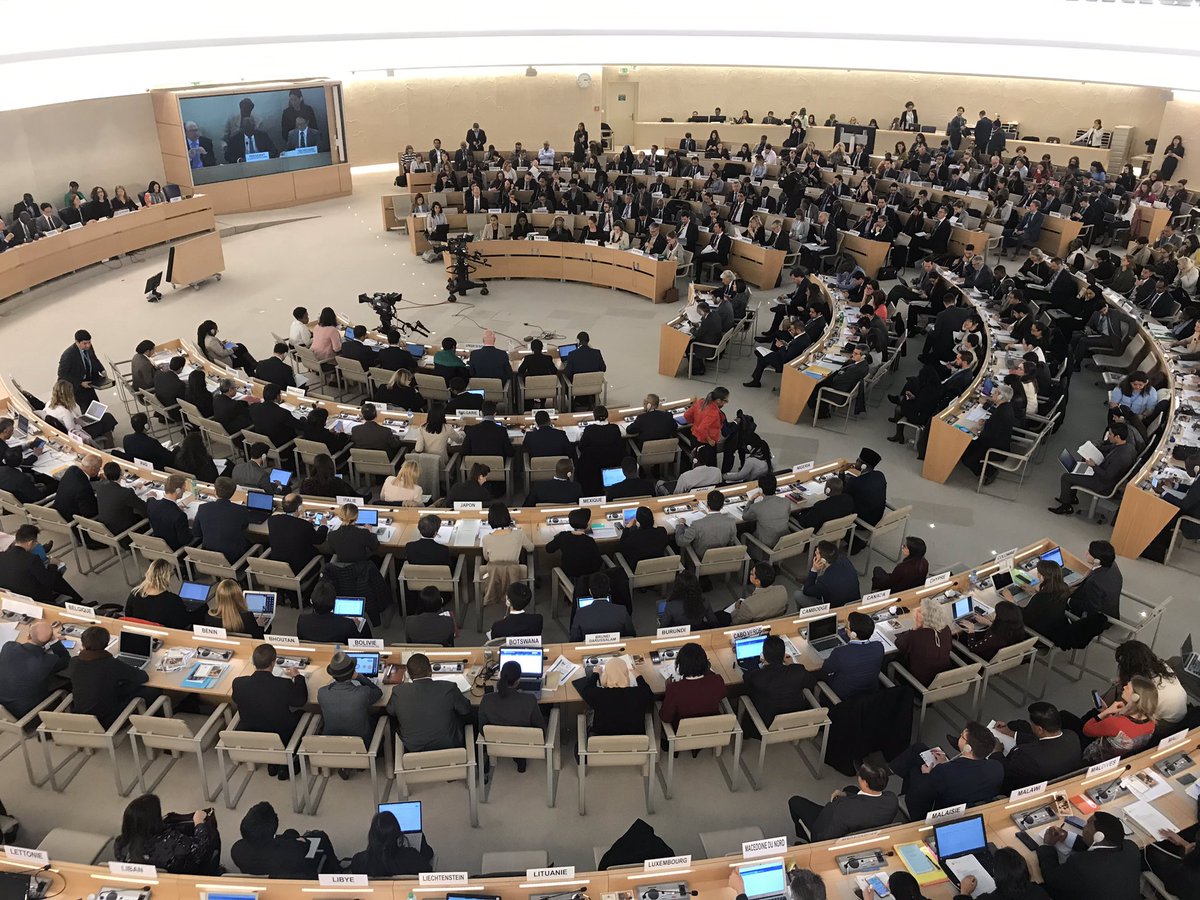
At the 59th session of the United Nations Human Rights Council, the Sri Lanka Core Group, comprising of Canada, Malawi, Montenegro, North Macedonia, and the United Kingdom, expressed continued concern over Sri Lanka’s lack of progress on human rights and accountability commitments.
Delivering a joint statement during the Interactive Dialogue on the High Commissioner’s Annual Report, UK Human Rights Ambassador Eleanor Sanders said there had not been substantive progress on deeper structural issues.
“We remain concerned by the Government’s limited progress in fulfilling its commitments on human rights, accountability, reconciliation, good governance and constitutional reform,” Sanders stated.
The Core Group called on the Sri Lankan government to “address longstanding impunity and ensure that journalists, human rights defenders and civil society organisations can operate freely and safely.”
It further emphasised the importance of building an “inclusive and comprehensive reconciliation and accountability process has the confidence of affected communities”.
The statement also reiterated concern over the continued use of the Prevention of Terrorism Act (PTA), despite repeated pledges by the government to repeal the controversial legislation. The PTA has long been criticised by Tamil civil society, international human rights groups, and UN experts for facilitating arbitrary detention and systemic abuse.
The Core Group additionally called for renewed efforts to resolve the issue of enforced disappearances, by “reinvigorating” the Office on Missing Persons.
“We reaffirm our willingness to work constructively with the Government on these issues,” the statement concluded.
The Core Group’s remarks come amidst renewed international scrutiny of Sri Lanka’s human rights record, as United Nations High Commissioner for Human Rights Volker Türk visits the island this week. His trip includes stops in Jaffna and Trincomalee, and is expected to involve discussions with senior government officials and Tamil civil society groups.