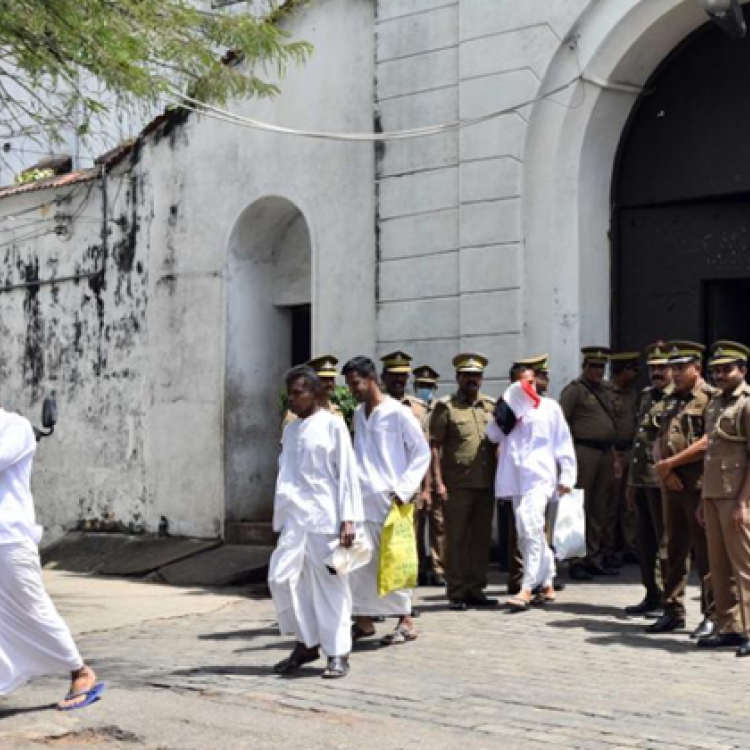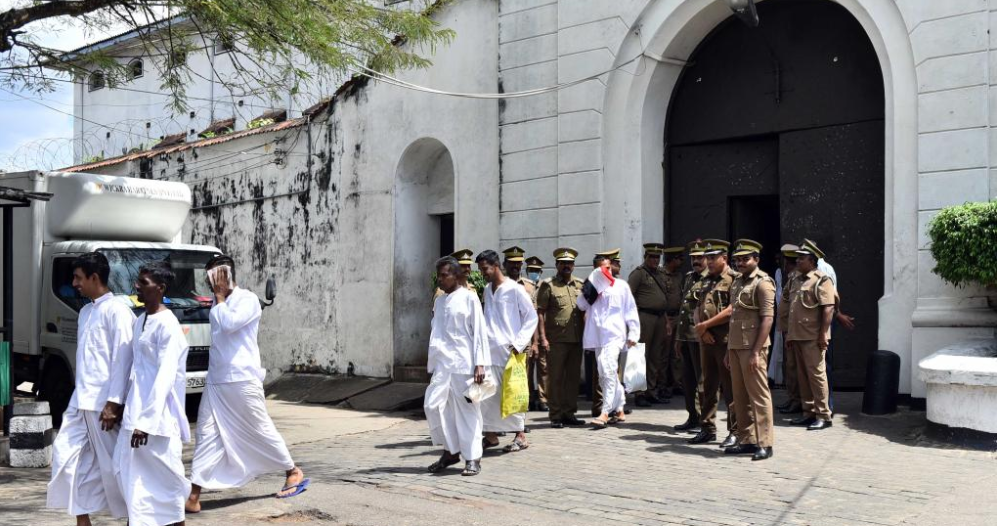
A report submitted to court by Sri Lanka’s Criminal Investigation Department (CID) has revealed that 69 inmates were released under the guise of presidential pardons despite lacking official authorisation.
These releases, which occurred between December 2024 and February 2025, are now at the centre of an ongoing criminal investigation.
According to the CID report, 57 prisoners from 29 different facilities were released on Christmas Day last year, while 11 others were freed on Sri Lanka's Independence Day, February 4. These releases were allegedly carried out without being vetted or approved under the proper presidential pardon process.
The findings are part of a broader investigation into the controversial release of an inmate from Anuradhapura Prison ahead of the Vesak festival. Senior Deputy Solicitor General Dileepa Peiris, representing the CID, told the court that the inquiry was triggered by a formal complaint submitted on June 6 by K. Prasanna Wandith, Senior Additional Secretary to the President. The probe was initiated under the guidance of the Inspector General of Police (IGP), the Senior Deputy Inspector General, and the Attorney General.
Under Article 34 of Sri Lanka’s Constitution, the process for granting pardons typically begins with a request from the Commissioner General of Prisons, followed by recommendations from the Ministry of Justice. These are forwarded to the Presidential Secretariat for final approval.
Prior to Vesak on May 12, a formal request was made to release 338 inmates under specific categories: a short-term remission for those with over a year served, full release for inmates jailed over unpaid fines, early release for elderly prisoners over 65 who had served half their terms, and partial remissions for prisoners serving 30-year sentences who had completed 20 years. Approval was granted by the Senior Additional Secretary to the President on May 9.
However, the CID report reveals that individuals not included in the approved list were falsely recorded as eligible for release and unlawfully freed. In one highlighted case, a forged letter dated June 6 was sent to the Ministry of Justice claiming that W.H. Athula Tilakaratne, an inmate at Anuradhapura Prison, had been pardoned. Prisons Superintendent M.S. Mohan Karunaratne has been arrested and remanded in connection with this unauthorised release. A second incident at the same facility is also under investigation.
Gamini Dissanayake, then Commissioner of Prisons, had publicly stated that only prisoners approved by the Sri Lankan president were eligible for amnesty, citing official directives that were issued to all prison superintendents. Dissanayake has since stepped down, citing the need to preserve the integrity of the ongoing investigation.
Justice Minister Harshana Nanayakkara, however, disputed these claims, stating unequivocally that Tilakaratne’s name was neither on the official pardon list approved by the President nor on the draft list submitted for approval. He criticised the lack of oversight by both the Presidential Secretariat and his own ministry, but assured that a full internal probe was underway to identify systemic failures.
Tilakaratne’s lawyer, Suranga Mohotti, defended his client by claiming that the release was not a legitimate pardon, but the result of a procedural lapse. Mohotti said Tilakaratne is facing multiple charges, including forgery and several counts of fraud and criminal breach of trust. Of the eight cases filed against him, one has concluded, while six remain pending.
Mohotti argued that his client has been unfairly portrayed and was never in hiding, despite public and media narratives. He also warned that Tilakaratne’s case reflects a broader pattern of questionable releases from prisons in Anuradhapura, Polonnaruwa, Negombo, and Wariyapola. If any fraudulent documentation was submitted to the High Court, Mohotti said, the Attorney General could escalate the matter to the Supreme Court. He also noted that there was no evidence of bribery by Tilakaratne, but said legal action could be taken if such claims surfaced.
Former Commissioner General of Prisons Thushara Upuldeniya has also been further remanded until June 25 as the inquiry continues into his alleged involvement.
At a public event, Sri Lanka's president Anura Kumara Dissanayake condemned the widespread corruption within Sri Lanka’s prison system and warned that officials involved in misconduct would be held accountable.
Article 34(1) of Sri Lanka’s Constitution grants the President extensive powers to pardon convicted individuals. However, the misuse of these powers has long been criticised for favouring political allies and those with influence, while marginalised groups, particularly Tamil detainees, remain imprisoned without legal recourse or hope of release.
SLPP MP Namal Rajapaksa expressed outrage on social media, accusing the President of shirking responsibility for signing off on the Vesak pardon list. “If the President does not understand the weight of his own signature,” Rajapaksa wrote, “then all future documents from treaties to defence agreements are in jeopardy.”
For Tamil political prisoners and the families of the disappeared, the scandal has reinforced long-standing criticisms of the island’s justice system. While high-profile offenders appear to benefit from loopholes and connections, Tamil prisoners continue to be denied equal treatment, legal relief, or clemency.