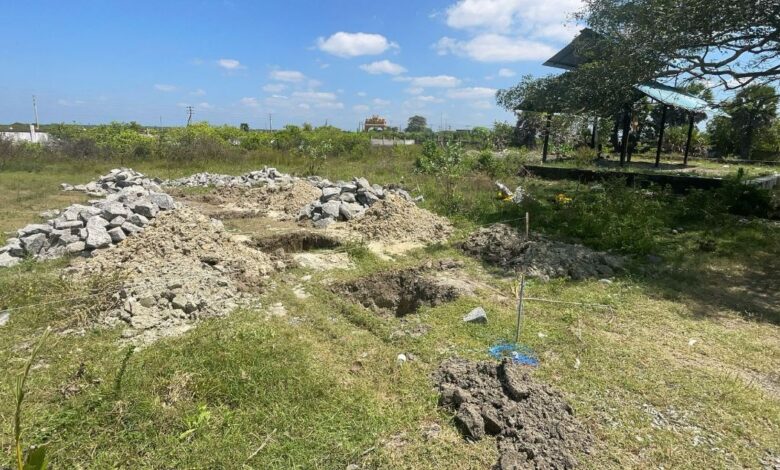
Tamil legal representatives have initiated formal proceedings in the Jaffna Magistrate’s Court, seeking to have the Chemmani-Sindubathi site officially recognised as a mass grave, following the unearthing of multiple human remains during excavation works earlier this year.
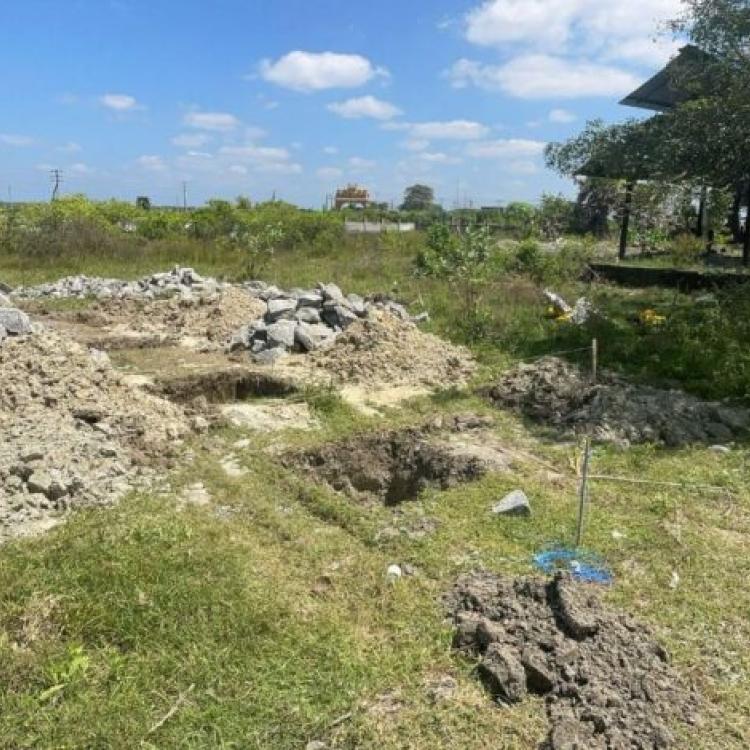
The site, located in Jaffna’s Nallur division, drew renewed scrutiny in February after several skeletal fragments were discovered during routine digging operations carried out by the Nallur Pradeshiya Sabha at the Chemmani-Sindubathi cremation grounds.
Suspicions quickly arose that the remains may be linked to the massacre of Tamil civilians in Chemmani between 1995 and 1996 - a period marked by widespread disappearances and alleged extrajudicial killings by Sri Lankan state forces. A formal complaint was filed at the Jaffna Police Station, prompting the Jaffna Magistrate to visit the site on 20 February. Based on the findings, official excavation work commenced on 15 May.
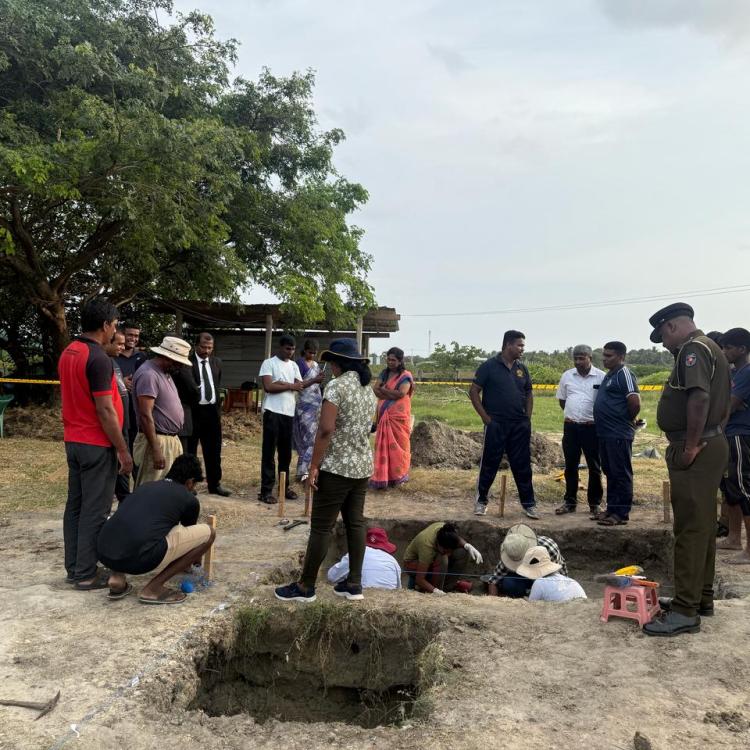
On the second day of digging, 16 May, investigators recovered a complete skeletal structure, a human skull, and a hand bone. As the remains were found in separate areas of the site, concern mounted that the area may constitute a mass grave. Excavation was temporarily halted on 17 May due to heavy rainfall and resumed shortly thereafter, with digging moved to a new section of the site due to waterlogging.
In the resumed phase of work, five additional human skulls and several sets of joint bones were unearthed. This brings the total number of skulls recovered to at least seven, alongside multiple other skeletal fragments.
According to legal and forensic standards in Sri Lanka, the discovery of more than three human skulls at a single site meets the threshold for a location to be declared a mass grave. Legal representatives confirmed they would file submissions with the Jaffna Magistrate’s Court to have the site formally recognised as such.
The Chemmani site has long been a symbol of unresolved wartime atrocities. In 1998, after a Sri Lankan soldier testified about the presence of mass graves containing the bodies of Tamils killed in custody, excavations in Chemmani led to the recovery of several skeletons but the state failed to pursue further investigations. The recent findings have renewed calls for accountability and comprehensive forensic examination of the site.