OPINION

Opinion

Latest news from and about the homeland

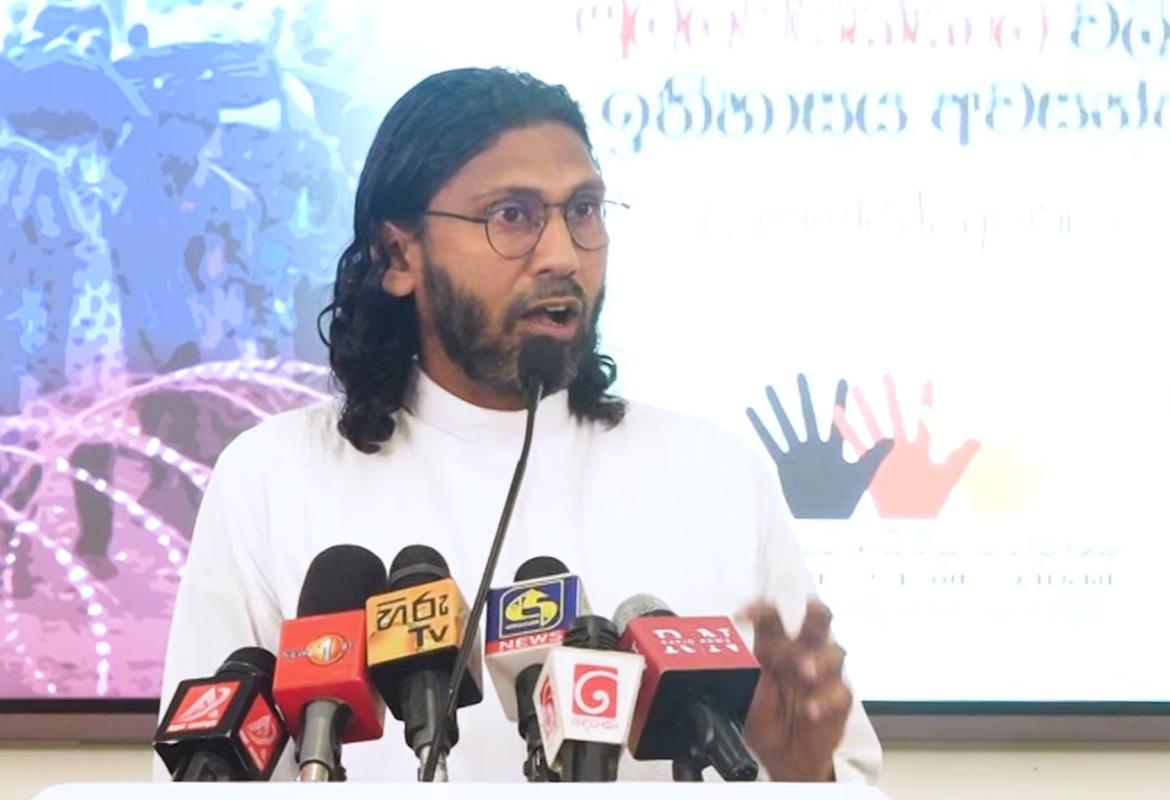
The full text of a speech delivered by Father Jeewantha Peiris on May 16, 2026, at the SEDEC Caritas Hall, at an event organised by the Movement for Equal Rights. _____ I think it is very important that in this evening’s discussion we ask the question of whether Mullivaikkal marks the end of history, because what we are still reading is history written by someone. Most of the time, we…

Heeding Victims’ Voices: The Struggle of Tamil Families of the Disappeared in Sri Lanka
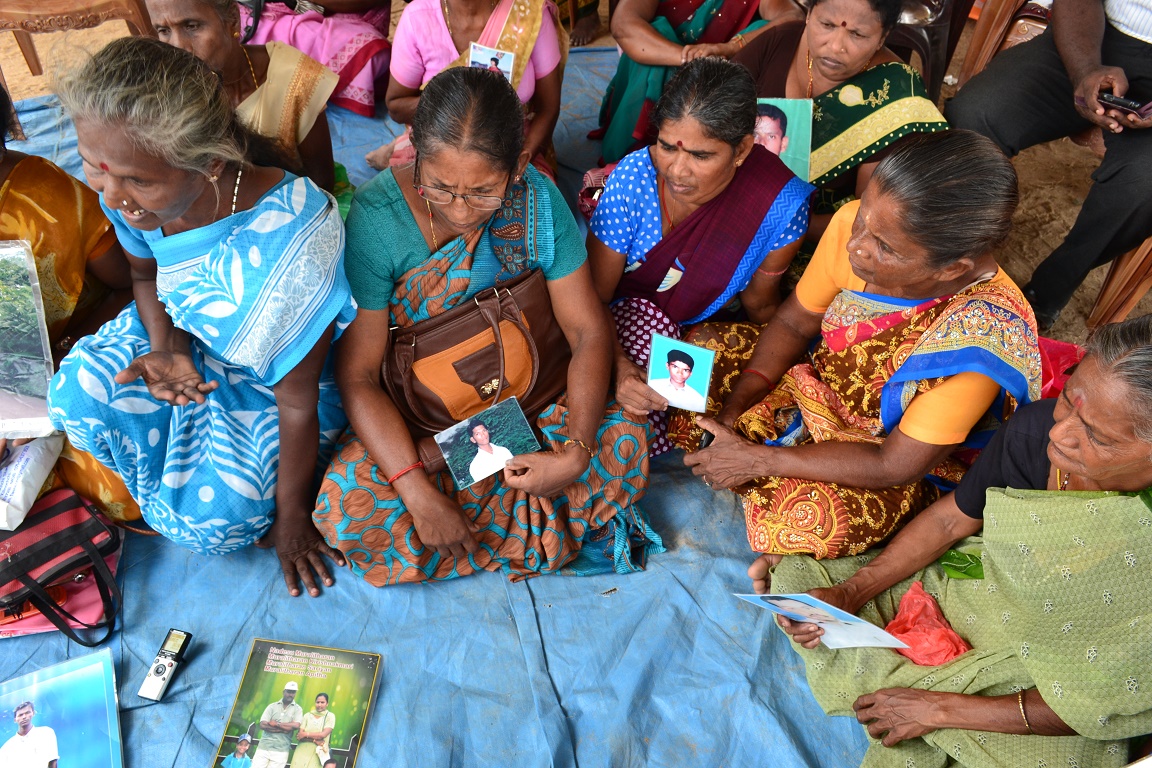
Writing in Just Security, Dharsha Jegatheeswaran, Co-Director of the Adayaalam Centre for Policy Research, a human rights think-tank based in Jaffna, illustrates how the “Tamil families of the disappeared have shown, there is no hope for truth and justice domestically in Sri Lanka”.

“The only way to provide these families their long-overdue answers and justice to all victims in Sri Lanka is to break the seal around the military through international accountability”, she maintains.

Sri Lanka’s Evasion of Accountability Tests the Limits of the International Human Rights System

Writing in Just Security, former Senior Lecturer in Law at University of Jaffna, Dr Kumaravadivel Guruparan, highlights the failure of the international community to hold Sri Lanka’s war criminals to accounts and calls for “an honest debate on the inherent limits of the human rights system in preventing ongoing violations and dealing with historical atrocities”.

Universal Jurisdiction — the Most Difficult Path to Achieve Justice for Sri Lanka

In light of previous futile domestic efforts to prosecute Sri Lankan war criminals, Andreas Schueller, Director of the International Crimes and Accountability Program at the European Center for Constitutional and Human Rights (ECCHR) highlights the failure to prosecute Sri Lanka's war criminals under universal jurisdiction and highlights the need for a UN investigative mechanism to pursue accountability for Sri Lankan war crimes.

Germany's one-sided prosecution of war crimes

‘Myanmar and Sri Lanka: Bound by Travails’

Writing in The Diplomat this week, Tamil Guardian features editor Thusiyan Nandakumar said the February coup in Myanmar “should serve as a wake-up call when it comes to Sri Lanka”.

Tamils and Justice can’t wait: The Need for Decisive UN Action on Sri Lanka

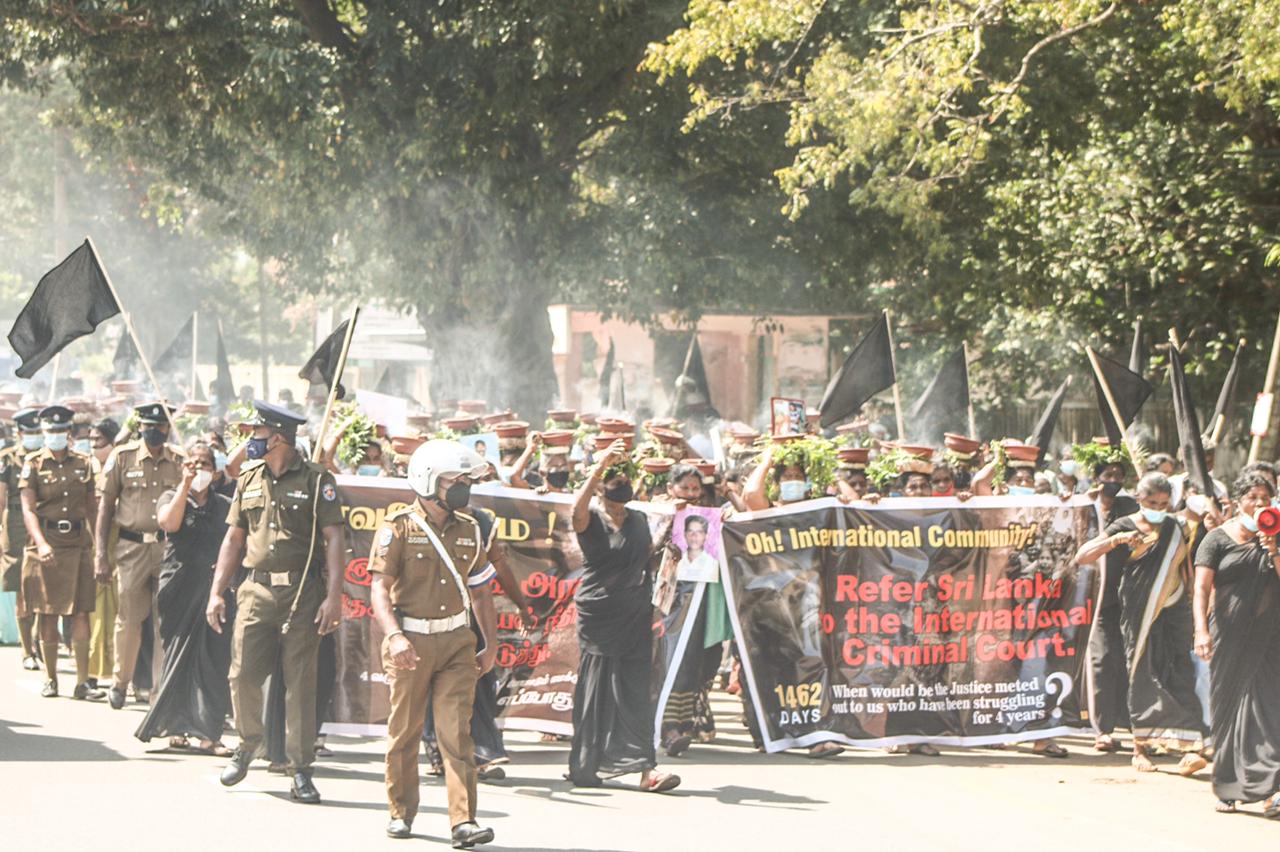
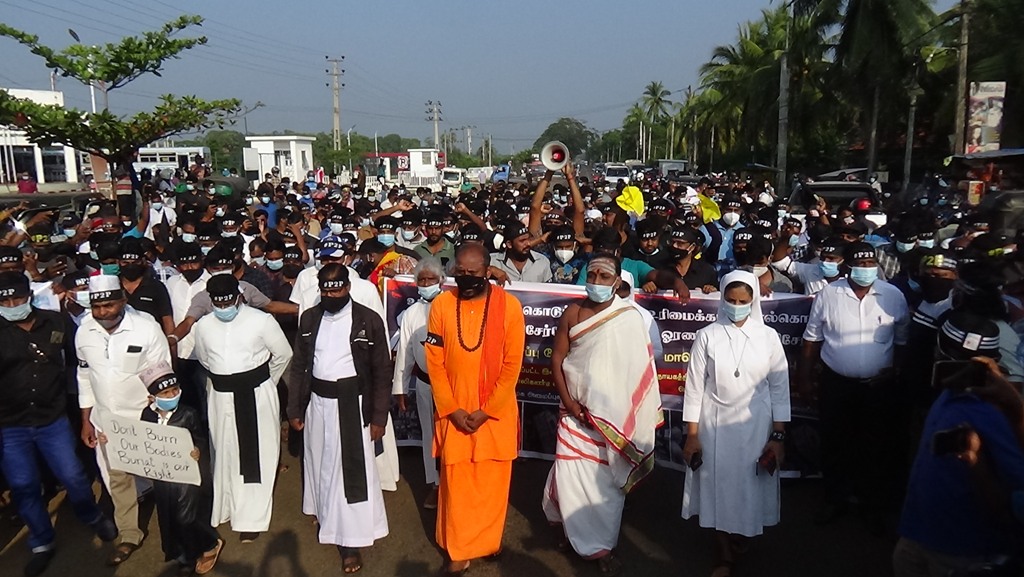
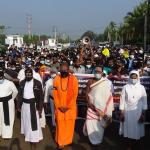
(Photo of  Kilinochchi protest 20 February 2021)

Writing in Just Security, Tasha Manoranjan, Executive Director of People for Equality and Relief in Lanka (PEARL), highlights that a failure to address impunity in Sri Lanka has “very real consequences, even beyond the preservation of international rule of law”.

A growing crisis in Sri Lanka

Writing in the Hindu, Meenakshi Ganguly, South Asian Director at Human Rights Watch, calls upon India to fulfil its obligations and support a strong resolution at the next UN Human Rights Council session which aims to “reduce the growing risk of future atrocities” in Sri Lanka.

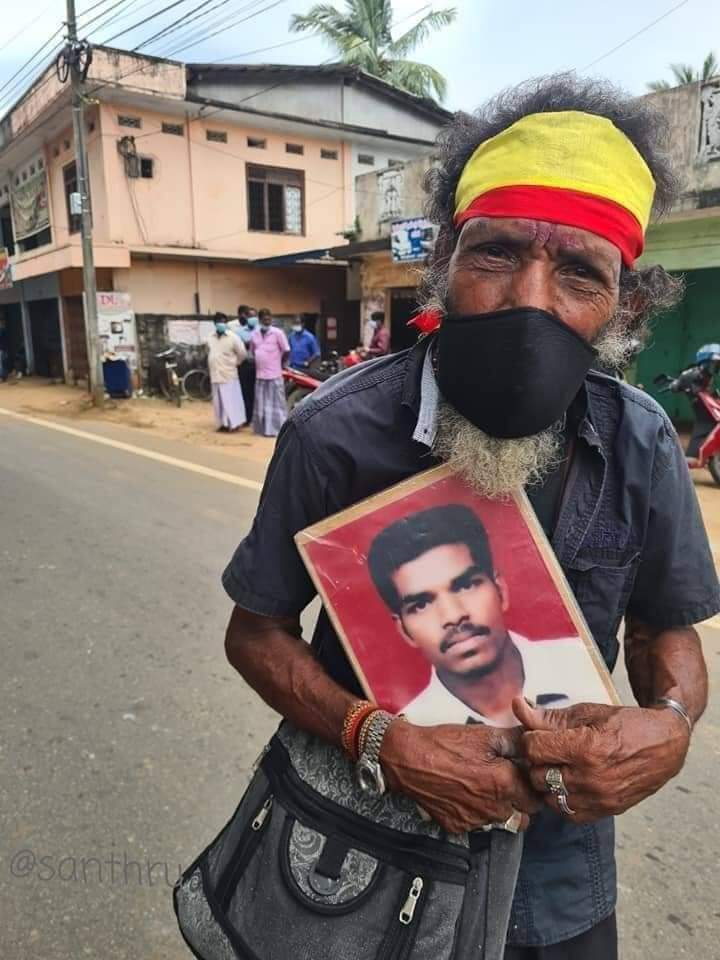
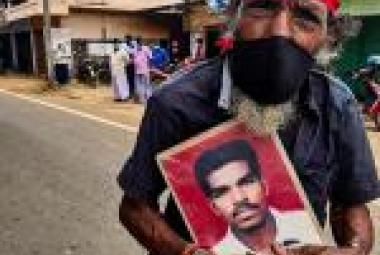
Muthiah’s search for his son

Last week, photographs of Muthiah Theivendran, a Tamil father searching for his forcibly disappeared son, went viral across social media.

Muthiah was part of the tens of thousands of Tamil protestors who rallied across the North-East earlier this month, during the Pottuvil to Polikandy demonstration. But it wasn’t the image of him marching alongside the masses that caught the attention of social media users. Instead, it was a photograph of the elderly, bearded gentleman, cutting a desolate figure, as he walked barefoot and alone after the protest had ended.

He was still wearing his mask, his red and yellow headband from the protest and still clutching a photograph of his disappeared son.

Echoes of the past in a new phase for the Tamil Struggle: #P2P and beyond

Writing in the Daily FT, Mario Arulthas, strategic advisor for People for Equality and Relief in Lanka (PEARL) and PhD student at SOAS University, reflects on the legacy of the P2P marches and notes that “the fundamental spirit […] echoes that of the first significant post-independence mass-mobilisation in 1956”.

Not All Detainees Are Equal: Class, Ethnicity and the Prevention of Terrorism Act

The Sri Lankan state portrays those arrested for allegedly committing terror offences, to date mainly Tamils, and after the Easter attacks also Muslims, as guilty from the point of arrest, writes Ambika Satkunananthan in GroundViews.

Against the Memory Police: War and Remembrance in Sri Lanka

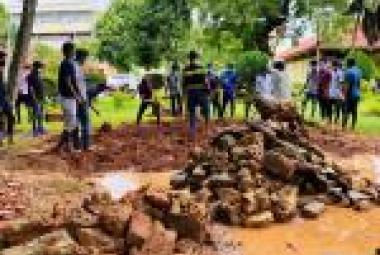
The destruction of the Mullivaikkal monument at the University of Jaffna on January 8 is an erasure of collective memory, writes Thamil Venthan Ananthavinayagan in The Diplomat.

Ananthavinayagan, a lecturer in public international law writes: