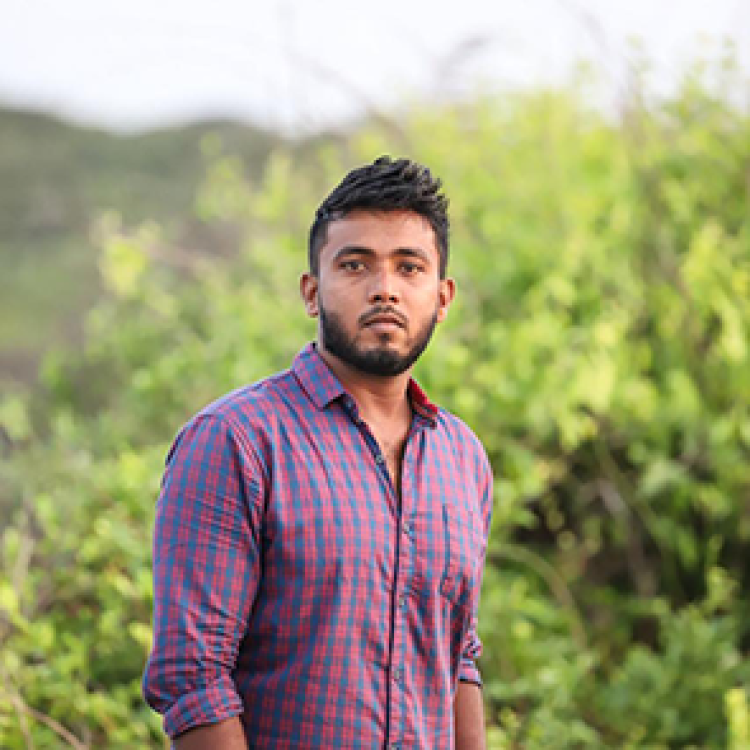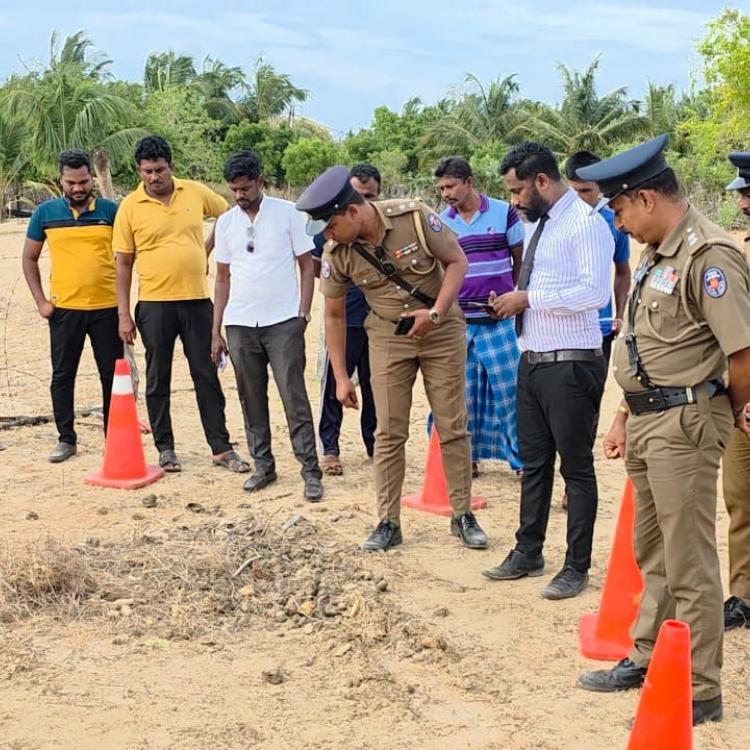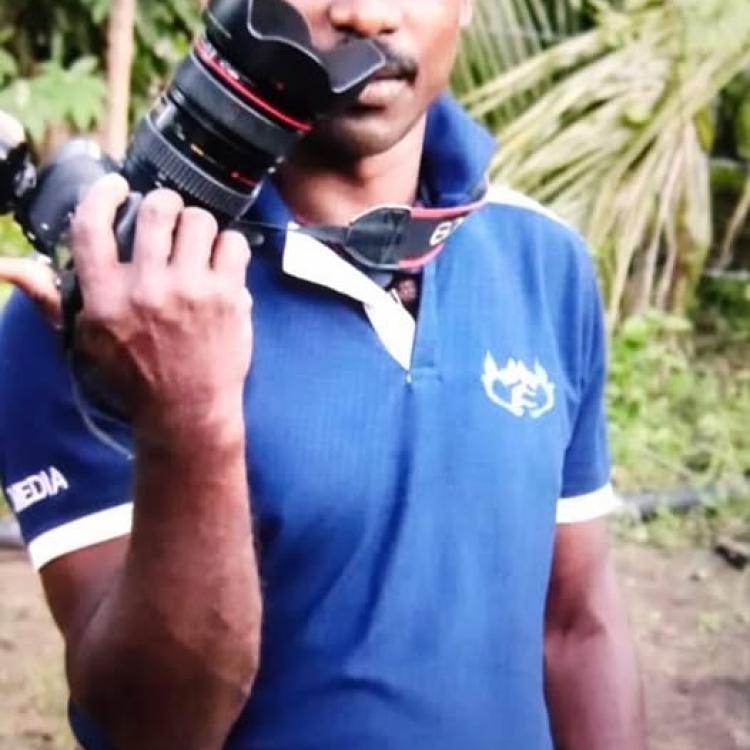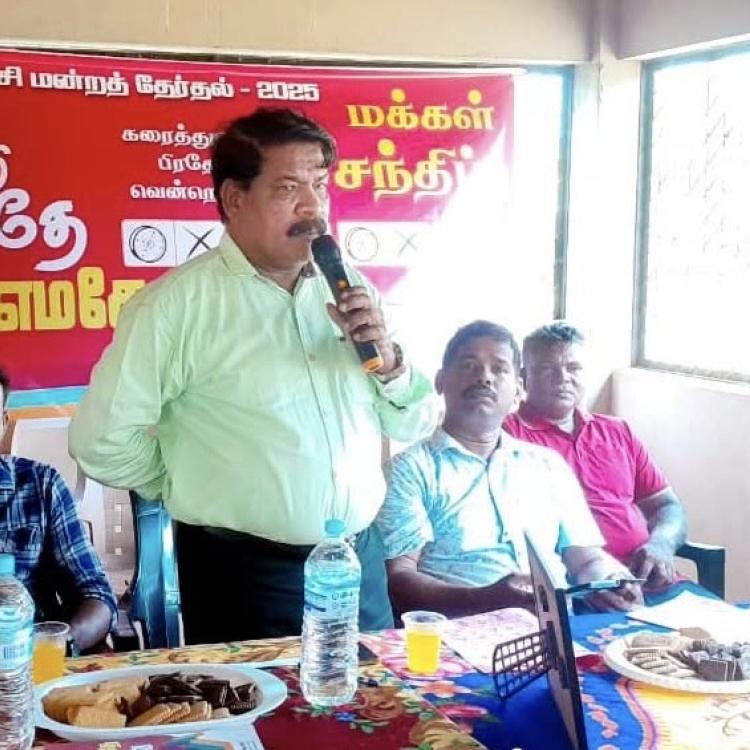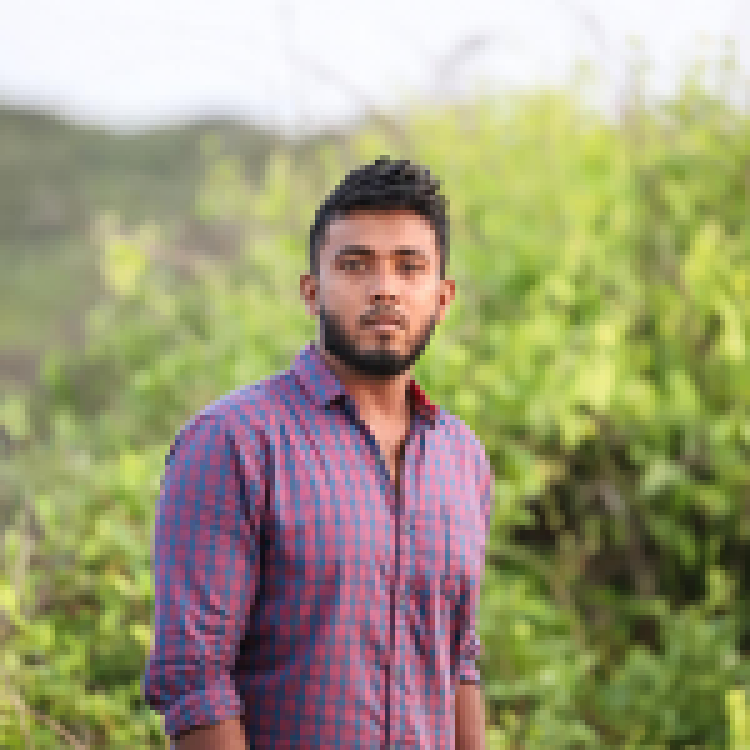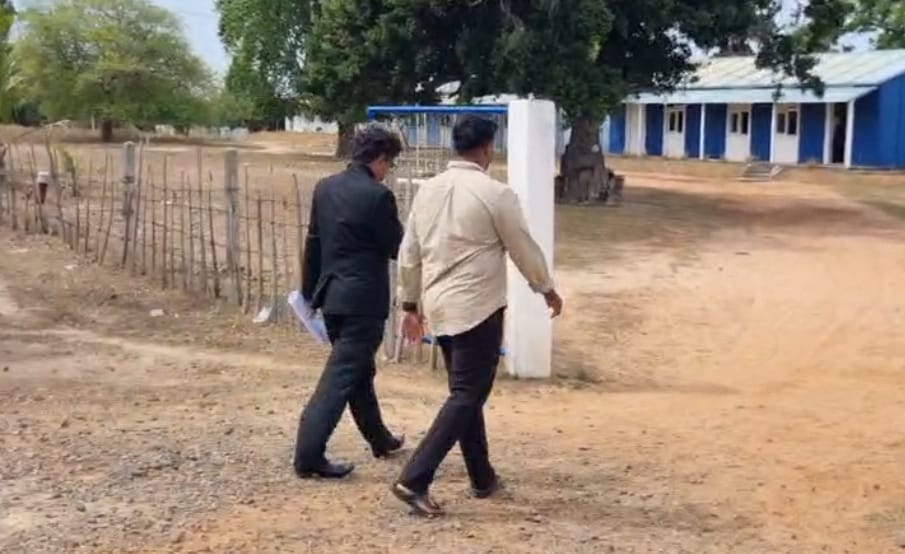
Tamil journalist, Kanapathipillai Kumanan, was subjected to an almost seven-hour interrogation by Sri Lanka’s Counter Terrorism and Investigation Division (CTID) on Sunday, in what press freedom advocates have denounced as part of a continuing campaign of harassment against Tamil media workers.
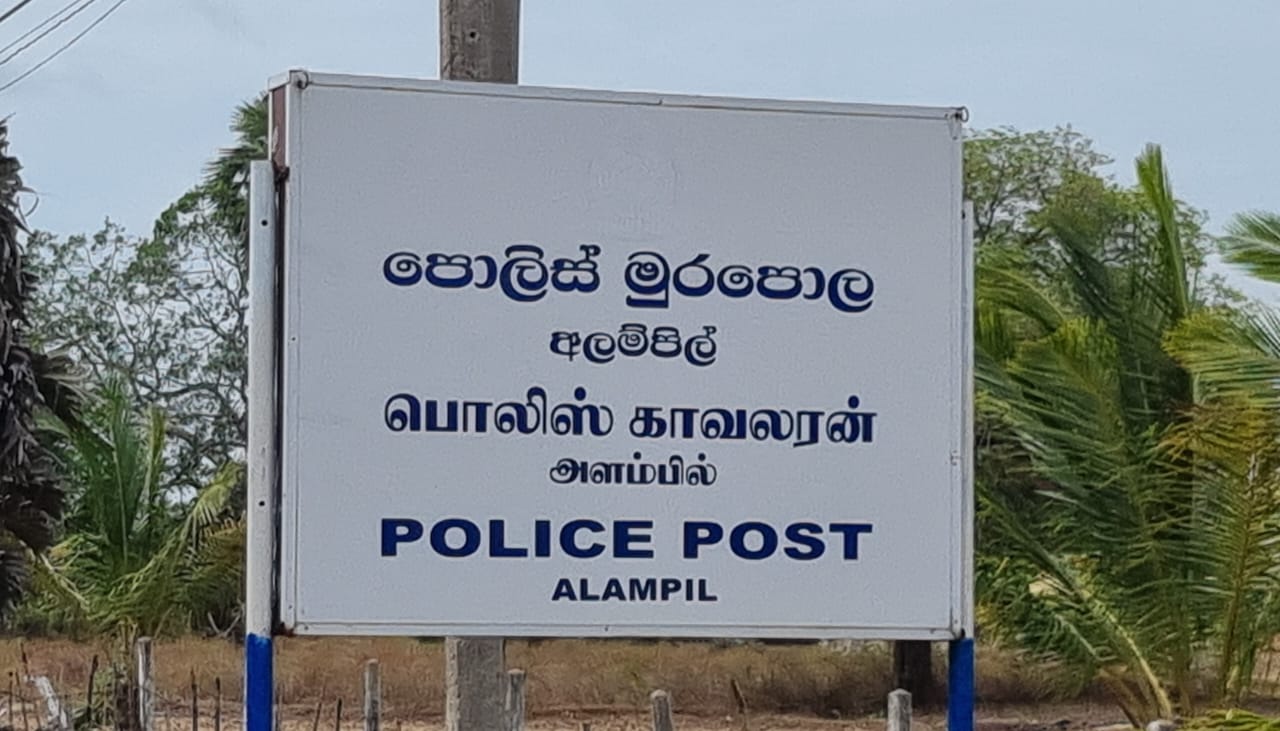
Kumanan, who has long reported on rights abuses and the militarisation of the North-East, presented himself at the CTID office located inside the occupying Alampil Police Station, Mullaitivu, accompanied by his legal team.
Following the marathon questioning, he posted online:
“Yesterday, I was interrogated by the Sri Lanka Police Counter Terrorism Investigation Division (CTID) 6 hours and 45 minutes. The questioning covered my journalism and photography work, Social media’s activities, financial activities, phone records, and overseas visits. I am deeply grateful for the unwavering solidarity, support, and love I have received. Your encouragement strengthens my resolve to continue fact-based reporting and to carry forward my work in the days ahead.”
‘Extreme investigation’
Speaking to reporters outside the police station, his lawyer described the ordeal as an “extreme investigation.”
“Kumanan has been through extreme restrictions when being investigated,” he said.
“In this investigation they looked at his details, bank transfer, communication and inquired him about his writings as a journalist for the community. Now it has been declared that if more information is required from Kumanan he will be called again for a second inspection.”
The lawyer continued by pointing to the double standards at play, noting that Southern Sinhala authors openly publish works referencing the Liberation Tigers of Tamil Eelam (LTTE) without facing harassment, while Tamil journalists are criminalised for the same.
“At present, the law is being applied in two very different ways. Laws passed in Parliament in the South are framed to uphold the ideals of the Sinhala-Buddhist majority. Otherwise, these investigations would be openly debated in society. Instead, there is a ban on publicly reporting or disclosing them. But that does not mean such restrictions cannot be challenged.”
“Take the issue over whether the term “Tamil Eelam” can be used. From a geographical perspective, there is nothing wrong with using this name to describe the Tamil-speaking areas of the North and East. Just because the LTTE popularised the term, and even though the LTTE is a banned organisation, it does not mean the name itself cannot be used. In fact, the phrase “Tamil Eelam” was first coined in 1922 by Sir Ponnambalam Arunachalam—a figure still celebrated in the South.”
“Similarly, cultural and historical symbols such as the karthigai flower, the tiger, and the senbagam bird are deeply rooted in our history. The ancient tiger flag of the Cholas, for example, cannot be erased simply because it was later used during the 33-year war. No one has the authority to erase our history.”
Escalating pressure on Tamil journalists
The latest summons is not an isolated incident. This harassment stretches back almost a year. In October 2024, CTID officials went to his family home in Mullaitivu, claiming they had received a complaint that he was “working from abroad to draw international attention to the rights issues faced by the Tamil people.” Though Kumanan was in Jaffna at the time, officers pressed his family members for testimony. When contacted by phone, they admitted they were unaware he had been living in the country for six months.
Kumanan told them not to harass his parents and insisted they summon him directly if questioning was required. Although officials promised to issue a summons within a week, none materialised until ten months later.
When the summons finally arrived in mid-2025, the CTID claimed an investigation had been launched into his social media activity and visited his residence once more to serve a formal notice.
Interrogation inside the “Alampil Post”
On Sunday, Kumanan and his lawyers were escorted into the Alampil police premises and what locals call the “Alampil Post” — a site notorious in Mullaitivu for killings and military operations. There, the CTID officer in charge, alongside three policemen, interrogated him for more than six hours.
According to his lawyer, officers pored over details of his bank records, communications, overseas visits, and social media activity, as well as his journalism and photography. At the end of the session, they warned him not to speak about what had taken place “or any matters relating to military intelligence” and indicated that further investigations were to follow.
“They also said he would be called again,” his lawyer said.
“As his legal advisor, I can firmly say that the work he has carried out is the normal work any journalist does. For example, accessing someone’s bank account information legally requires a court order—yet in Kumanan’s case, this due process has not been followed. The investigation is one-sided and unjust, and we will be raising greater awareness about it in the future.”
Broader crackdown on Tamil media
The interrogation has sparked widespread condemnation from rights advocates. For years, Tamil journalists have reported harassment, intimidation, and surveillance by Sri Lanka’s security forces, particularly when covering genocide-related issues such as disappearances, land occupation, or Tamil memorialisation.
Tamil reporters have been threatened with the confiscation of their equipment, subjected to house raids, and even violent attacks, with investigations into these incidents rarely producing accountability.
In its 2024 Country Reports on Human Rights Practices, the U.S. State Department noted a “persistent trend of surveillance, intimidation, and harassment of journalists and civil society actors, especially those working on enforced disappearances, land seizures, environmental issues, and with former combatants in the north and east.”
For Kumanan, however, the resolve remains firm. As he put it after his release:
“Your encouragement strengthens my resolve to continue fact-based reporting and to carry forward my work in the days ahead.”