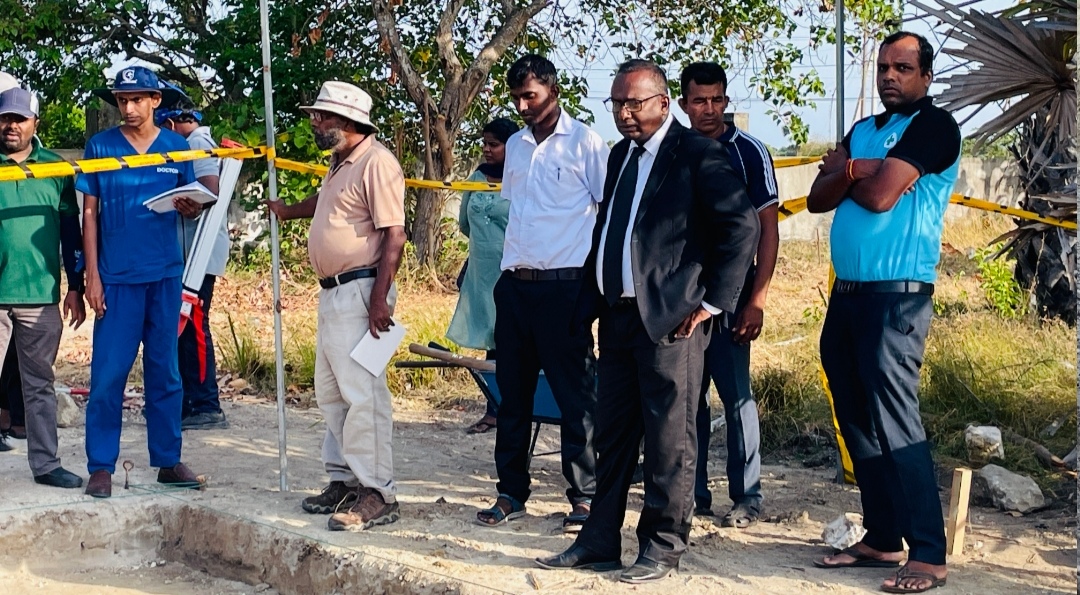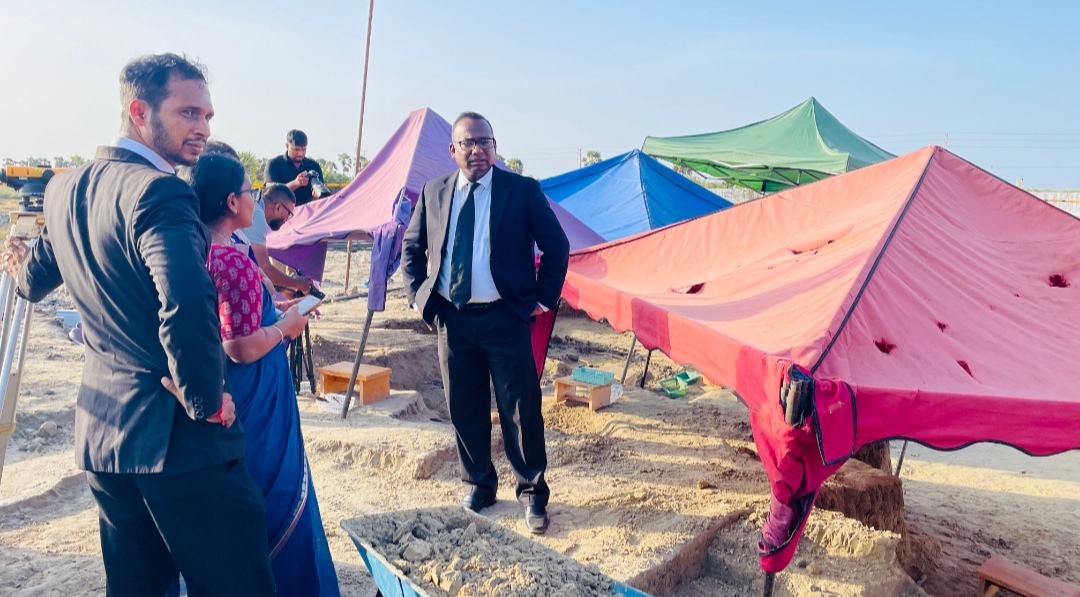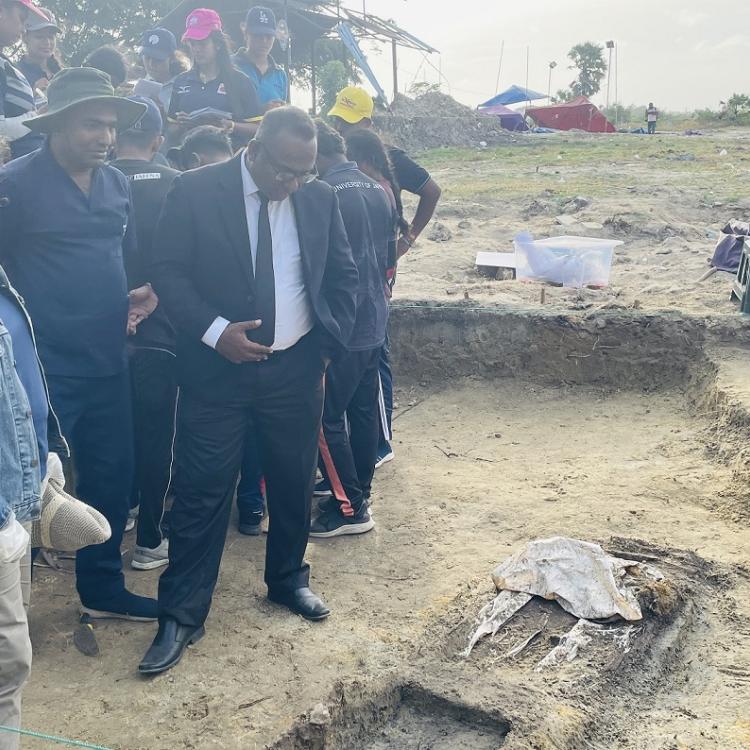
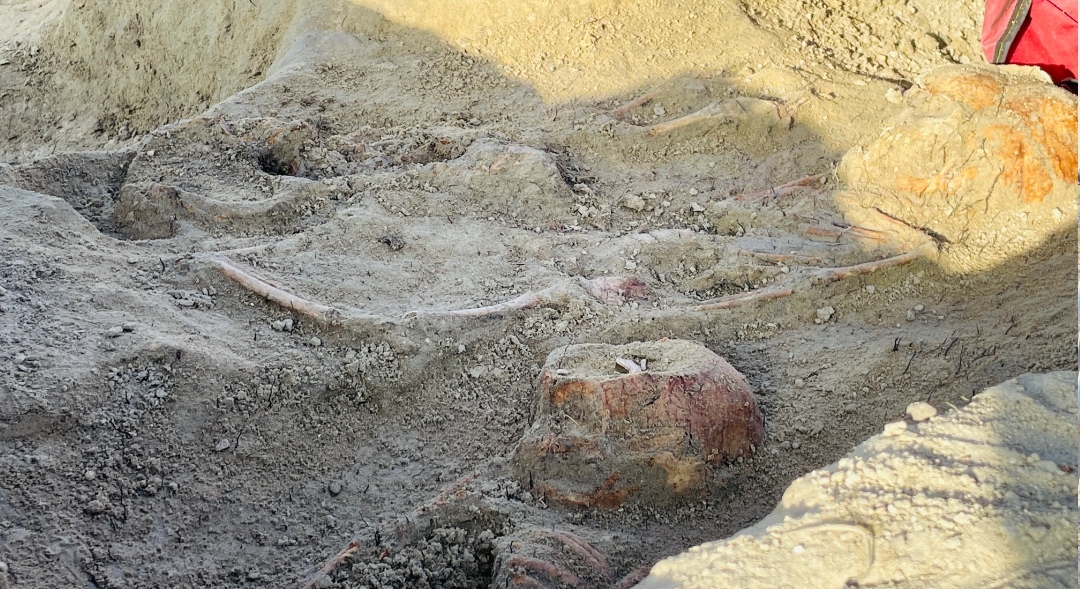
Excavations at the Chemmani mass grave site in Jaffna have revealed further chilling discoveries, with the number of identified skeletal assemblages now rising to 118, including one adult skeleton found in a posture cradling the remains of a small child.
Of these, 105 have been fully exhumed, shedding new light on the scale of atrocities believed to have been committed by Sri Lankan state forces during the armed conflict.

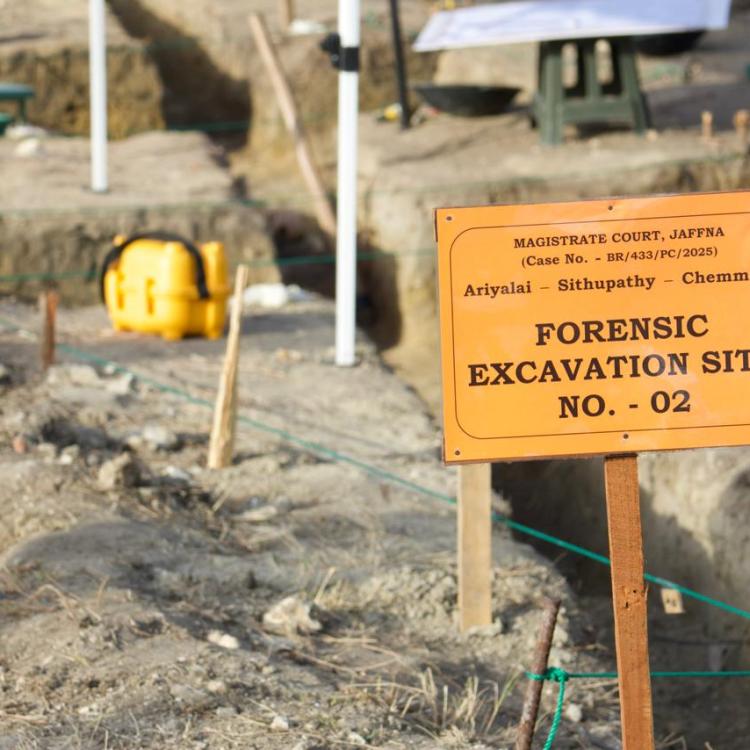
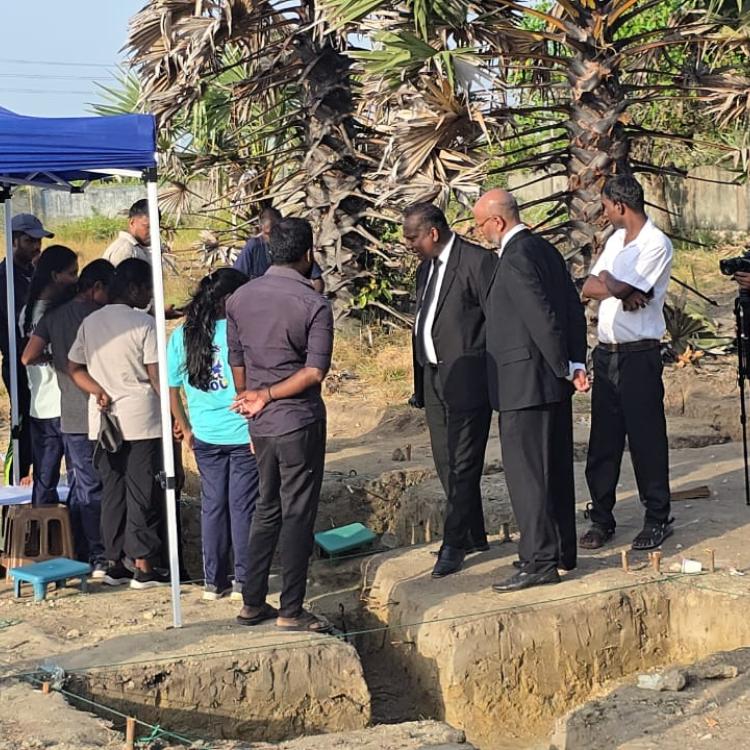
On Thursday, forensic teams uncovered three more sets of human remains at the two court-designated sites, Forensic Excavation Site No. 01 and Site No. 02, bringing the total number of fully exhumed skeletons in this ongoing phase to 40.
The bodies of several infants and children have already been found on the site – one of the island’s largest mass graves. The latest discovery of an adult cradling a child raises more concerns about how those who were buried there were killed.
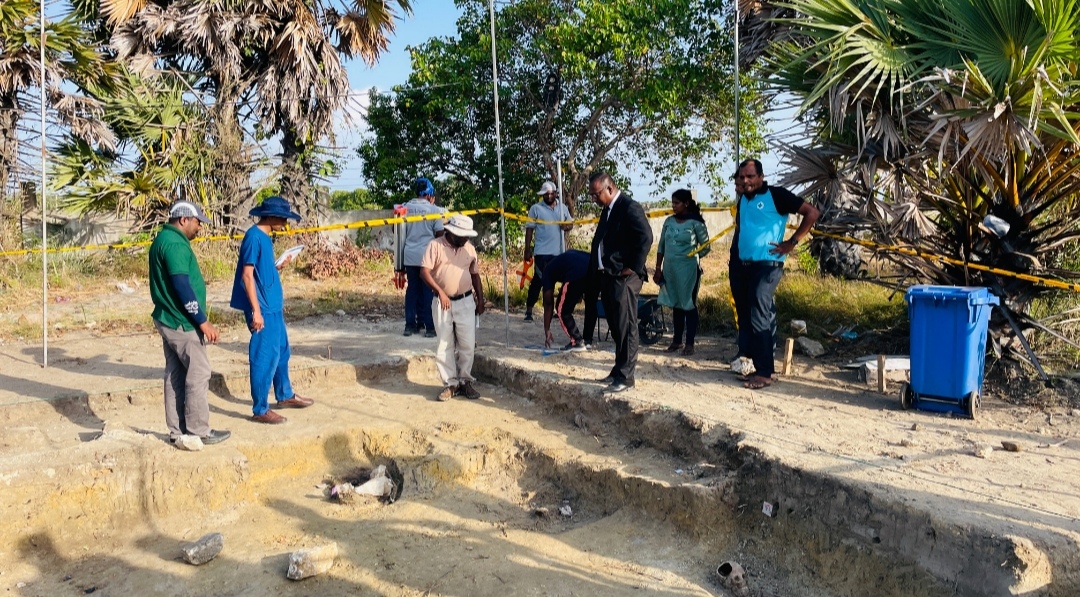
International attention also continues to grow. On Wednesday, the Swiss Ambassador to Sri Lanka, Siri Walt, led a delegation to the Chemmani sites, where they consulted with forensic experts and observed the excavation process.
Meanwhile, delays in securing Ministry of Defence clearance for the use of Ground Penetrating Radar (GPR) technology have impeded broader scanning efforts at the site. In response, arrangements have been made to acquire scanning equipment through the University of Jaffna, in coordination with the University of Sri Jayewardenepura. GPR operations are now scheduled to begin on Monday.
The excavation is currently in its second phase, with 45 days authorised by the courts for this round of work. Thursday marked the 26th day of this phase, and the 11th day of its second segment. Altogether, the investigation has spanned 35 working days, conducted in structured phases since the site’s re-excavation was ordered.
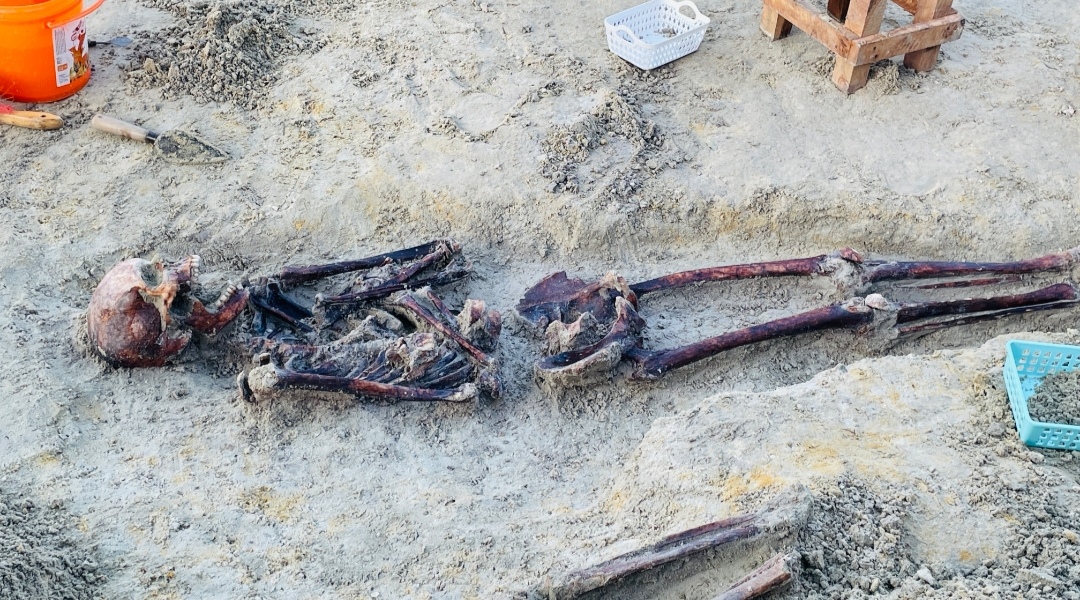
The Chemmani site has long been associated with allegations of mass killings and enforced disappearances carried out by Sri Lankan armed forces in the 1990s. First brought to public attention in 1998 by a Sri Lankan soldier, the site is widely believed to contain the remains of Tamils who were detained, tortured, and executed during military operations in the North-East.
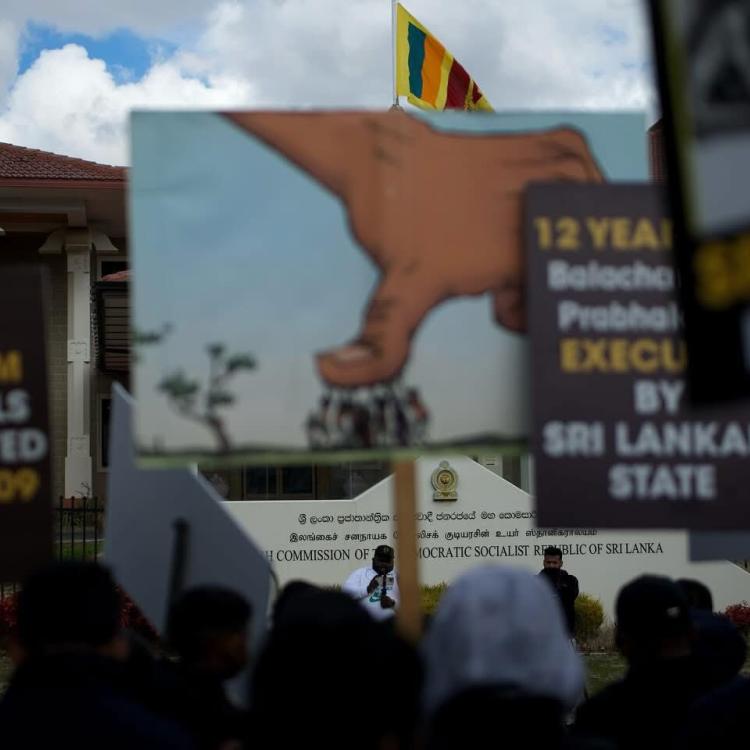
The Chemmani mass grave, alongside others discovered across the Tamil homeland - including in Mannar, Batticaloa, and Mullaitivu - stands as damning evidence of Sri Lanka’s legacy of state violence and impunity. Tamil families and human rights advocates continue to demand a credible international investigation, rejecting domestic mechanisms that have repeatedly failed to deliver justice.