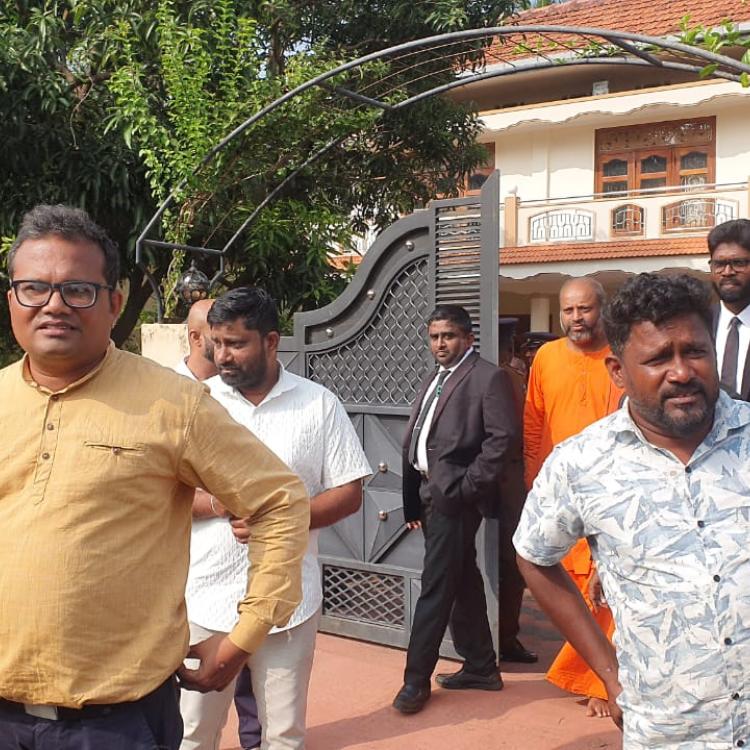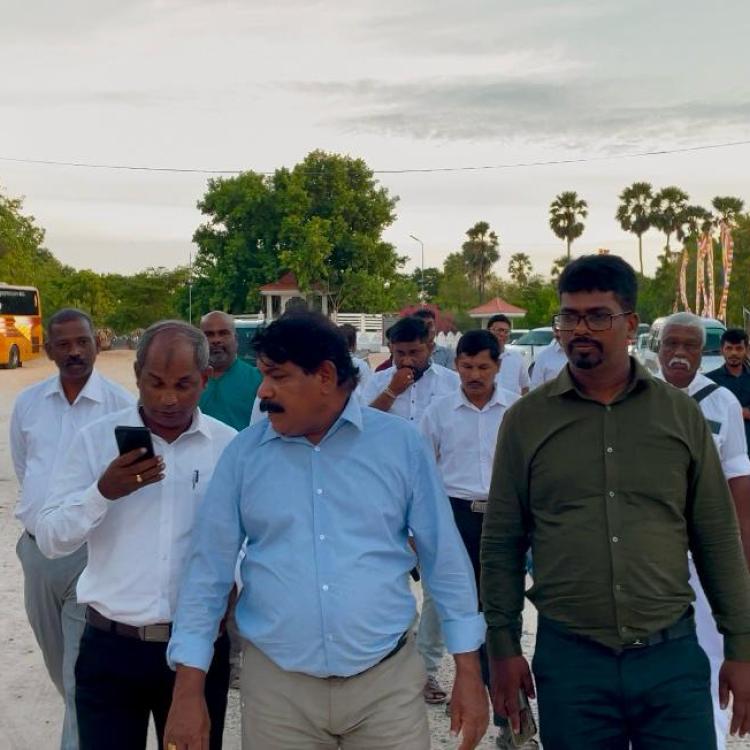
The Chief Incumbent of the Nainativu Nagadeepa Vihara, Sri Navadagala Paduma Keerthi Tissa, has strongly criticised the seizure of privately owned Tamil lands for the construction of the Thaiyiddy Tissa Vihara in Jaffna, describing it as a serious wrongdoing carried out in collaboration with the Sri Lankan military.
Speaking to the media after visiting the site earlier this month, the senior monk said it was entirely unjustifiable to forcibly acquire private Tamil land when land already belonging to the Thaiyiddy Tissa Vihara existed. He stressed that a Buddhist monk should never have engaged in such an act.
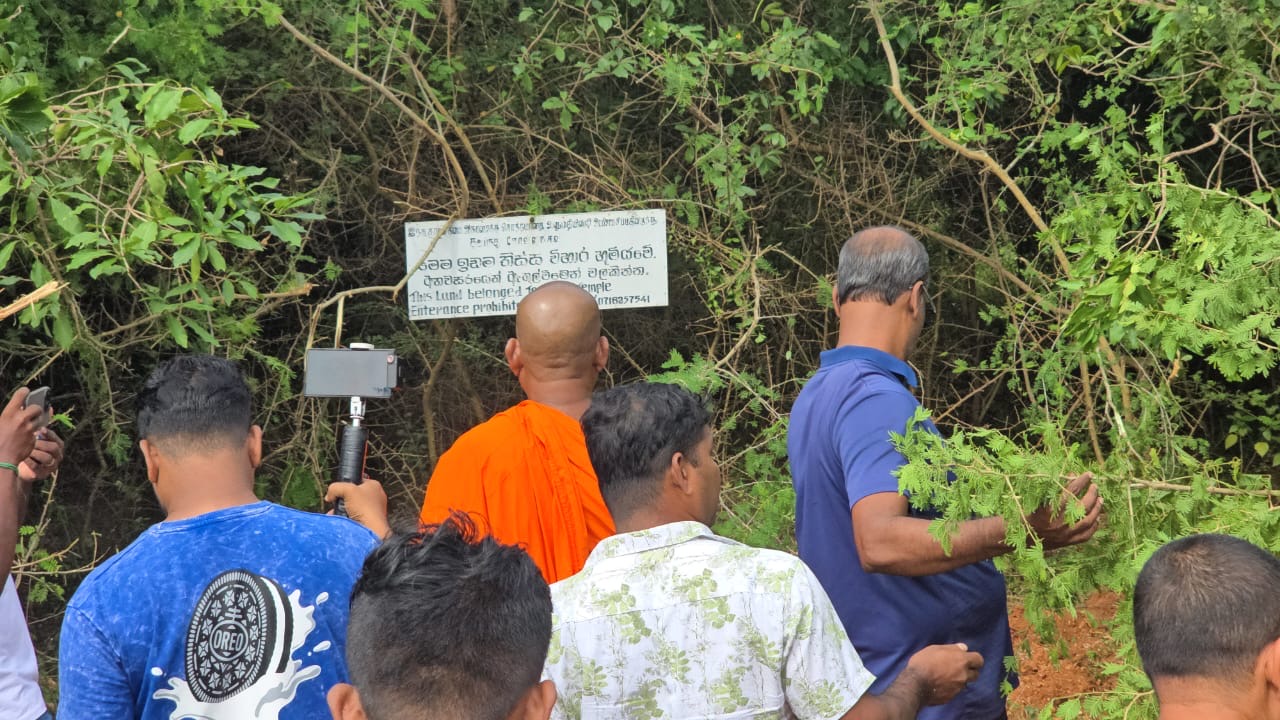
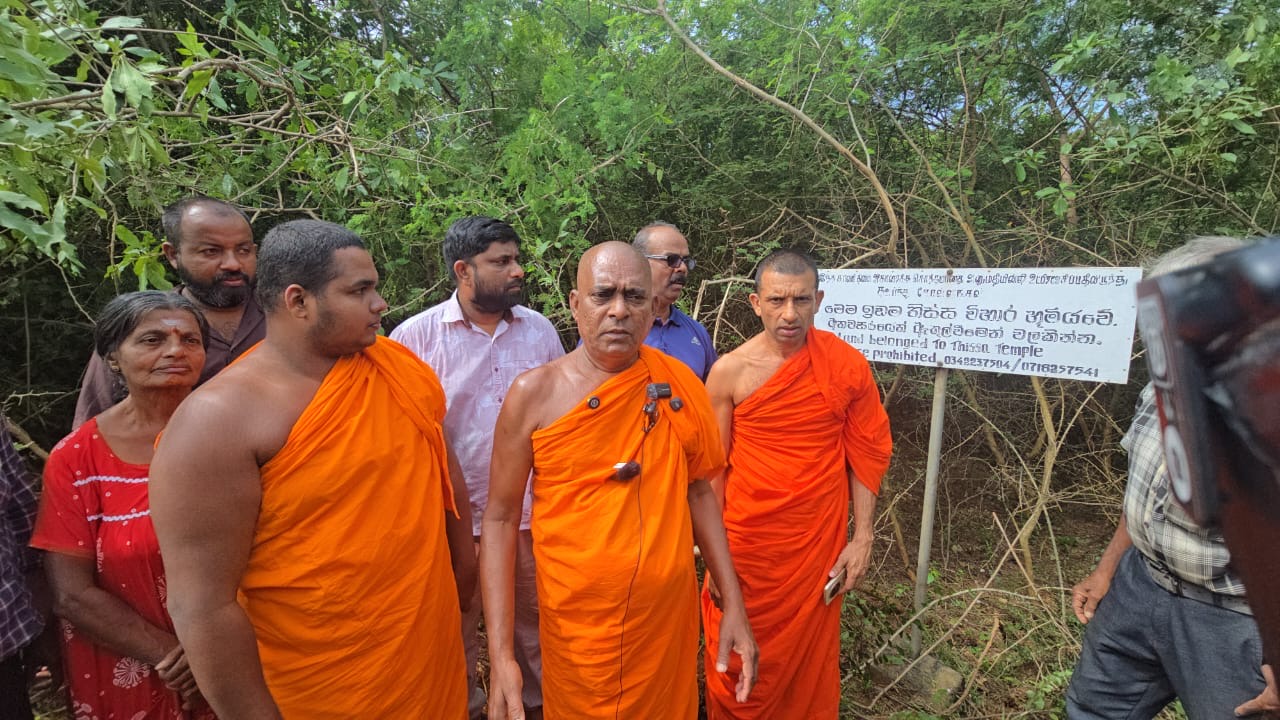
A group of Buddhist monks led by the Nagadeepa chief incumbent visited the area where the Thaiyiddy Tissa Vihara is located, where they met with Tamil landowners who lost their property for the construction of the Buddhist temple. The delegation also inspected the location where the Tissa Vihara previously stood, as well as lands already belonging to the vihara, before addressing the media.
Further elaborating, Paduma Keerthi Tissa said the land on which the Thaiyiddy vihara currently stands consists of privately owned plots. Despite this, and despite the existence of vihara-owned land, private lands were seized with military involvement and construction proceeded regardless. This, he said, amounted to a grave injustice.
“We who preach to others have been taught by the Buddha himself that one should not take what belongs to another,” he said.
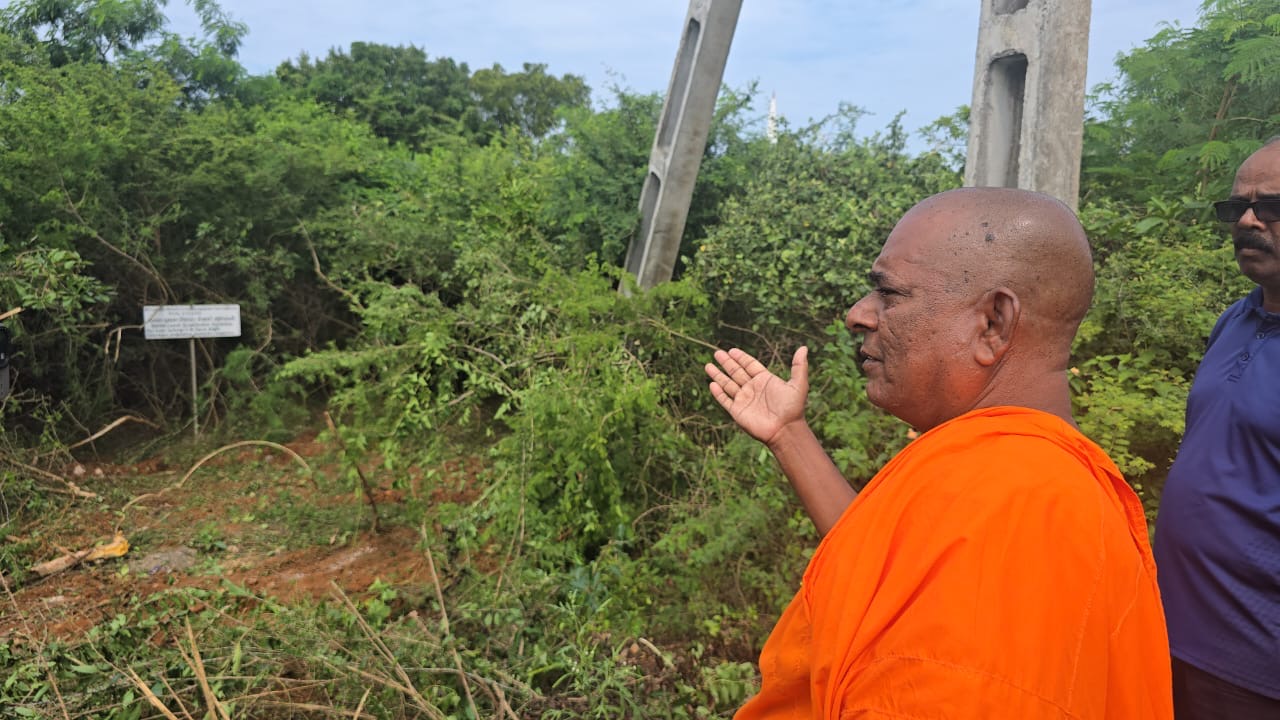
He also rejected claims that the seized lands would be released in four phases, describing such assurances as deceptive. He warned that in practice, years often pass between each phase, and emphasised that the land must be released in full, without delay.
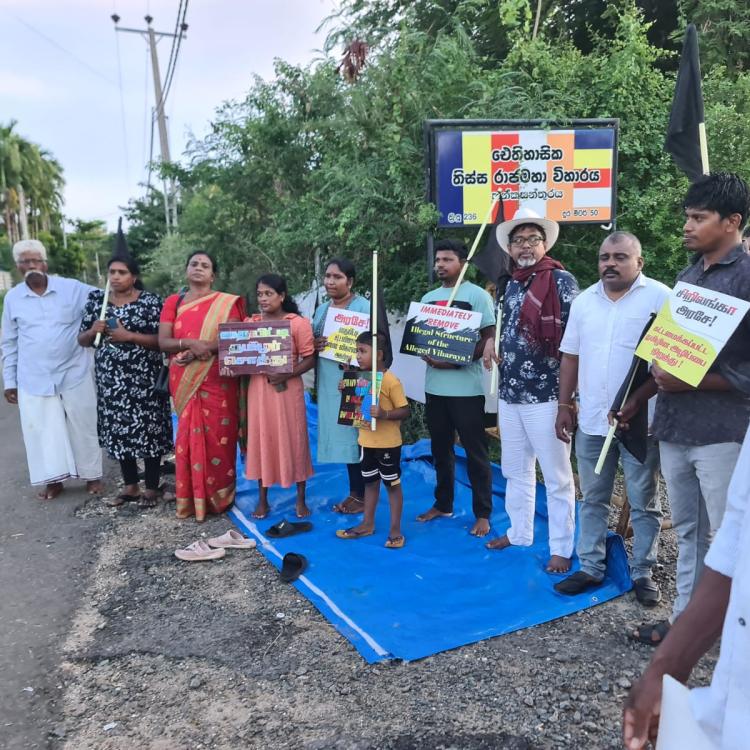
The chief incumbent described the protests by affected Tamil residents as just and legitimate, stating that this was precisely why he had chosen to raise his voice in support of their demands. He added that following his intervention, the Chief Incumbent of the Jaffna Vihara had also expressed agreement with his position. Subsequently, the Chief Incumbent of the Thaiyiddy Vihara addressed the media and stated that no new construction would be undertaken at the site.
Appealing directly to the Inspector General of Police and senior police officials, Paduma Keerthi Tissa urged that legal action against protesting landowners be halted.
“These people, having lost their lands, are standing on the streets and protesting. If their lands are returned, they will not protest. Therefore, the Sri Lankan police should not impose restrictions on protests, but instead ensure protection for those who are demonstrating,” he said.
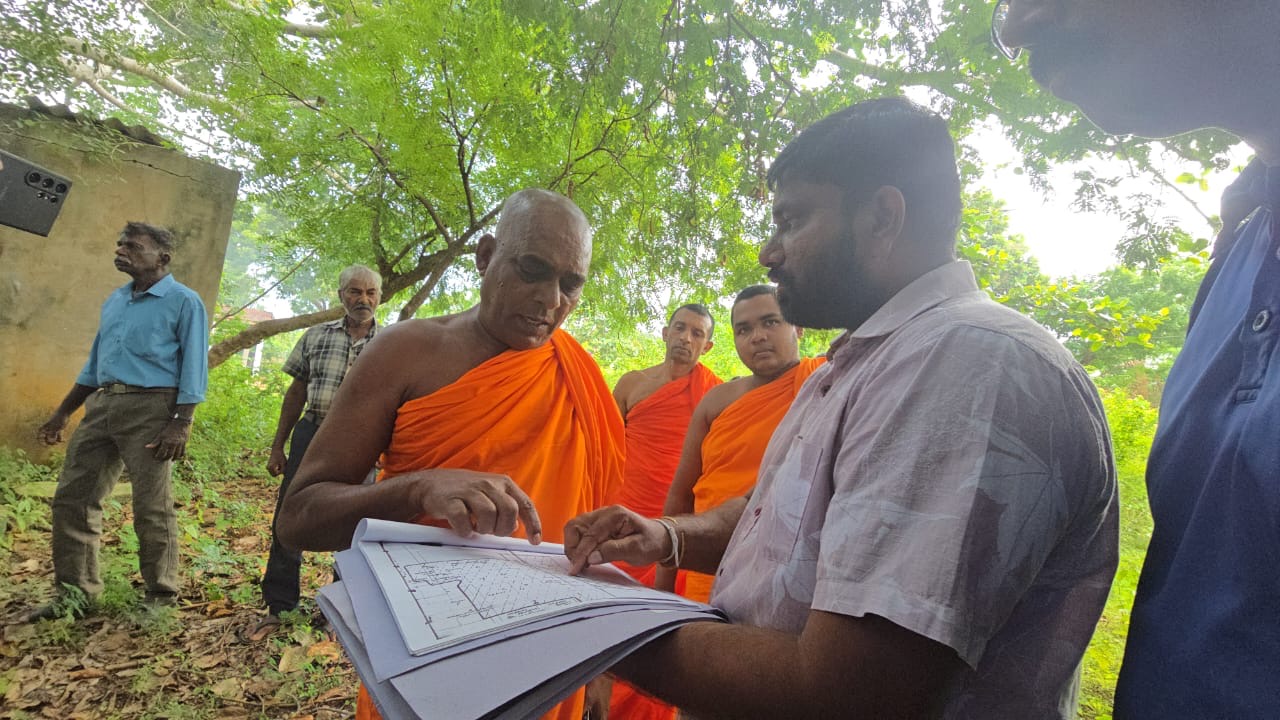
Meanwhile, tensions have escalated following a warning issued by the Sri Lankan police to the Valikamam North Provincial Council. At a council meeting held on the 18th of December, members resolved to install a multilingual notice board in front of the Thaiyiddy Vihara stating, “This is an illegal building.”
Following this resolution, the Officer-in-Charge of the occupying Valikamam North Police Station informed the District Secretary that legal action would be taken if such a board were erected. In a letter, police claimed intelligence reports indicated plans to install the sign and warned that doing so could create tensions between Buddhist and Hindu communities and disturb public peace.
The council was further informed that any organisation seeking to display such a notice must do so strictly through legal channels, and that any attempt deemed unlawful would result in legal action.
The developments come amid sustained protests by Tamils against the military-backed construction of Buddhist viharas on seized land in the Tamil homeland, a process widely criticised as part of a broader project of state-sponsored Buddhicisation and dispossession in the North-East.