
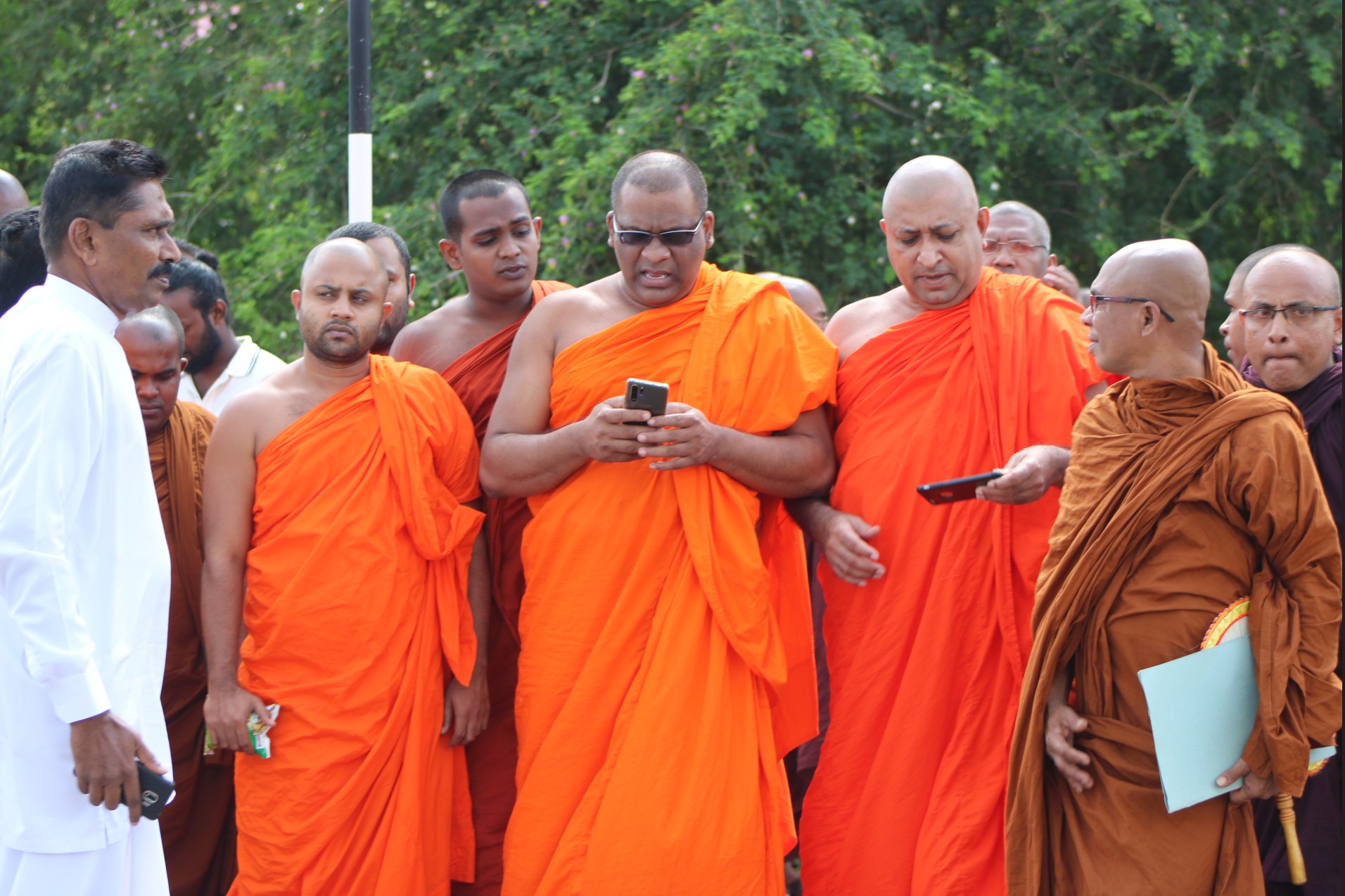
Writing in the Guardian, Sonia Faleiro highlights how in countries such as Sri Lanka and Myanmar, where Theravada Buddhism is prominent, 'monks have emerged as central figures in movements that promote sectarian hatred' and incite violence.
The piece, which was adapted from excerpts of her upcoming book The Robe and the Sword: How Buddhist Extremism Is Shaping Modern Asia, details how Buddhism is given preference in the Sri Lankan constitution, resulting in an imbalance in governance.
"In this island nation of 22 million, Buddhism is not merely a faith but a cornerstone of national identity for the Sinhalese majority, who make up more than 70% of the population. The constitution itself grants Buddhism “the foremost place”, creating a delicate balance – or imbalance – between secular governance and religious preference, and often making the country’s religious minorities, including Tamil Hindus (12.6%), Muslims (9.7%) and Christians (7.4%), feel like second-class citizens."
This has led to the reverence of monks who have incited violence against Tamil and Muslim communities across the island and have developed a close relationship with the political elites found in the south of the island.
"In 2012, Gnanasara cofounded the Bodu Bala Sena (BBS), or Army of Buddhist Power, which claimed to protect the Buddhist majority from threats posed by minority religious groups. Among its key demands were preferential treatment for Buddhist students, and a ban on Muslim practices such as the slaughter of cattle for religious rituals and the certification of products as halal. Gnanasara and his BBS cohort hosted rallies that drew thousands and leveraged their social media following to spread their message. Their rhetoric escalated. At one rally, Gnanasara declared: “This country still has a Sinhala police, a Sinhala army. After today if a single [Muslim] or some other [minority] touches a Sinhalese … it will be their end...Most people I met told me that, despite his divisive positions, Gnanasara was all but above the law. Sri Lanka’s president, Gotabaya Rajapaksa, who would later be forced to flee in a helicopter amid mass protests, had appointed the monk to lead a taskforce charged with making legal amendments that were clearly anti-Muslim. Gnanasara received all the attendant privileges of a politician in south Asia, including armed guards and sycophantic deference. Rauff Hakeem, a member of parliament and leader of the country’s largest Muslim political party, told me: “The yellow robes are untouchable."
Falerio, added that the Buddhist clergy seemed to have switched hostility across different groups to maintain relevance.
"During my time on the island, I had noticed a shift: the hostility once directed at Muslims was now turning toward Christians. Newspapers carried reports of pastors attacked, churches vandalised and worship obstructed. It was as if the monks had decided they had taken their campaign against Muslims as far as it could go, and now needed a new enemy to remain relevant and keep their audience engaged. Far from being guided by scripture, these men seemed to be working to an algorithm."
Read the full piece at the Guardian