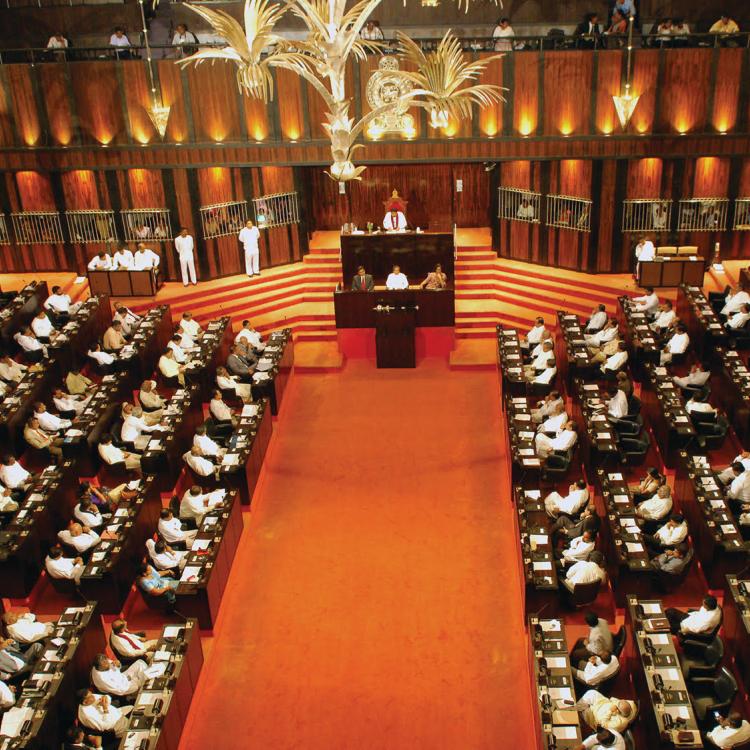
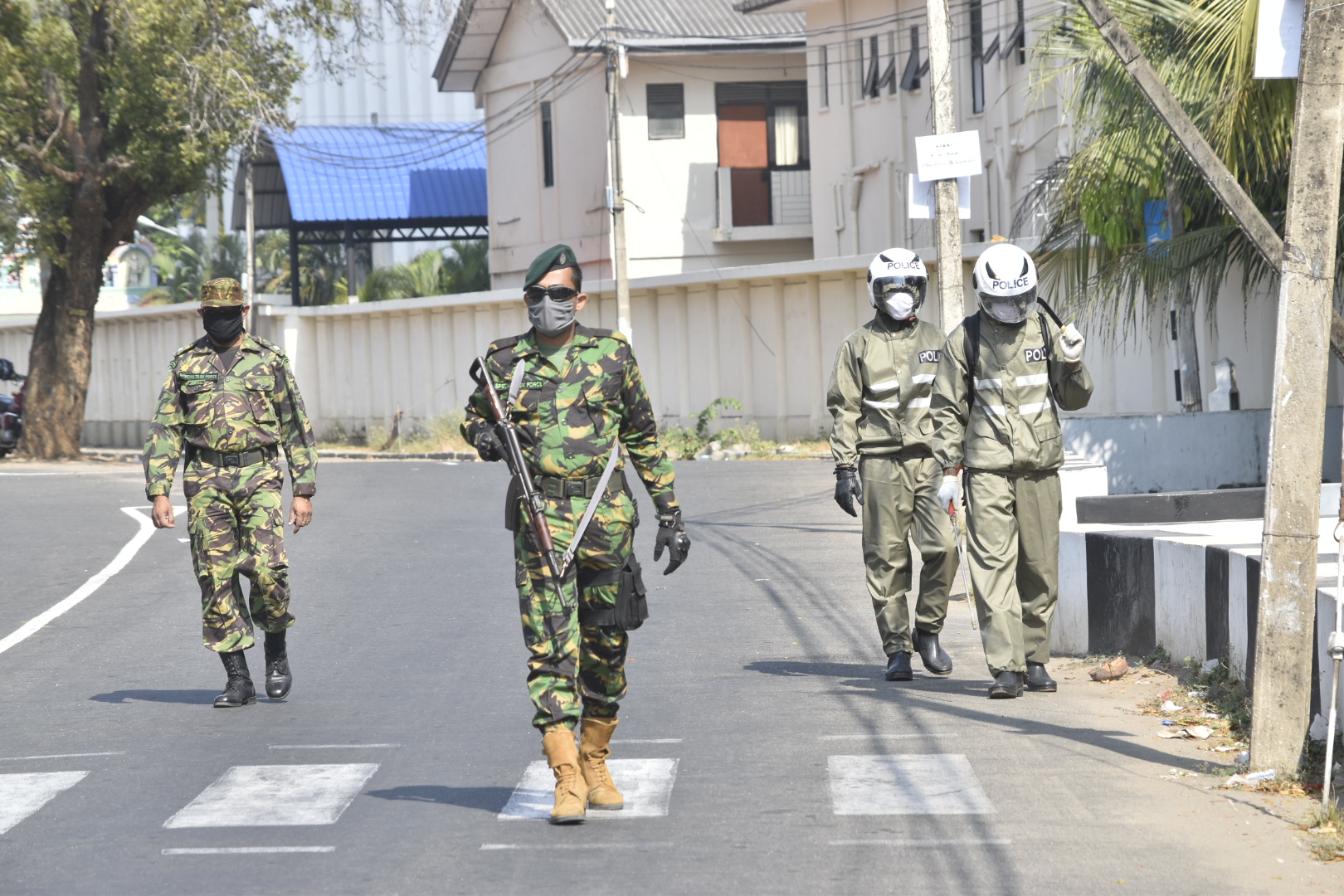
 Sri Lanka’s parliament on 9 April approved the extension of the state of public emergency declared following Cyclone Ditwah in late November 2025, granting the government continued sweeping powers under the Public Security Ordinance more than four months after the natural disaster.
The motion was passed with 137 votes in favour and 27 against, allowing the government to maintain emergency regulations long after the immediate post‑disaster period had passed. The ruling National People’s Power (NPP), which holds a two‑thirds parliamentary majority, was able to extend emergency rule with little resistance from the opposition.
Human rights lawyer and former Human Rights Commission of Sri Lanka chairperson Ambika Satkunanathan questioned the necessity of prolonging emergency rule, warning that extended reliance on exceptional powers risks normalising governance by decree. While acknowledging that temporary emergency measures may have been justified during early recovery efforts, she cautioned that repeated extensions entrench executive power and weaken democratic oversight.
Satkunanathan criticised the substance of the emergency regulations themselves, describing them as largely “cut and pasted” from those imposed during the 2022 economic crisis under former Sri Lankan president Ranil Wickremesinghe. She noted that several provisions appeared unrelated to disaster response, including clauses permitting arrests under sections 365 and 365A of the Penal Code, which criminalise same‑sex relations. She also raised concerns over the appointment of a Commissioner‑General of Essential Services through emergency powers, questioning why existing statutory bodies such as the Disaster Management Centre were not utilised instead. According to Satkunanathan, governing through ad‑hoc emergency mechanisms rather than strengthening permanent institutions undermines meaningful and lasting reform.
The extension has renewed scrutiny of the Public Security Ordinance, which allows the Sri Lankan government to override ordinary law through emergency regulations with limited judicial oversight. Rights advocates warn that such provisions mirror powers enshrined in the Prevention of Terrorism Act (PTA), a law long used to permit arrest without warrant, prolonged detention and sweeping restrictions on fundamental freedoms.
Although the PTA operates independently of a declared emergency, critics say that emergency regulations issued under the PSO have historically replicated or expanded PTA‑style powers, enabling the Sri Lankan state to exercise similar levels of repression even when facing pressure to reform or repeal the PTA. In effect, the PSO allows governments to reactivate emergency‑style governance at will, blurring the line between temporary crisis response and permanent authoritarian control.
Sri Lankan President Anura Kumara Dissanayake initially declared the emergency following the cyclone’s aftermath. However, critics argue that the continued reliance on emergency law signals a shift away from routine governance towards entrenched executive rule, echoing patterns seen during both wartime and post‑war periods.
The extension follows mounting allegations of abuse by Sri Lankan authorities during the emergency period. In one widely criticised incident, police fatally shot a 17‑year‑old boy who reportedly failed to stop when ordered, before later attempting to misrepresent his age and alleged links to criminal activity.
Further alarm was raised after Deputy Minister of Public Security Sunil Watagala stated that individuals criticising government ministers or ruling party figures on social media could face action under emergency regulations, including potential prison sentences of up to ten years.
Public concern has also been fuelled by the government’s overwhelming parliamentary dominance. Critics argue that the ruling coalition’s numerical strength has weakened accountability mechanisms, pointing to the recent failure of a no‑confidence motion against Energy Minister Kumara Jayakody over an alleged coal procurement scandal estimated at 8 billion rupees. Despite sustained political pressure, media scrutiny and public criticism, the motion was defeated along party lines.
Recent local government elections, in which voter turnout fell to 61.88 percent and the NPP failed to replicate its parliamentary dominance, have been widely interpreted as a sign of waning public confidence in the government.
Rights advocates warn that the continued use of emergency powers is particularly alarming given Sri Lanka’s long history of deploying the PSO and PTA to suppress dissent, entrench impunity and centralise power — a pattern that has disproportionately targeted Tamils in their homeland under successive governments.