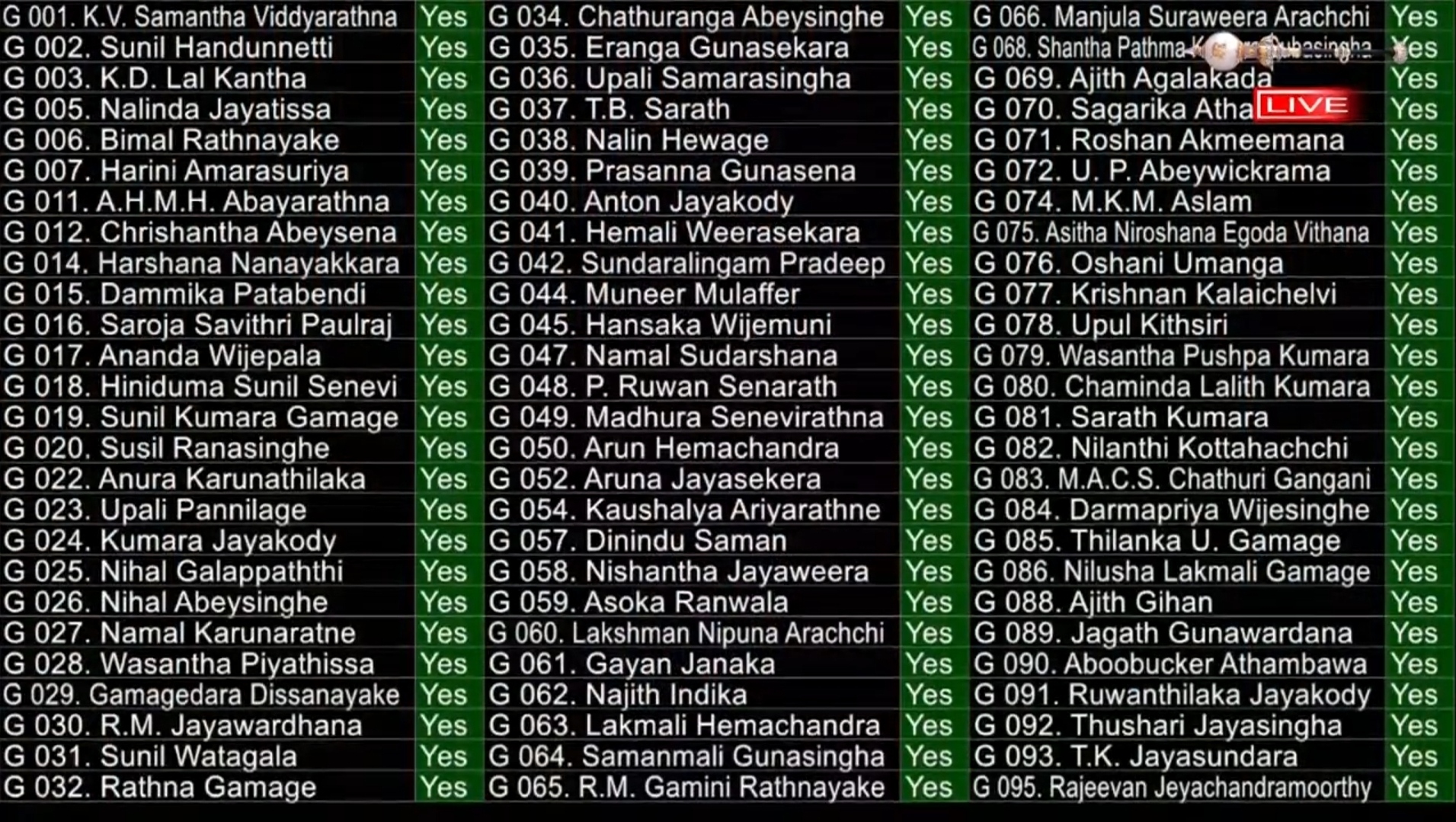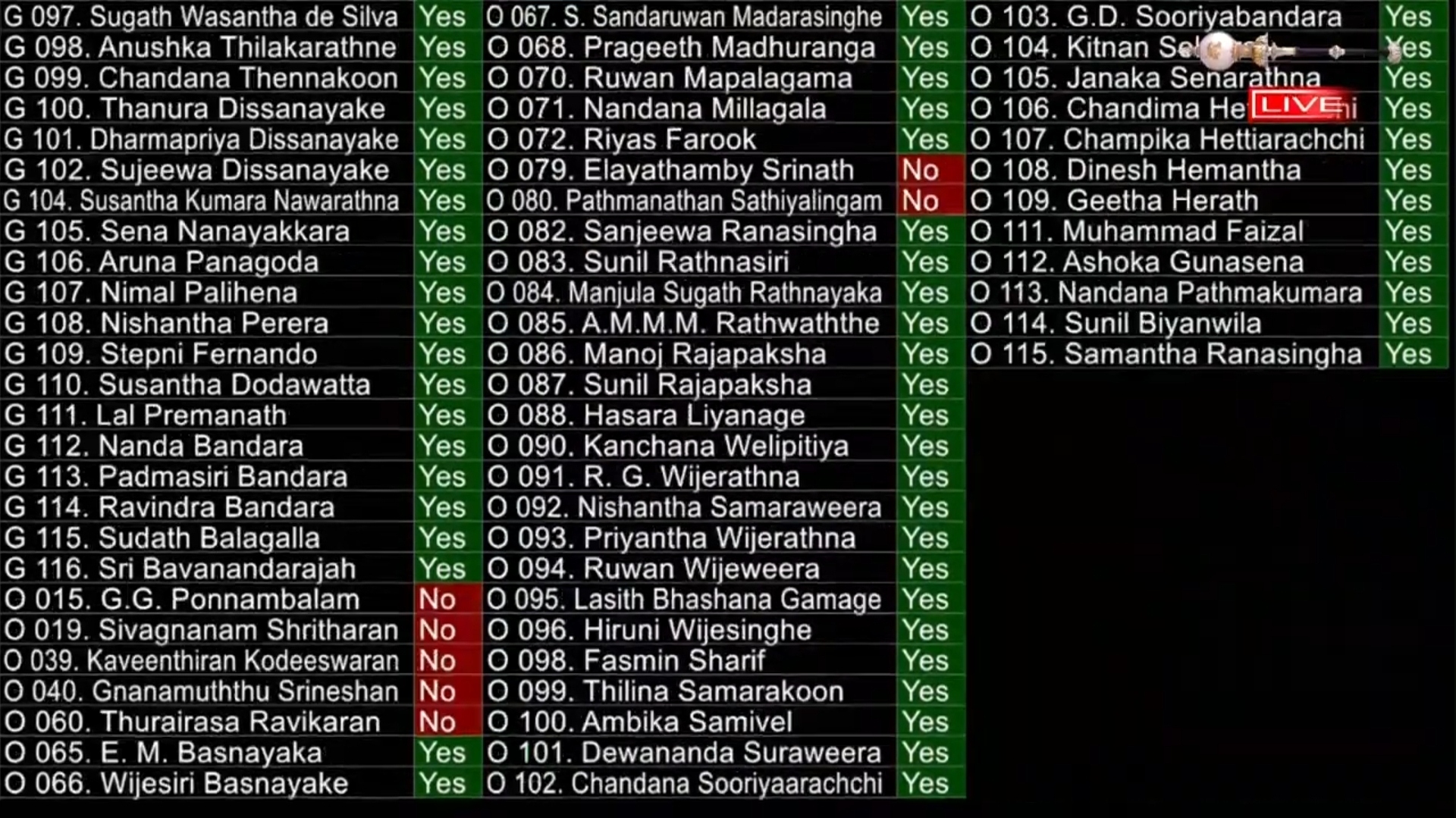
Sri Lanka's parliament on Tuesday approved a further extension of the country's state of public emergency, with all seven votes against the measure cast by Tamil Members of Parliament.
The motion was passed by 135 votes in favour and seven against, a majority of 128. The seven MPs who opposed the extension were Gajendrakumar Ponnambalam, Sivagnanam Shritharan, K. Kodeeswaran, G. Srineshan, T. Ravikaran, E. Srinath and P. Sathiyalingam.
The state of emergency was first declared on 28 November 2025 in the aftermath of Cyclone Ditwah, which killed at least 390 people and caused an estimated US$4.1 billion in damage. It has remained continuously in force since then, with the ruling National People's Power (NPP) government using its two-thirds parliamentary majority to secure successive extensions.
The extension maintains extraordinary powers available to President Anura Kumara Dissanayake under Sri Lanka's Public Security Ordinance. Under those powers, the government may proclaim emergency regulations that supersede ordinary legal provisions, impose restrictions on public gatherings, expand military and police powers, authorise warrantless arrests and searches, and exercise greater control over public information and communications.
The April extension drew criticism from rights advocates, including concerns that the regulations had been largely copied from those used during the 2022 economic crisis under former president Ranil Wickremesinghe, and that several provisions were unrelated to disaster response. The Human Rights Commission of Sri Lanka had previously written to Dissanayake raising concerns that the emergency regulations were incompatible with international human rights standards and Sri Lanka's own constitution. The previous extension in April had also been criticised after Deputy Minister of Public Security Sunil Watagala stated that individuals who criticised government ministers on social media could face action under emergency regulations, including prison sentences of up to ten years.
The latest vote takes place amid heightened scrutiny of Sri Lanka's security powers more broadly. Protests have taken place across the North-East following the arrest of Tamil rapper Sangeethsan Ganeskumar, known as Hiphop Sangee, under the Prevention of Terrorism Act on 2 June. Amnesty International has raised concerns over the arrest.
Tuesday's vote marks the latest in a series of monthly renewals of emergency powers that were initially introduced in response to a specific natural disaster and have remained in place for more than six months, with no government indication of when they will be lifted.