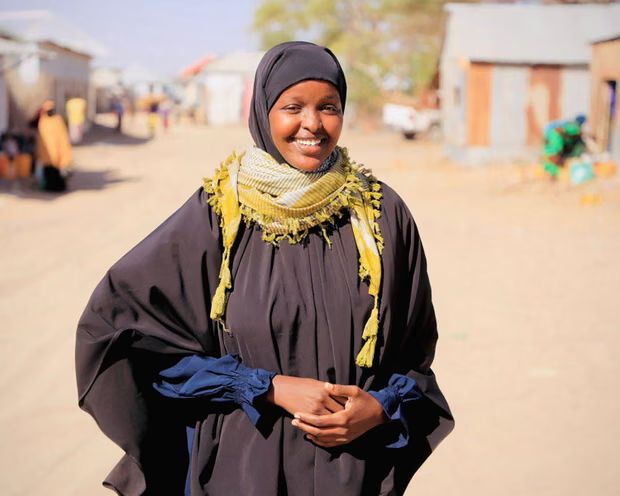
Sadia Moalim Ali, a 27-year-old nursing graduate and rickshaw driver from Somalia, has been sentenced to three years’ imprisonment after being convicted of insulting government institutions over comments she made on social media.
Ali, who had posted on Facebook and TikTok, was sentenced on 25 June in a case that has sparked outrage in Somalia and renewed concern over the shrinking space for public criticism. Prosecutors had initially charged Ali with both insulting state institutions and incitement to commit a crime, but she was convicted only on the former charge.
Her posts reportedly criticised Somalia’s federal government over worsening economic conditions, youth unemployment, rising fuel prices, alleged corruption, nepotism and forced evictions.
Ali, who is the main breadwinner for her family and has a one-year-old daughter, has reportedly been in custody since 12 April.
Her case has attracted widespread public attention, with critics arguing that the sentence represents a serious infringement on freedom of expression and a warning to others who publicly challenge the government. The sentence has drawn criticism from prominent Somali political figures, including former President Sharif Sheikh Ahmed and former Prime Minister Hassan Ali Khaire, who joined calls condemning the court’s decision.
Opponents of the ruling have argued that peaceful criticism of government policies should not be treated as a criminal offence, warning that the judgment risks discouraging public participation and political debate. Human rights organisations have also expressed concern over the case, stating that “the harsh sentence represents a serious attack on freedom of expression and the legitimate work of human rights defenders in Somalia.”
Ali has also alleged that she was tortured while in custody. Her claims include being beaten, held in solitary confinement and denied basic necessities. At court, she also said police officers had threatened her with rape. Her lawyer has rejected the ruling and said the defence will appeal.
The case has renewed scrutiny of freedom of expression and civic freedoms in Somalia, where journalists, activists and government critics have periodically faced legal action over public criticism of state institutions. Rights advocates warn that prosecutions for peaceful political speech may create a chilling effect, discouraging citizens from raising concerns over governance, corruption and economic hardship.
Since 2022, Somali authorities have faced allegations of using arbitrary arrests, detention, harassment and intimidation to silence journalists, activists and others who express dissenting views.