
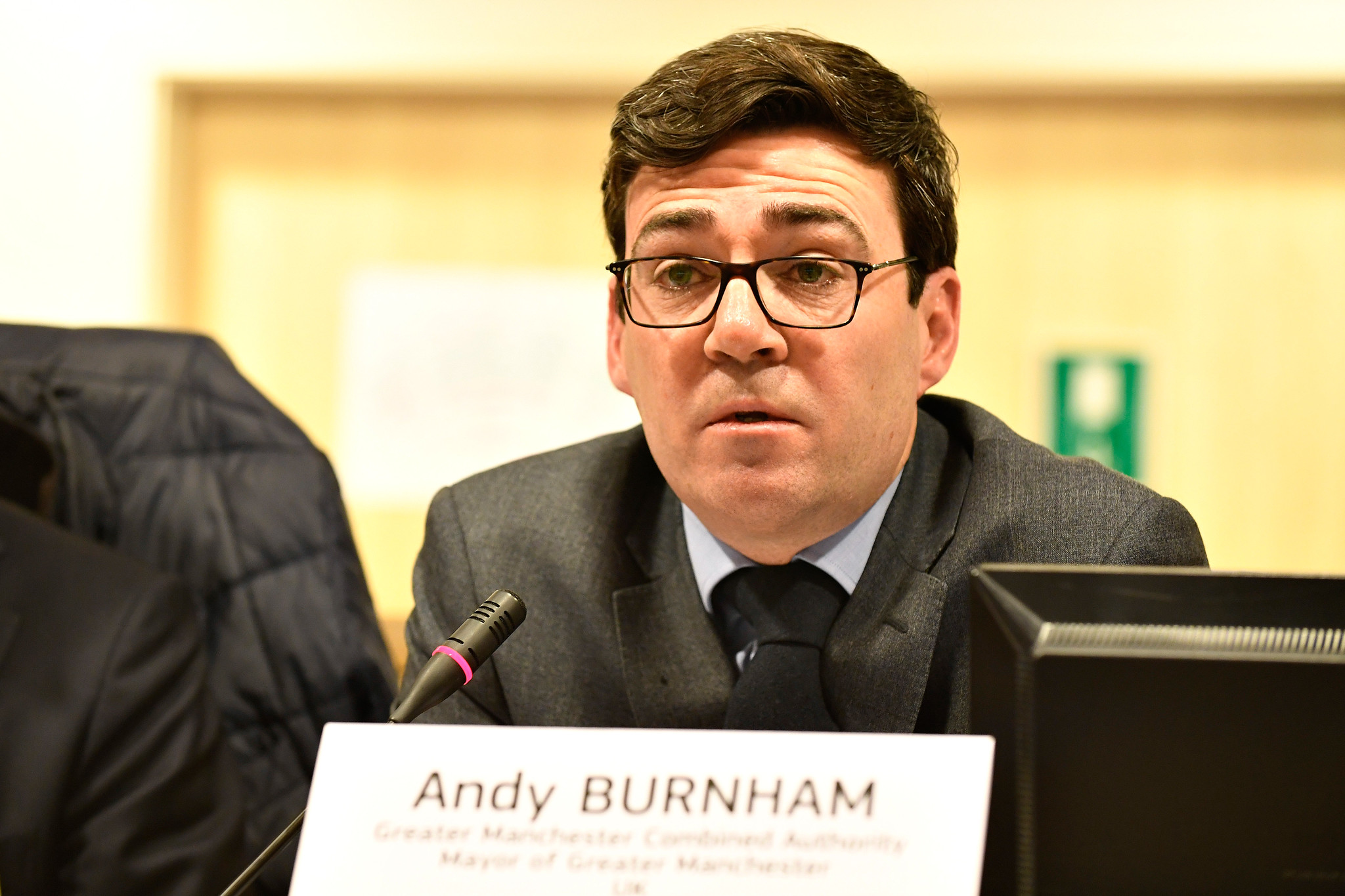
Burnham at the EU Mayors' Conference in 2018.
As Andy Burnham emerges as the frontrunner to succeed Keir Starmer as Labour leader and British prime minister, British Tamils are weighing a record on Tamil justice that is far thinner than the outgoing premier's, yet not quite the blank slate it might first appear.
Starmer, who announced on Monday that he would resign as Labour leader and stay on as prime minister until his successor is chosen, leaves behind years of statements on Mullivaikkal, Tamil self-determination, sanctions and the referral of Sri Lanka to the International Criminal Court. Burnham carries none of that headline record. There is no evidence of him marking Mullivaikkal, recognising the Tamil genocide, calling for an ICC referral, backing sanctions on Sri Lankan officials, or speaking on Tamil self-determination.
What he does have are two parliamentary moments, both from his time as shadow home secretary, in which his work touched the Tamil cause and, on each occasion, came down on the side of Tamils: asylum protection for a Sri Lankan Tamil torture survivor, and the stigma that terrorism proscription casts over the wider Tamil community. Neither answers the central Tamil demands. But for a politician with no campaigning history on the issue, they point in a direction British Tamils may find encouraging.
A quieter record than Starmer's
The contrast with his predecessor is real. As Labour leader, Starmer repeatedly marked Tamil Genocide Remembrance Day and Thai Pongal with statements invoking justice, accountability and the sacrifices of the Tamil people. In 2021 he called on the British government to deploy human rights sanctions against senior Sri Lankan officials and military personnel. In 2022 he urged Britain to heed the UN High Commissioner for Human Rights and "refer the perpetrators of atrocities to the International Criminal Court". In 2024, months before entering government, he used his Thai Pongal message to remember "the sacrifices made by the Tamil people for self determination, peace and justice in Sri Lanka".
In office, his government imposed targeted sanctions on four individuals implicated in grave human rights violations during the armed conflict, the first such British measures.
But they fell well short of what British Tamils had demanded.
Britain has still not recognised the Tamil genocide, Sri Lanka has not been referred to the ICC, and the wider sanctions regime Tamil organisations sought has not followed. Burnham would inherit those unmet pledges and the expectations attached to them, but, unlike Starmer, without having personally made and then failed to deliver them.
Standing with a Tamil torture survivor
Burnham's clearest Tamil-related intervention came in October 2015, when, as shadow home secretary, he led Labour's opposition to the Conservative government's Immigration Bill, which sought to extend "deport first, appeal later" powers to all human rights claims, allowing people to be removed from Britain before their appeals were heard.
.jpg)
Streeting attends a Tamil Genocide Remembrance Day event in 2015.
During his speech, Wes Streeting intervened with the case of a Tamil asylum seeker. Streeting himself was touted for the top job, but came out this morning in support of Burnham. "I can give my right hon. Friend exactly such an example," Streeting told him in 2015. "One of the many cases my office is dealing with at the moment is that of a Sri Lankan Tamil whose application has been refused and who bears the mental and physical scars of torture. His application is now on appeal. If the Home Secretary's proposals had been in place, he would already have been returned to Sri Lanka, where, given the human rights situation there, his life would potentially be at risk." Streeting added, "I cannot support those measures and I do not understand how the Home Secretary can propose them."
Burnham took up the point. "I think that in their heart of hearts a lot of Government Members are not able to support the measures, because they have seen in their surgeries cases similar to that mentioned by my hon. Friend," he said. "They will know people who would have been deported if this Bill had been in place and who would not have been able to exercise their legitimate right to be present in person at their own appeal."
Pressed later in the debate on whether Labour would seek to protect pregnant women and victims of torture, rape and conflict from immigration detention, Burnham was unequivocal. "Personally speaking, in my view those people and children should not be in detention," he said, offering to work "on a cross-party basis" to address the issue.
The exchange was not a statement on Sri Lanka's violence against Tamils. But it placed Burnham on record opposing powers that could have returned a Tamil torture survivor to danger, and affirming that such survivors should not be detained. The point still matters: Britain has continued to deport Tamils to Sri Lanka despite longstanding evidence of torture, surveillance and intimidation, and successive governments have been criticised by rights groups for relying on assurances from Colombo. Burnham's instinct, on the one occasion he engaged, ran the other way.
Naming the stigma on the Tamil community
The second moment came in July 2016, during a debate on proscription under the Terrorism Act 2000. Drawing on the case of the International Sikh Youth Federation, whose ban had recently been lifted after a protracted legal fight, Burnham argued that proscription could outlive its justification and stigmatise whole communities.
"Learning from that experience, I say to the Minister that evidence does change over time," he said. "There may have been grounds to proscribe that organisation back then, but those grounds clearly expired some time ago." He added that "the people to which such orders relate may find that they stigmatise a section of their community".
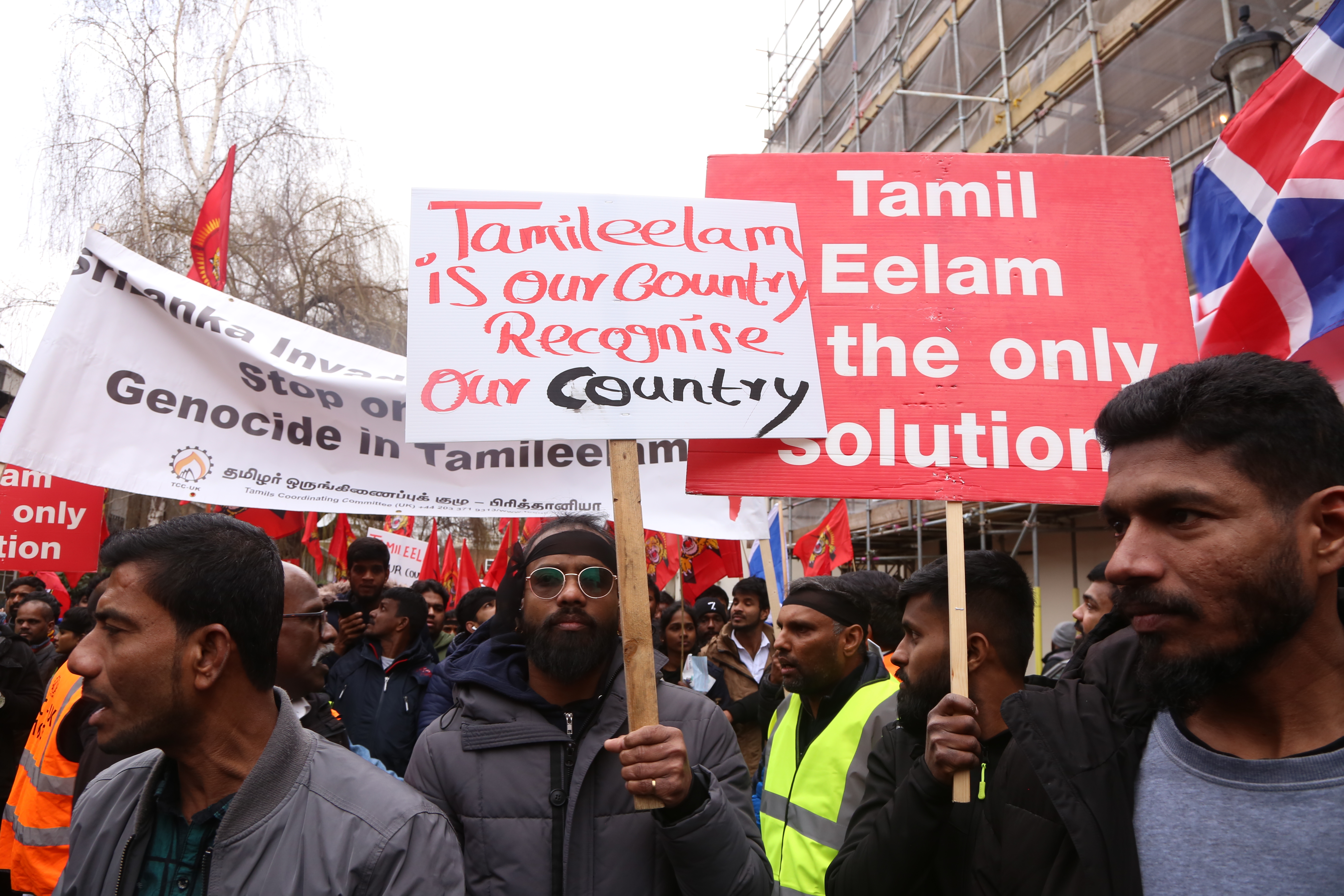
British Tamils protest in London, 2024.
It was Keith Vaz, then chair of the Home Affairs Committee, who made the Tamil link explicit. "The fear of stigma is very much in the minds of communities," Vaz said. "An example is the LTTE, which was correctly proscribed by the Government. Its leader was killed and the organisation no longer exists, but a stigma is still attached to members of the Tamil community. That is why it is so important to have a time limit, after which proscriptions can be reviewed, rather than people having to go to court each time."
Burnham agreed without hesitation. "I strongly agree with the Chair of the Home Affairs Committee," he said. "There may be good grounds to proscribe organisations, my right hon. Friend the Member for Leicester East (Keith Vaz) accepted that there was a case with the organisation that he mentioned, but the stigma does affect a much wider community."
He did not call for the de-proscription of the LTTE, nor did he speak to Tamil self-determination or the homeland. But he accepted, on the record, that proscription casts a long shadow over diaspora communities including Tamils, and that the law should not run indefinitely without review.
Grounds for cautious optimism
None of this amounts to the sustained, Tamil-facing engagement that defined Starmer's years in opposition. There are no Mullivaikkal statements, no call for genocide recognition, no demand for an ICC referral, no backing for sanctions, no remarks on the militarisation of the Tamil homeland. On the headline questions, Burnham is genuinely untested.
On immigration, Burnham has certainly shifted his previous stance and sought to position himself on Labour’s harder “control and compassion” flank. He has backed Home Secretary Shabana Mahmood’s push to tighten both legal and irregular migration routes, while also calling for faster asylum processing, greater use of immigration detention for those with no valid claim, and quicker removals. His stance marks a shift away from earlier, more liberal positions, including previous calls to scrap “no recourse to public funds”, though he continues to argue for safe legal routes and for those already in the UK and trapped in the asylum system to be allowed to work.
Yet the two interventions he previously made has led some British Tamils to become hopeful. Burnham would not enter Downing Street burdened by Starmer's broken promises. He would enter it with a slate that is still largely to be written.
The pledges he would inherit
Labour entered government with its senior figures having repeatedly acknowledged the need for international accountability over Sri Lanka. Starmer had spoken of sanctions and the ICC, David Lammy had called for Sri Lanka to be sent to The Hague, Catherine West had pointed to Labour's commitment to work with international partners on justice, and Wes Streeting had a long record of pressing the Tamil case.
Burnham's rise sharpens the question rather than settling it. Will those commitments be quietly dropped with Starmer's departure, or carried into the next Labour government? The answer will be felt not only in Westminster but across the Tamil homeland, where families of the disappeared continue to protest, mass graves continue to be uncovered, memorials continue to be watched and disrupted, and the military remains entrenched across the North-East.
British Tamils will press Burnham, as they pressed Starmer, to state plainly whether he stands by Labour's commitments on sanctions, the ICC and accountability for genocide. He begins without the record his predecessor built, but also without his record of disappointment.