
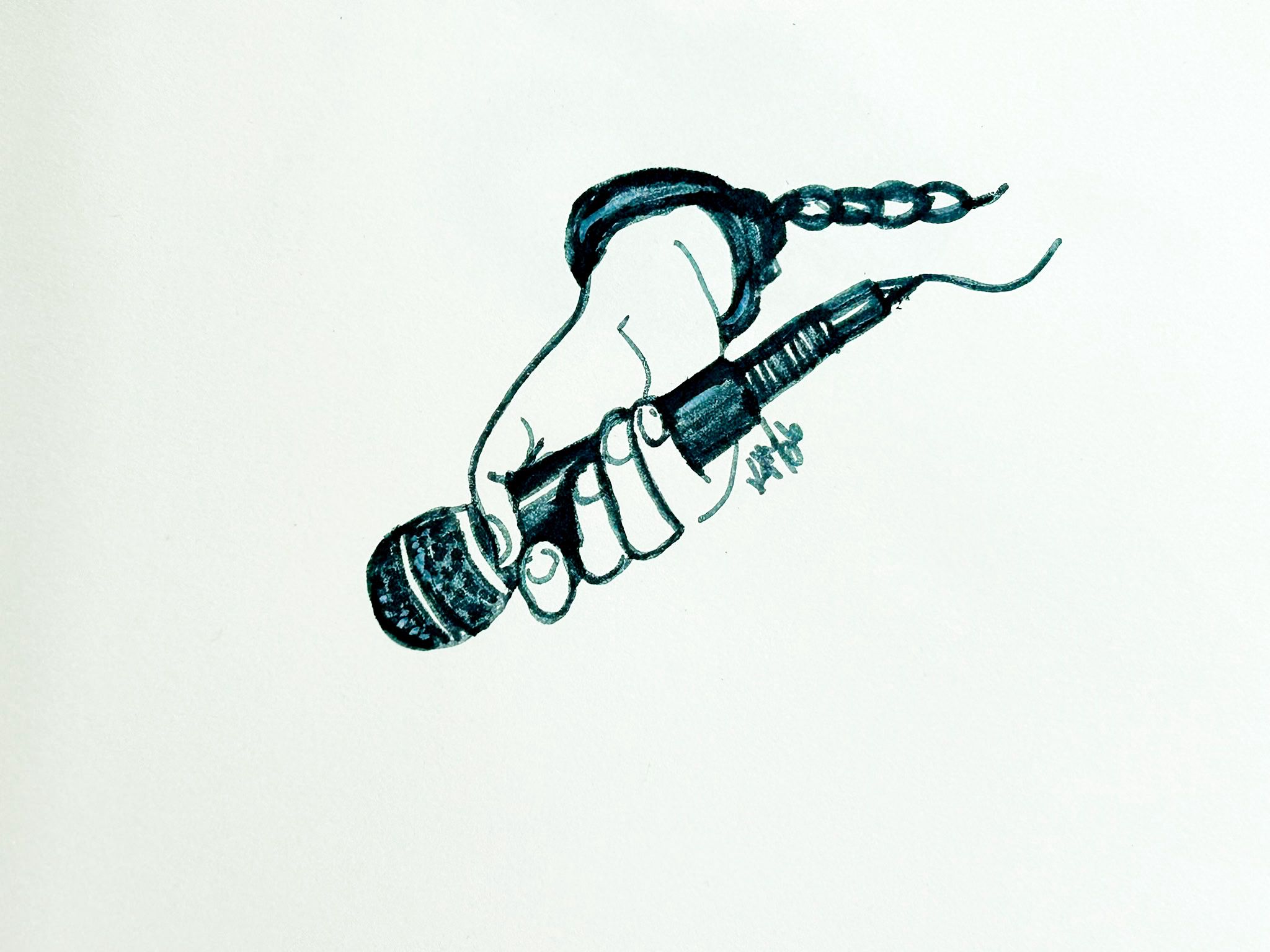
Sangeethsan Ganeskumar walked free on bail today, ten days after Sri Lankan police decided his music was a crime. The 24-year-old rapper from Kilinochchi, known as HipHop Sangee, had performed at a temple festival, filmed the evening, set the footage to his own music and uploaded it. For this, he was arrested under of the Prevention of Terrorism Act and locked in a prison. His release is undoubtedly welcome, but this is not justice. A young Tamil man spent ten days in a cell for a song, the case against him has not been withdrawn, and the law under which he was seized remains on the books, waiting for the next artist.
Sangeethsan’s freedom was not granted; it was extracted. Protesters gathered across the North-East, lawyers took a fundamental rights petition to the Supreme Court, and Tamil politicians repeatedly raised the case in various fora. Amnesty International demanded his release and the repeal of the legislation under which he was held, whilst condemnation carried across the diaspora, from Tamil youth and student organisations in London, to demonstrations in Paris, to elected officials in Canada. So untenable was the case that even a Rajapaksa scion – the political heir of the PTA's most enthusiastic practitioners - complained of the law's 'selective use'. It was this mobilisation, at home and abroad, that pried open the prison gates. The state did not discover its error. It retreated under pressure, as it only ever does.
Nor was his arrest an isolated misjudgement. It was the most brazen act in an escalating campaign against Tamil cultural expression across the North-East, where police have in recent weeks interrupted musical performances, opened investigations into homeland-themed songs at temple festivals, and summoned the son of the late musician S. G. Santhan for questioning over a performance in Urumpirai. The occupying state has long understood what it is policing. The threat posed by a young man rapping is not to anyone's security but to the climate of repression upon which Sri Lanka's occupation of the Tamil homeland seeks to instil. It is the expression and embrace of Tamil nationhood, as well as the refusal to submit, that Colombo fears. The imposition of ten days of imprisonment for a song is the state clamping down and ensuring that every Tamil in the North-East has been made to understand a lesson. Political or even artistic expression of the struggle for equality, risks your liberty.
Meanwhile, in the south, another man remains held under the same Act. Suresh Salley, the retired major general who once directed the State Intelligence Service, was arrested in February in connection with the Easter Sunday bombings, accused of complicity in attacks that slaughtered more than 270 people. After more than a hundred days in detention he has begun a hunger strike, and his relatives, alleging ill-treatment in custody, now demand the repeal of the very law he once served at the apex of the state's intelligence apparatus.
There is a darker irony still, for the torture he now alleges is a practice he himself stands accused of. Salley reportedly coerced Dr Thurairajah Varatharajah, the government doctor who survived the final massacres at Mullivaikkal, into announcing false casualty figures at a staged Colombo press conference, withholding the surgery he urgently needed until he complied, conduct the ITJP described as a violation of the Convention Against Torture. In court this April, the state's own prosecutors went further, declaring that abductions and assaults on journalists had been carried out by a group operating under his command. Due process belongs to everyone, including Salley. But there is something instructive in the spectacle of the Sinhala establishment discovering the cruelty of the PTA only when it reaches one of its own. For decades the same law was used to torture, disappear and indefinitely detain Tamils in their thousands without a murmur from those now so exercised.
Even today, one detainee stands accused of orchestrating mass murder and of the very abuses he now protests; the other of uploading a video of him rapping a song. That both were held under the same provisions illustrates the draconian design of the PTA, its victims selected by political convenience.
The National People's Power (NPP) government came to office pledging to abolish this Act, and that pledge, like so many before it, has dissolved on contact with power. Arrests have continued throughout its tenure, and when pressed on Sangeethsan's case, Anura Kumara Dissanayake offered the assurance that no detention order had been issued against him – remarks delivered whilst the young man was being held in a Jaffna prison. Either the Sri Lankan president did not know what his own police and courts were doing, or he knew precisely and hoped his empty assurance would pass for action. Both answers indict him, and today's release resolves neither. Successive governments have promised for a decade to repeal or replace this law, each pledge placating international scrutiny whilst the legislation continued its work undisturbed. That the self-proclaimed agents of 'change' should follow the same script is unsurprising. This regime is cut from the same cloth as its predecessors.
And through all of this, the diplomatic missions in Colombo, so fluent in the language of 'reconciliation' when occasion demands, said nothing. Not one embassy raised Sangeethsan's name publically during the ten days he sat in a cell. Their silence is symptomatic of a posture that has survived every change of government on the island, in which Colombo is to be appeased rather than reformed, whoever holds power and whatever is done in its name.
Bail is not vindication. The charges against Sangeethsan Ganeskumar must be dropped in their entirety, and the PTA must be repealed entirely. A regime that fears a song is incapable of reform.
______
Illustration by Keera Ratnam.