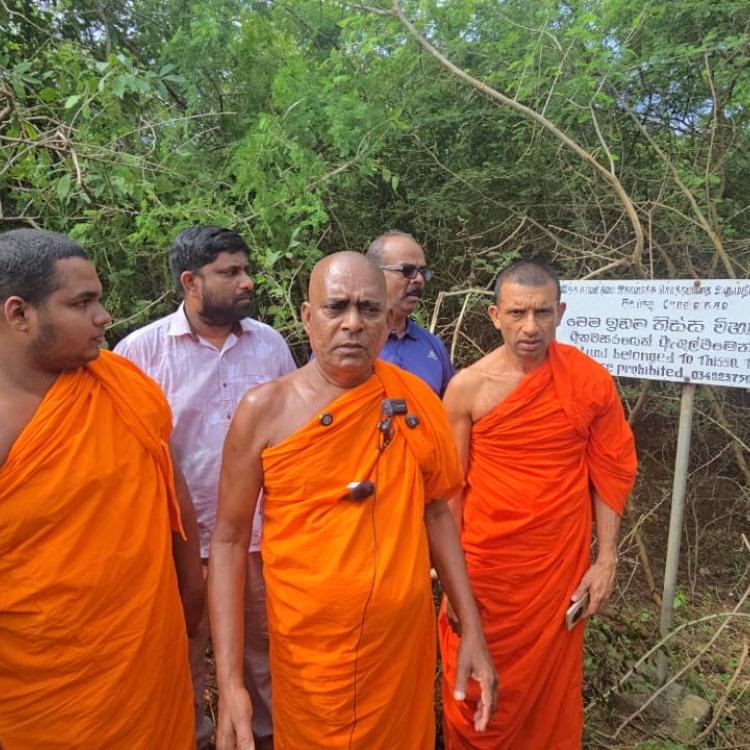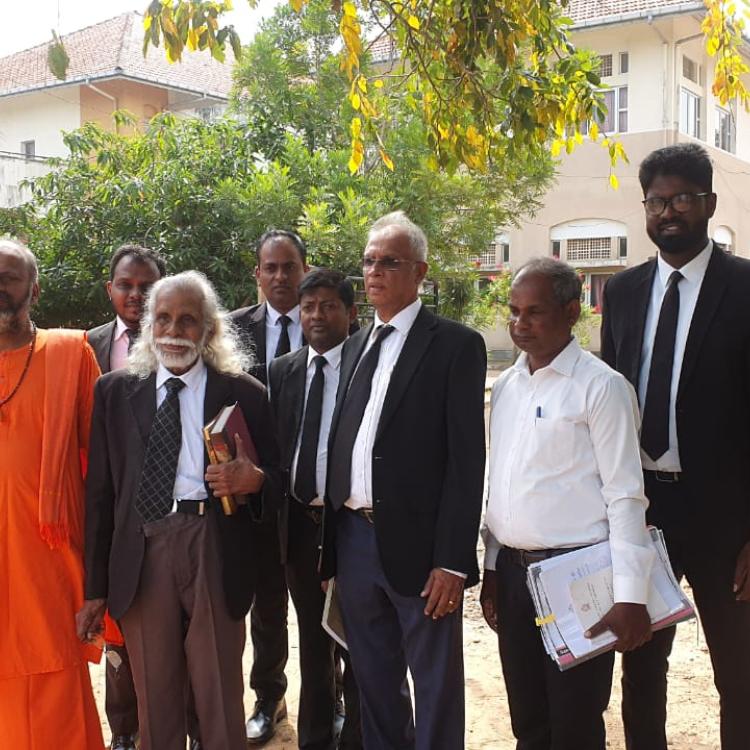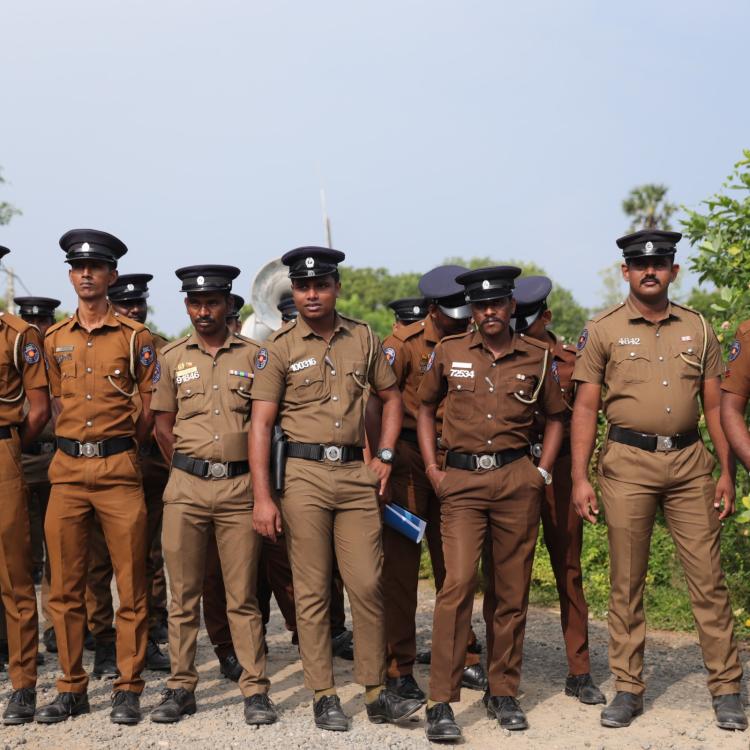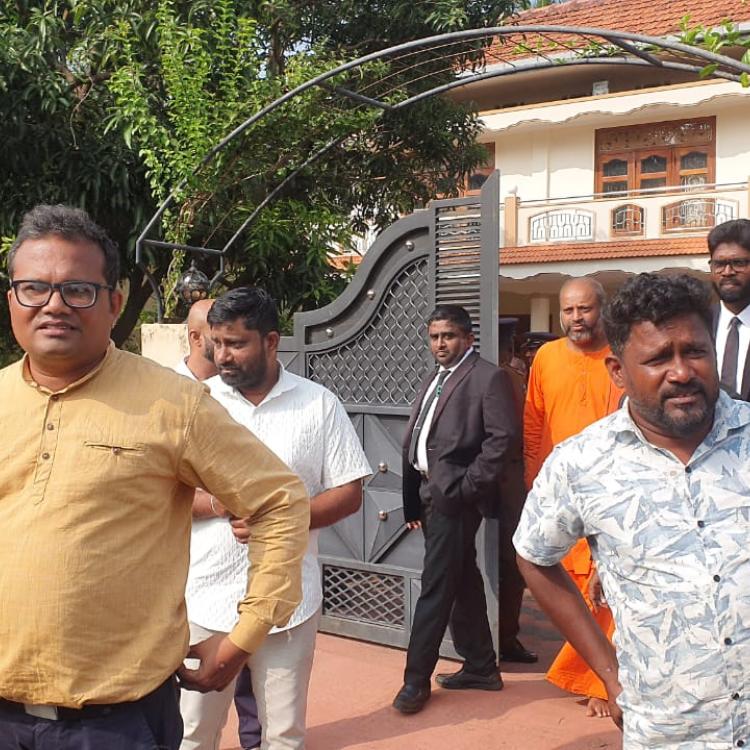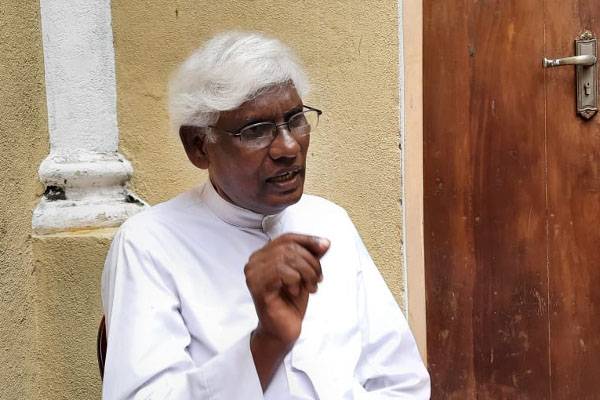
Social justice activist Rev. Fr. M. Sathivel has sharply questioned why Sri Lankan President Anura Kumara Dissanayake, who repeatedly claims there should be one law for both the South and the North, has failed to enforce that principle in the case of the illegally constructed Thaiyiddy Buddhist vihara in Jaffna.
In a strongly worded media statement issued on 18 January 2026, the Catholic priest criticised Dissanayake for refusing to exercise his executive authority to dismantle the unlawful structure and return occupied private Tamil lands.
He stated that during Thai Pongal celebrations in the Tamil homeland, Dissanayake accorded public prominence to the monk of the illegal vihara, which was erected with a Sinhala-Buddhist majoritarian agenda. By seating the monk in the front row at a public event, Dissanayake had effectively legitimised and honoured the unlawful construction.
At the same time, Rev. Fr. Sathivel said, Tamil people protesting against the temple and against the Sri Lankan military’s continued occupation of private lands have been branded as extremists. This, he noted, amounted to a deliberate humiliation of the people of the Tamil homeland.
He questioned whether this was the so-called gift offered to Tamils on their festival day, and urged Tamil nationalists to immediately express their opposition to the President’s actions.
Justice for those affected by the Thaiyiddy vihara can only be achieved by dismantling the illegal structure and returning the seized lands to their rightful Tamil owners, he said. According to him, this alone would constitute genuine justice.
Rev. Fr. Sathivel emphasised that the law must be equal for all and asked why Dissanayake, who speaks of equality before the law, has failed to act decisively in this matter. He referred to remarks made by a monk of the Naga Vihara to the media after meeting with Dissanayake, in which it was claimed that he is hesitant to act against the illegal shrine and is acting out of fear of Sinhala-Buddhist chauvinism.
He further questioned the morality of labelling Tamil people who demand the return of their ancestral lands as racists, especially when such accusations come from those aligned with religious and racial extremism.
Describing Thai Pongal as a festival of working people, Rev. Fr. Sathivel said it is not merely a cultural celebration but also a political affirmation of the right to live freely on land nourished by one’s own labour. He argued that to truly honour the festival would be to ensure the freedom and dignity of the people of the land. Instead, he said, the President offered no such assurance in his address.
He also highlighted that although the Sri Lankan president pledged during election campaigns to release Tamil political prisoners, no guarantees have been provided to date. Likewise, there has been no clarity regarding the release of Tamil lands under military occupation.
Rev. Fr. Sathivel stated that while standing on Tamil soil, Dissanayake had hurt the sentiments of the Tamil people, an act he described as unacceptable. Although Dissanayake claimed to have come to celebrate with Tamils, he instead turned their political and cultural festival into a display of his own political spectacle.
He warned that the National People’s Power government may attempt to repeat this approach by turning the Tamil homeland into a stage for its own celebrations on 4 February, Sri Lanka’s so-called “Independence Day”.
Just as Tamil lands continue to be seized and occupied in various forms, he cautioned, there is also a growing danger that Tamil national politics could be encroached upon through what he described as the deceptive political theatrics of the NPP.
In conclusion, Rev. Fr. Sathivel called upon Tamil political leaders and civil society organisations to mobilise the people and develop an action plan to observe the forthcoming Independence Day as a Black Day across the Tamil homeland. He said this would be a form of protest against ongoing land grabs and the humiliation inflicted upon the Tamil nation.
Emphasising that this moment is centred on liberation, he urged all religious leaders and institutions to extend their full cooperation and support to this collective struggle.