
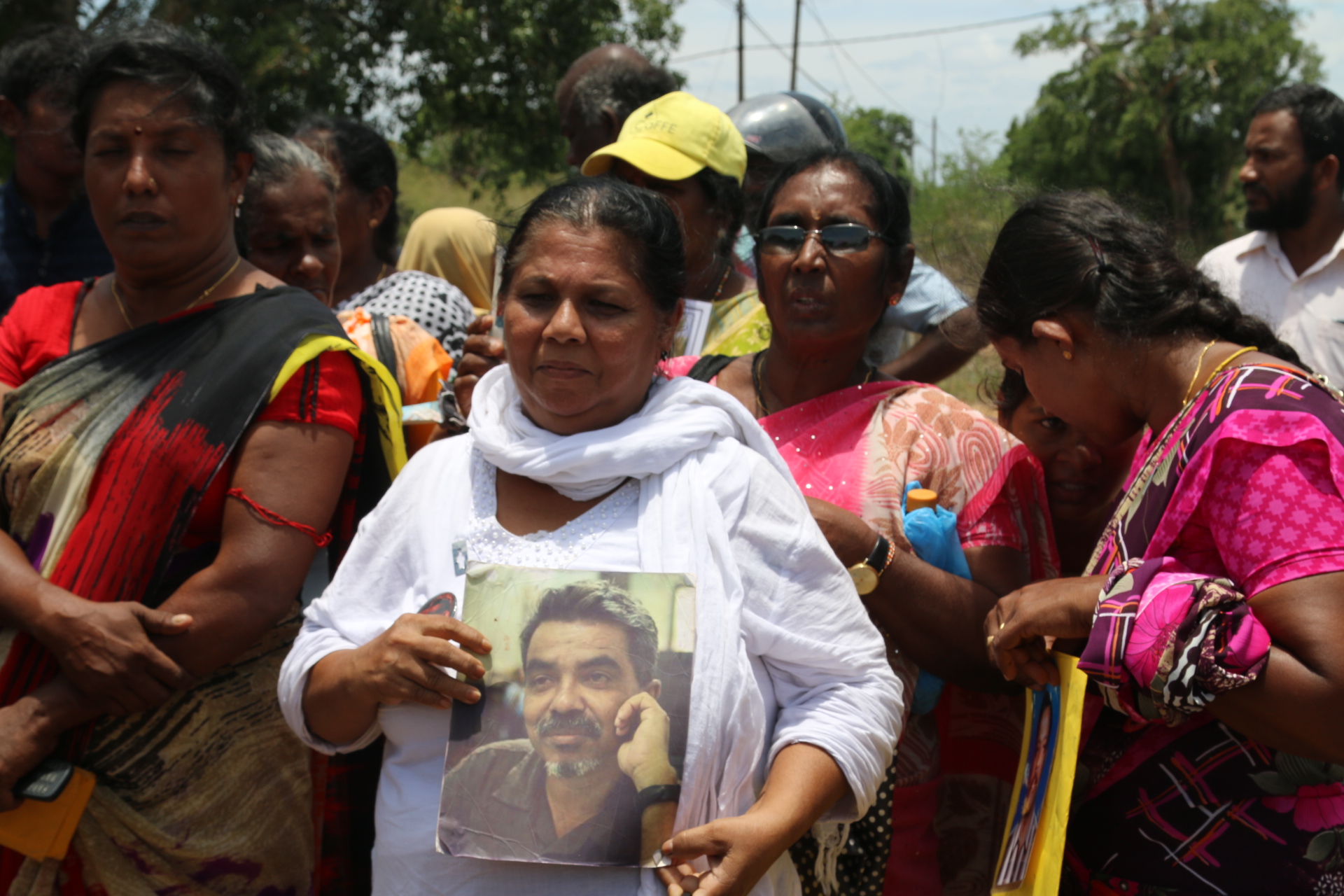
Activists, media freedom organisations, and the family of disappeared journalist Prageeth Ekneligoda have strongly condemned the promotion of a Sri Lankan military intelligence officer who is currently facing criminal charges in connection with his abduction and disappearance.
In a letter addressed to Sri Lankan President Anura Kumara Dissanayake, Sandya Ekneligoda, the wife of the missing journalist, stated that she had learned through media reports that Lieutenant Colonel Erantha Radeesh Peiris had been promoted to the rank of Brigadier.
She expressed deep opposition to the decision, pointing out that Peiris remains a defendant in the ongoing criminal case relating to the enforced disappearance of her husband in 2010. According to the letter, Peiris is one of several military intelligence officers charged in connection with the case. The Attorney General filed 17 indictments against him in 2019, including a charge of murder. Investigations carried out by the Criminal Investigation Department have identified him as being directly involved in the abduction, she said.
Sandya Ekneligoda warned that promoting an officer who is facing such grave allegations poses a serious threat to the integrity of the judicial process.
“By conferring such a senior rank on an officer accused of grave crimes, there is a serious risk of influencing witnesses, discouraging investigating officers, and undermining the judicial process,” she wrote.
She further referred to a separate ongoing case in which a retired senior military officer, who is also an accused in the Ekneligoda case, is alleged to have threatened a key witness. This, she noted, demonstrates the real and continuing dangers faced by those seeking justice in enforced disappearance cases.
Civil society organisations and press freedom groups echoed these concerns, stating that the promotion sends a damaging signal at a time when Sri Lanka claims to be committed to accountability and the rule of law.
They said the decision reinforces a long-standing culture of impunity surrounding enforced disappearances and attacks on journalists.
Media rights activists emphasised that the Ekneligoda case is one of the most prominent unresolved crimes against the press in Sri Lanka and has long symbolised the failure of successive governments to ensure justice for victims of state-linked violence.
The promotion of an accused officer while legal proceedings are still ongoing, they said, is deeply troubling and contradicts any genuine commitment to transparency or accountability.
Prageeth Ekneligoda, a political cartoonist and journalist, disappeared on January 24, 2010, just days before Sri Lanka’s presidential election. His case has drawn sustained domestic and international attention, becoming emblematic of the thousands of enforced disappearances that took place under successive Sri Lankan governments. Prior to his abduction, he was investigating the use of chemical weapons by Sri Lanka’s army against Tamils in the North-East.
For his family and for campaigners who have spent years demanding answers, the latest development represents yet another blow to hopes of justice.