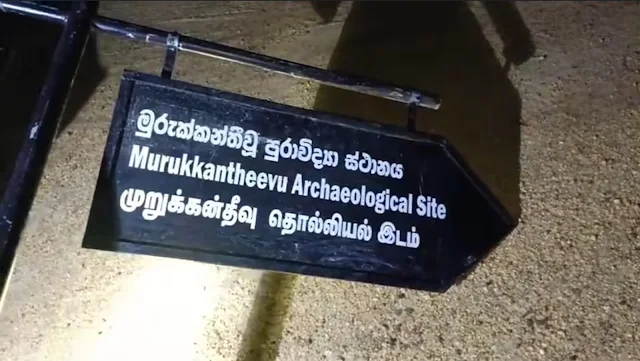
Officials and residents in Batticaloa are raising alarm over what they say is a deepening pattern of unilateral encroachments by the Sri Lankan Department of Archaeology into Tamil areas, following the sudden installation of disputed signboards across the district this week.
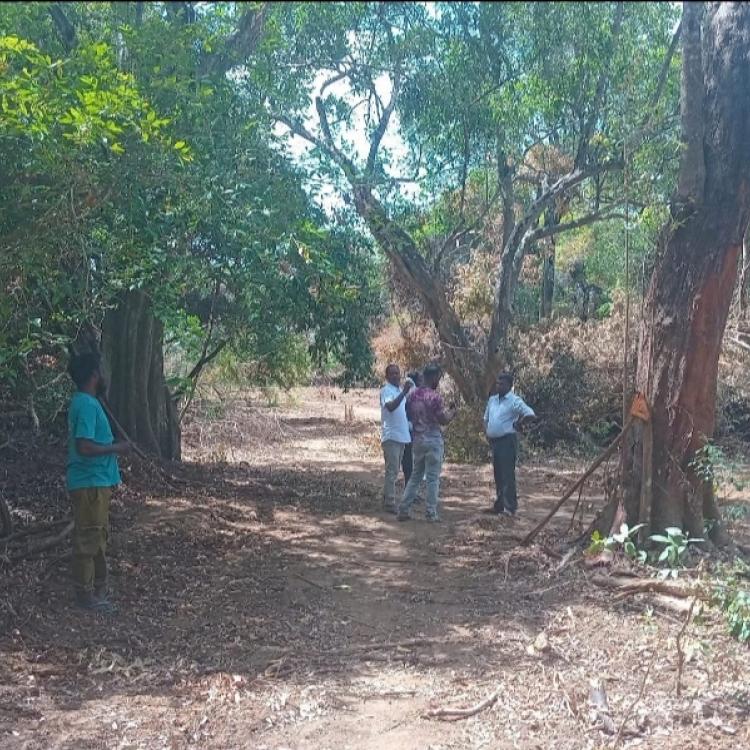
On Thursday, communities near the Thanthamalai Murugan Temple reported that department officials had abruptly erected new trilingual boards along the access road, declaring the surrounding area an “Archaeological Area”. Locals say no prior notice, consultation or explanation was given. The temple sits within the Manmunai South Divisional Secretariat, a region with an extensive Tamil religious and cultural heritage.
Former MP P. Ariyanenthiran condemned the move, warning that such unilateral declarations have historically preceded attempts at Buddhicisation, with state-backed Buddhist structures and symbols introduced into the Tamil homeland. He pointed out that “archaeological” classifications have frequently been used to justify state land takeovers under the guise of heritage protection, eroding the integrity of Tamil cultural sites over time.
These concerns follow fresh outrage in Trincomalee earlier this week, where an attempt to install an unauthorised Buddha statue triggered widespread protests.
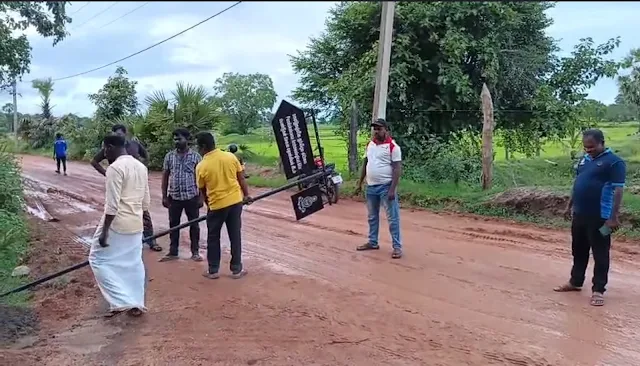
Tensions escalated further on Friday when the Koralaipattru Pradeshiya Sabha removed several additional signboards that the department had installed in Thikilivettai, Murukkantheevu and Pendukalchenai. The new boards had similarly designated the areas as archaeological sites. The local authority said the Department of Archaeology had violated Section 15 of the 1987 Pradeshiya Sabha Act by failing to obtain the mandatory approval required before installing any such signage.
The Chair of the Koralaipattru Pradeshiya Sabha said the removal was necessary to uphold local regulations and accused the department of repeatedly operating without consent in Tamil-majority areas. He alleged that these actions form part of a wider, coordinated attempt to claim land in the Eastern Province under archaeological pretences in order to facilitate government-backed encroachments into the North-East.
Together, the incidents in Thanthamalai and across Koralaipattru have intensified fears that state institutions are advancing a structured agenda to expand control over areas of long-standing Tamil worship and heritage, echoing practices documented elsewhere in the Tamil homeland.
In response, Minister of Buddha Sasana, Religious and Cultural Affairs Dr Hiniduma Sunil Senewi announced that an investigation has been launched into the removal of the signboards. In a statement, he said the Department of Archaeology has installed similar signage “for many years” as part of a government programme to identify and protect heritage sites. He added that an “organised group” was responsible for removing the latest boards and that the matter has been reported to the Minister of Public Security.
The minister said legal action would be taken and that investigators would “identify those responsible without delay”, claiming that “a group with political motives” was behind the removals.