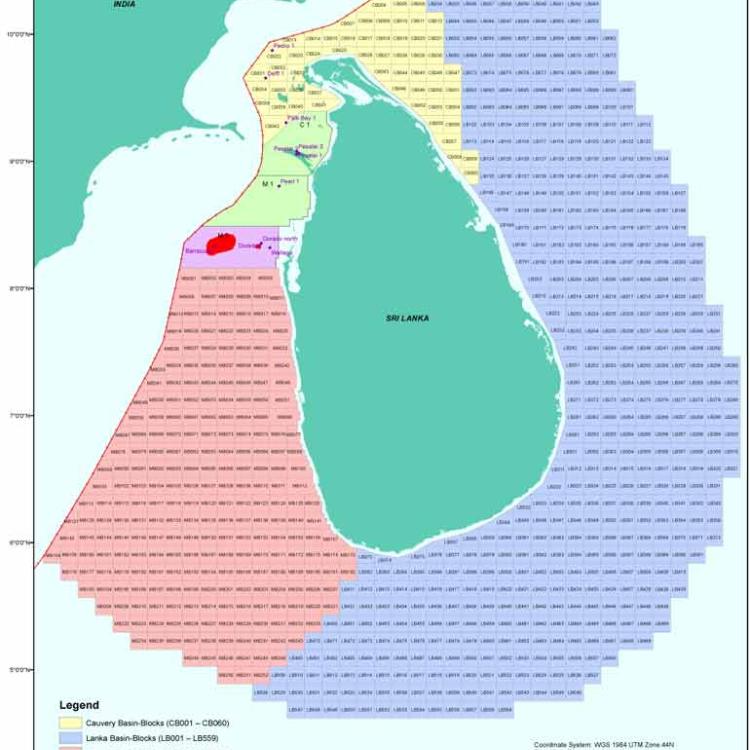
Sri Lanka is set to invite international tenders for exploration and development licences for oil and gas in the Mannar Basin.
The government has sought to expedite the process. Previously, they had announced that they would invite tenders for a consultancy to manage the international bidding process, but have instead decided to proceed directly with exploration and development licenses.
Sri Lanka gazetted a national policy on natural gas in September 2020, outlining strategies to create domestic demand and providing operators with options to commercialise offshore gas. In addition, the Petroleum Resources Act No. 21 of 2021 was introduced to regulate exploration and production activities.
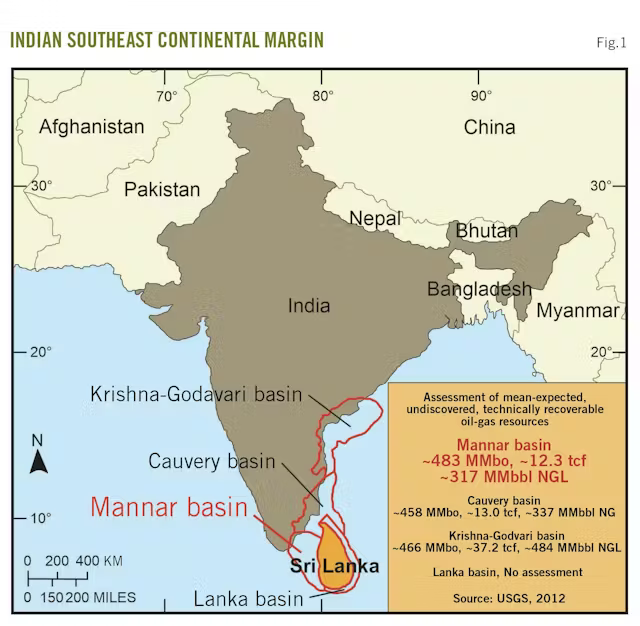
The Mannar basin straddles Sri Lankan and Indian waters and has only been explored by a handful of wells. The Sri Lankan portion of Mannar basin’s proven petroleum resources remains undeveloped and underexplored, with only five exploration wells drilled in the northern part of the basin.
In 2011 Cairn Lanka Pvt. Ltd. drilled Barracuda and Dorado wells and discovered two natural gas fields in upper Cretaceous clastic beds. Cairn departed the undeveloped fields in 2015, declaring them not commercially viable.
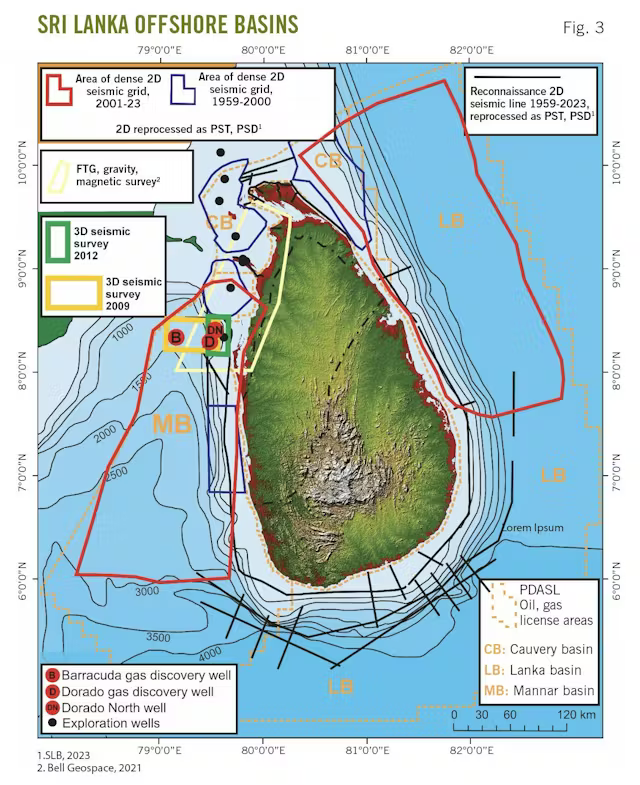
In 2012 USGS published a geologically-based assessment of undiscovered, technically recoverable, conventional petroleum resources which included Mannar and Cauvery basins. Lanka basin was not assessed due to lack of geologic data. The USGS assessment is a petroleum system-based analysis and part of a project to estimate technically recoverable petroleum resources for priority basins worldwide.
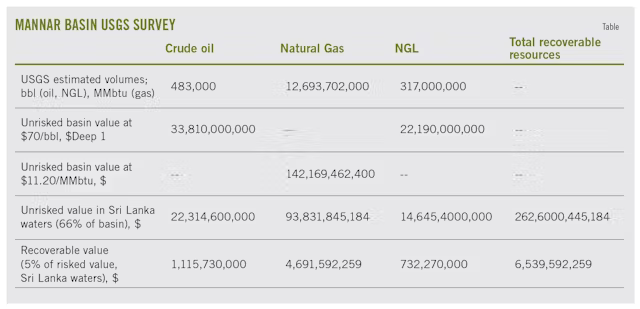
Table 1 shows the estimated USGS mean volumes for crude oil, NGL, and natural gas in Mannar basin. The study’s estimate of the basin’s ultimate resource value is based on crude oil and NGL at $70/bbl and natural gas at $11.20/MMbtu, which represents conservative spot market average prices for several years.
About 66% of Mannar basin lies within Sri Lankan waters based on USGS basin boundaries and the maritime boundary with India. In these waters, the basin’s recoverable fossil fuel resources are valued at $6.54 billion, assuming 5% of the resources are discovered and economically producible. The estimate may be conservative if the petroleum system contains suspected but unproven source rocks and traps.
Sri Lanka's Climate Risk
A report published by the World Bank in partnership with the Asian development bank outlines the climate risk associated with Sri Lanka if emissions are not curved to keep global temperature rises below the Paris Climate agreement designated 1.5 degrees. It was noted in the report that "Sri Lanka faces a significant threat from extreme heat with the number of days surpassing 35°C, potentially rising from a baseline of 20 days to more than 100 days by the end of the century under emissions pathway RCP8.5". The RCP8.5 emissions scenario is generally referred to "as business as usual", suggesting it is a likely outcome if no efforts are taken to reduce greenhouse gas emissions. Extreme heat threatens human health and living standards, particularly outdoor labourers in areas without adequate cooling systems, the report notes that extreme heat events will 'particularly impact communities in Sri Lanka's northern region'. The projected changes expected are expected to impact on Sri Lanka's poorest and most marginalised communities, exacerbating poverty and inequality.