
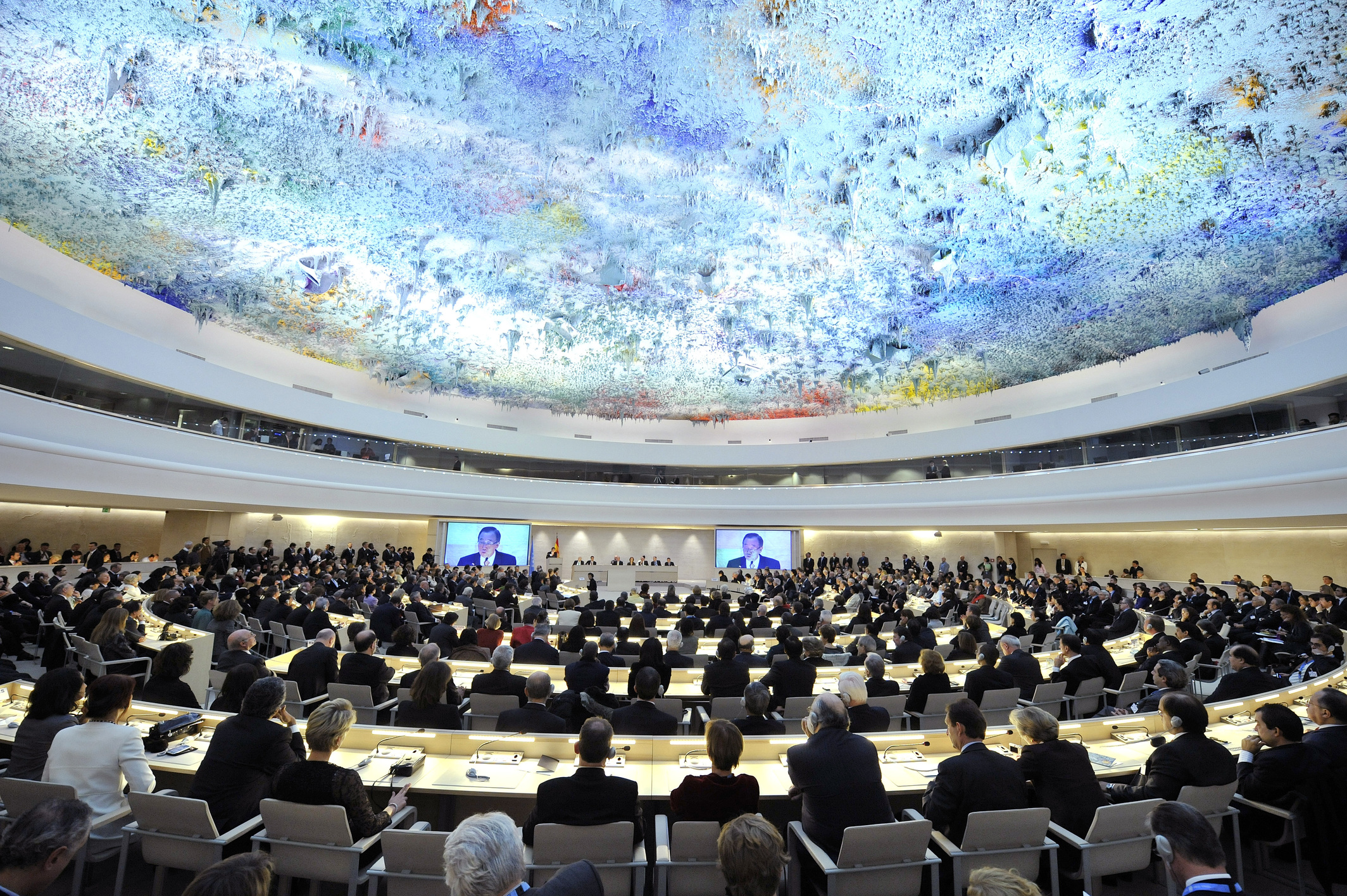
The British Tamils Forum (BTF) has written to United Nations High Commissioner for Human Rights Volker Türk, expressing deep concern over the recently adopted UNHRC Resolution A/HRC/60/L.1/Rev.1 on Sri Lanka and warning that it risks reinforcing impunity rather than advancing justice for the Tamil people.
In its letter dated 15 October 2025, the BTF said the resolution, which promotes “reconciliation, accountability and human rights in Sri Lanka”, fails to address the root causes of the conflict between the Sinhala and Tamil nations and ignores the elements of genocide that underpin decades of state violence in the Tamil homeland.
The letter said the new resolution has eroded the confidence of Tamil victims, despite the existence of over 120,000 documents compiled by the UN that show systematic violations of international law since 1956. The UNHRC’s continued reliance on domestic mechanisms “that lack credibility and independence”, the BTF cautioned, “may inadvertently convey tolerance toward or appear to legitimise acts consistent with genocide.”
The BTF also highlighted ongoing state-sponsored violations, including land grabs, enforced demographic changes, and the destruction of cultural and religious heritage in the North-East, describing them as evidence of entrenched structural genocide.
Citing confidentiality concerns, the Forum said Tamil victims provided testimony to OSLAP under strict assurances of protection. Transferring that material to a Sri Lankan body, it warned, would expose them to reprisals and “undermine the trust that enabled such cooperation.” Without full access to evidence or participation from victims who now fear retaliation, “any domestic tribunal will lack the capacity to identify the patterns, perpetrators, and intent behind systematic violations.”
The BTF argued that the new UN resolution “risks reinforcing the status quo” and allowing the Sri Lankan state to continue delaying genuine reform. More than a year into the current administration, it said, there has been no meaningful progress on devolution, accountability, or reconstruction.
The presence of individuals implicated in war-time abuses within state institutions, the letter continued, “casts serious doubt on the independence and impartiality of any domestic body.” Such conditions, it warned, will drive Tamil victims to lose faith in the international justice process itself.
Declaring that “sustainable peace and stability in Sri Lanka depend on robust international oversight,” the BTF urged the UNHRC to move beyond failed domestic approaches and pursue international accountability through the International Criminal Court (ICC) or the International Court of Justice (ICJ).
The letter called for a time-bound action plan to ensure the repatriation of displaced persons, resettlement and reconstruction of the North-East, and the creation of an international judicial mechanism grounded in the OSLAP repository.
Sixteen years after the end of the armed conflict, the BTF said, “justice, accountability and transitional mechanisms remain elusive.” The UN, it added, has both the authority and the moral responsibility to act decisively “to ensure that justice for the Tamil people is no longer delayed or denied.”
Read the full text of the letter here.