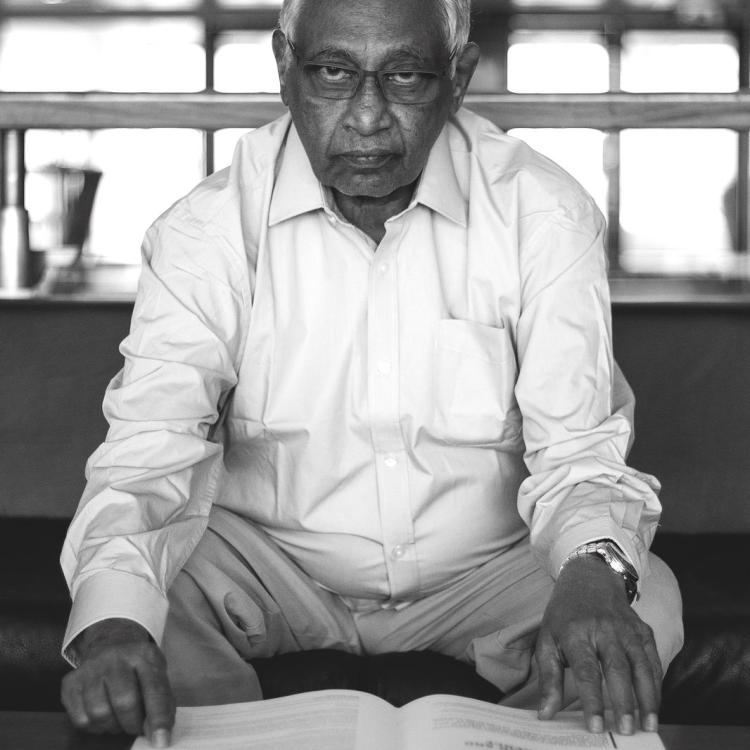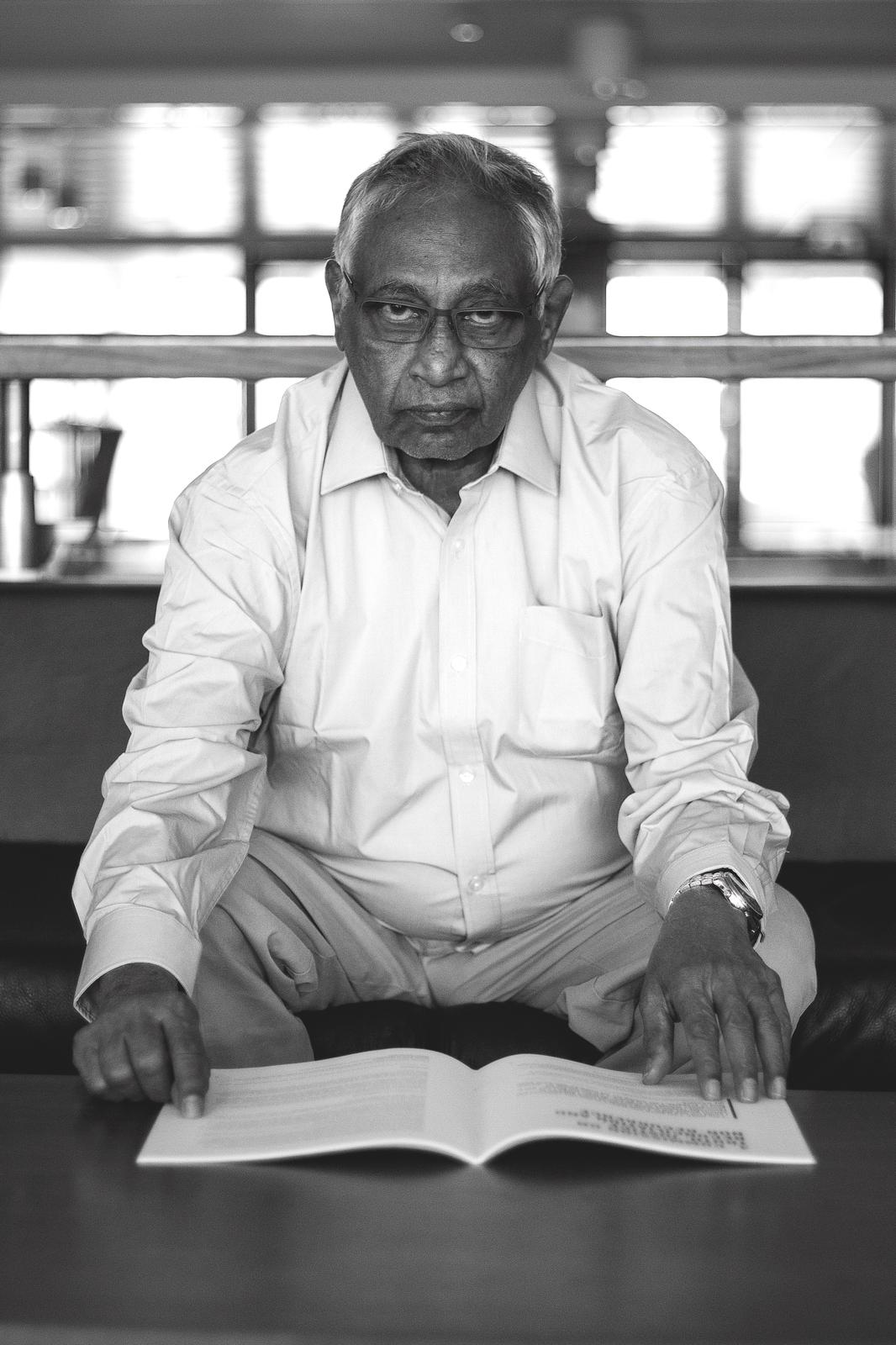
The United Kingdom paid tribute to Dr Kasipillai Manoharan at the United Nations Human Rights Council (UNHRC) this week, honouring the Tamil father who spent nearly two decades fighting for justice for his son and four other students murdered by Sri Lankan security forces in Trincomalee in 2006.
Speaking as he introduced the latest UN resolution on Sri Lanka in Geneva, the UK’s Permanent Representative to the WTO and UN, Kumar Iyer, described Dr Manoharan as “a tireless advocate for justice” whose determination inspired many around the world.
“Dr Manoharan was a tireless advocate for justice following the killing of his son, Ragihar, one of five students murdered in Trincomalee in 2006 in an emblematic human rights case,” Iyer said. “His unwavering pursuit of truth and accountability, including his campaign at the United Nations and his presence at this Council, inspired many. His passing is a solemn reminder that too many family members have passed away without seeing justice for their loved ones, or without knowing the fate of those who were disappeared.”
Dr Manoharan, who passed away in September, became a symbol of Tamil resistance to impunity after he refused to remain silent about the murder of his son, who was among five Tamil students shot dead on the Trincomalee seafront by Sri Lankan security forces. Despite intimidation and repeated threats, he testified before international bodies and continuously campaigned for justice.
His death came as the UN passed a resolution on Sri Lanka, which extends the mandate of the Office of the High Commissioner for Human Rights (OHCHR) for another two years. Introducing the draft, Iyer said the resolution “acknowledges the steps taken and the commendable commitments made by the current Sri Lankan government,” but stressed that “tangible action” was still needed.
“The exhumation of mass graves holds the potential to deliver long-awaited answers to families,” he added, urging that such investigations be carried out “in a manner that ensures they support future identification efforts and uphold the dignity of victims.”
Iyer further called for the repeal of the Prevention of Terrorism Act, reform of the Online Safety Act, and an end to the surveillance and intimidation of human rights defenders and families of the disappeared. He emphasised the crucial role of the OHCHR in continuing to support accountability and justice for victims.
The resolution was later adopted by consensus, renewing the UN’s evidence-gathering mechanism on Sri Lanka until 2027.
For Tamils across the North-East and the diaspora, Dr Manoharan’s struggle remains emblematic of the decades-long quest for truth and justice. His death, while the perpetrators of his son’s murder remain free, underscored the continuing failure of the Sri Lankan state to hold those responsible to account.
As Iyer noted, “For those who remain – survivors, families, communities – their call for truth and justice grows ever more urgent.”