.JPG)
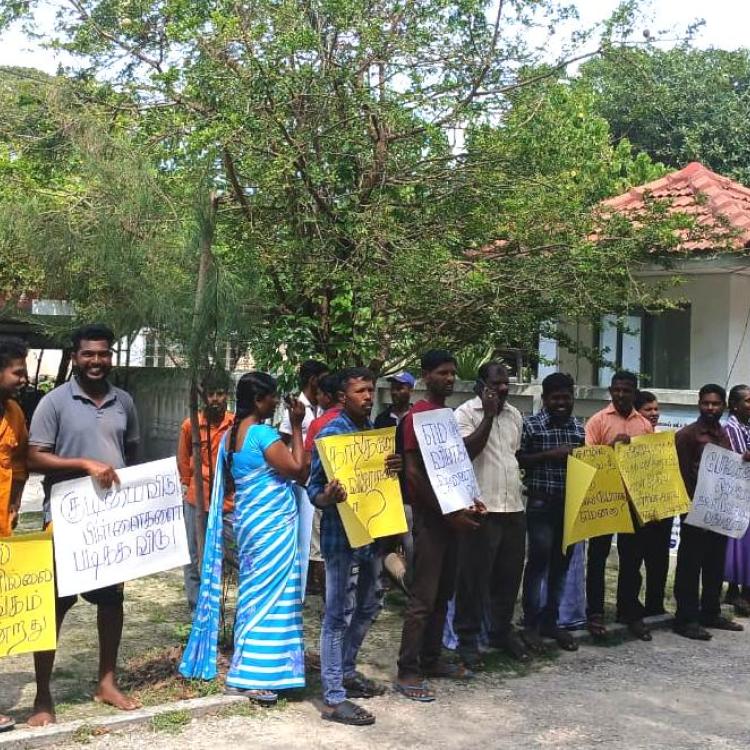
Tamils in Mannar protesting against a new liquor store last year.
Sri Lanka’s Alcohol and Drug Information Centre (ADIC) has released new data revealing that 83 per cent of deaths on the island are caused by non-communicable diseases (NCDs), many directly linked to alcohol consumption.
Despite repeated warnings from health experts, the government has been accused of ignoring a worsening national crisis.
According to ADIC, around 50 people die every day in Sri Lanka due to alcohol use, totalling nearly 20,000 preventable deaths each year. Globally, alcohol accounts for an estimated three million deaths annually, but in Sri Lanka, the figures are escalating amid weak regulation and profit-driven policies.
Public health experts have accused the Sri Lankan government of prioritising excise revenue over citizens’ wellbeing, noting that while alcohol tax brings in billions of rupees annually, the economic burden of alcohol-related diseases far outweighs this income.
ADIC’s statement further exposed how the alcohol industry is being allowed to target youth and women to compensate for declining sales, while successive administrations have issued new liquor licences under the guise of tourism. Critics say such actions directly contradict the government’s public stance on promoting a “healthy society.”
Despite repeated calls from health advocates to introduce a scientific tax index that adjusts excise duties in line with inflation and economic growth, the Sri Lankan government has failed to act decisively. Temporary bars and tourism-linked liquor outlets continue to proliferate, often with political backing.
Recent incidents, including the deaths of several fishermen in 2024 after consuming a toxic liquid mistaken for alcohol, have further highlighted the authorities’ failure to curb illicit brewing and ensure safety standards.
According to Sri Lanka's Alcohol and Drug Information Centre (ADIC), the North-East has some of the highest rates of alcohol consumption in the country. Batticaloa district reports the highest percentage (37.8%), while Jaffna records 20.4%. The fear is that introducing more liquor outlets in such regions could further exacerbate existing social problems, caused by decades of genocide and an ongoing Sri Lankan military occupation.