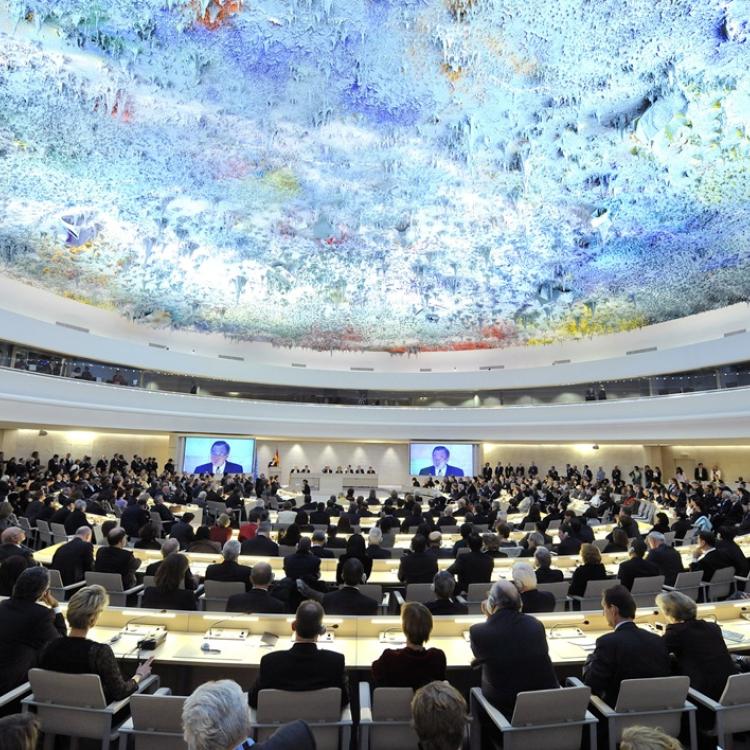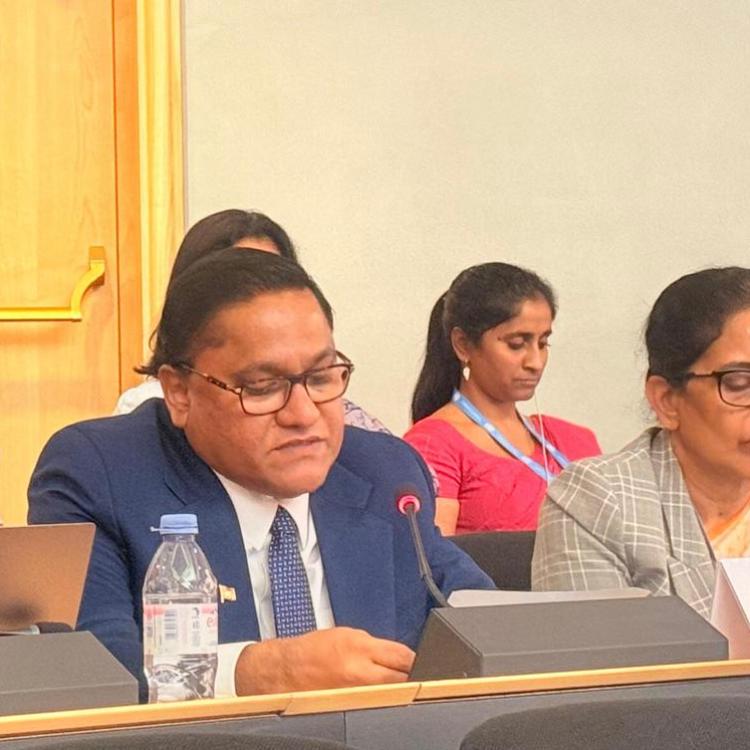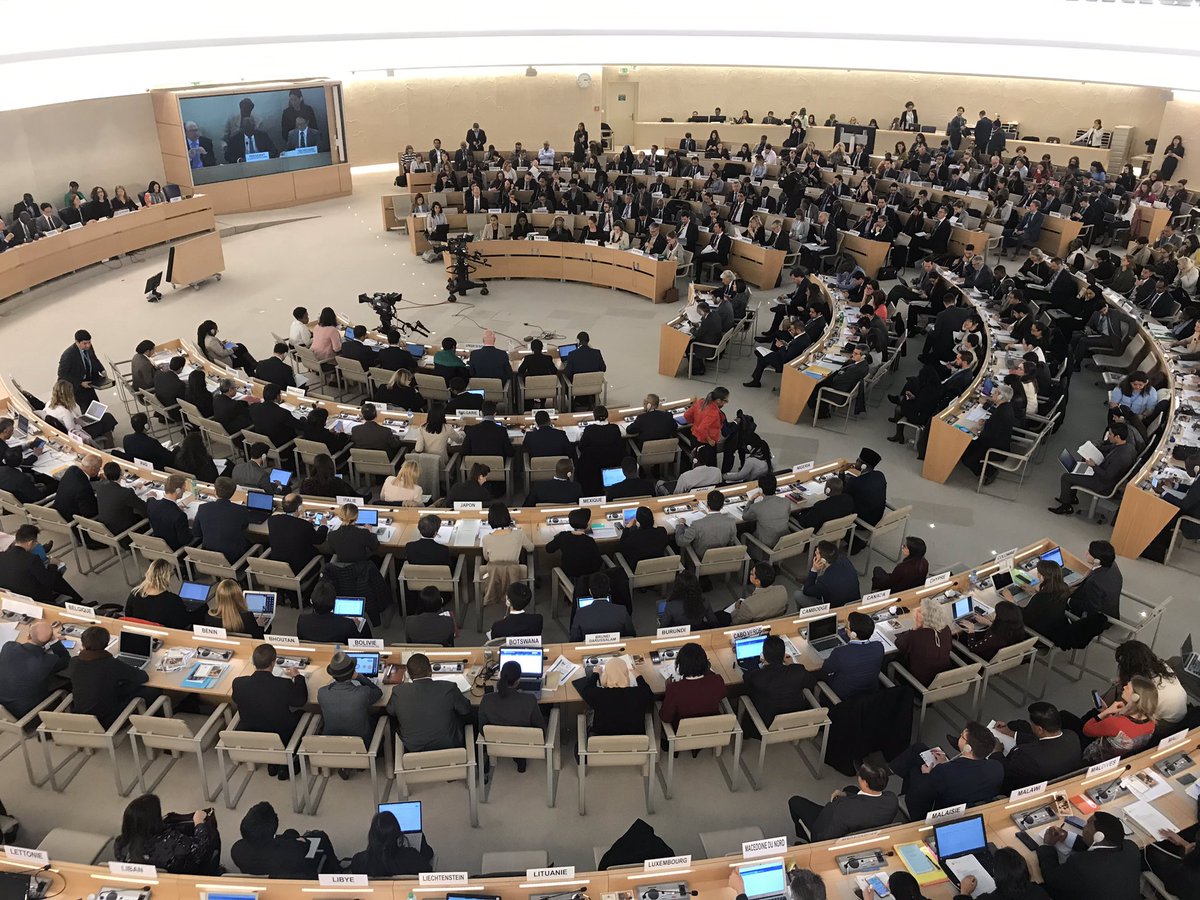
India delivered its statement on Sri Lanka at the UN Human Rights Council in Geneva on Monday, where it once again stressed its support for Tamil aspirations of “equality, justice, dignity and peace”, but only within what it described as the island’s “unity, territorial integrity and sovereignty.”
“We have taken note of the High Commissioner’s report,” said Ms. Anupama Singh, First Secretary at India’s Permanent Mission. “As a close friend of Sri Lanka and an immediate neighbour with deep-rooted ties to it, India has remained steadfast in its support of the relief, rehabilitation, resettlement, and reconstruction process in Sri Lanka since 2009.”
Singh emphasised the “deep historical, cultural and civilisational ties” between the two countries, describing Sri Lanka as central to India’s Neighbourhood First policy and Vision MAHASAGAR. She pointed to Indian Prime Minister Narendra Modi’s visit to Colombo in April and Sri Lankan president Anura Kumara Dissanayake’s trip to New Delhi last December as milestones in bilateral ties.
India’s statement reiterated its longstanding call for Colombo to fully implement its own constitution, conduct long-delayed provincial council elections, and pursue “meaningful devolution of powers.”
“India’s approach has always been to support the aspirations of the Tamil community for equality, justice, dignity and peace within the overall unity, territorial integrity and sovereignty of Sri Lanka,” Singh told the Council.
“India believes that meaningful devolution and genuine reconciliation, through an inclusive approach, would contribute to nation-building and a durable peace. Progress in these areas will not only benefit all communities in Sri Lanka but also reinforce the strong foundation of friendship and trust between our two nations.”
India has for decades pushed for the implementation of the 13th Amendment to the Sri Lankan constitution, a measure born from the 1987 Indo-Lanka Accord, which established provincial councils as a vehicle for limited devolution. Successive Sri Lankan governments, however, have refused to fully implement even this framework, with elections to the councils delayed for years.
Tamil political parties and civil society groups continue to call for a solution that goes beyond provincial councils and international accountability for the genocide, warning that devolution under Colombo’s control has repeatedly failed to protect Tamil rights.