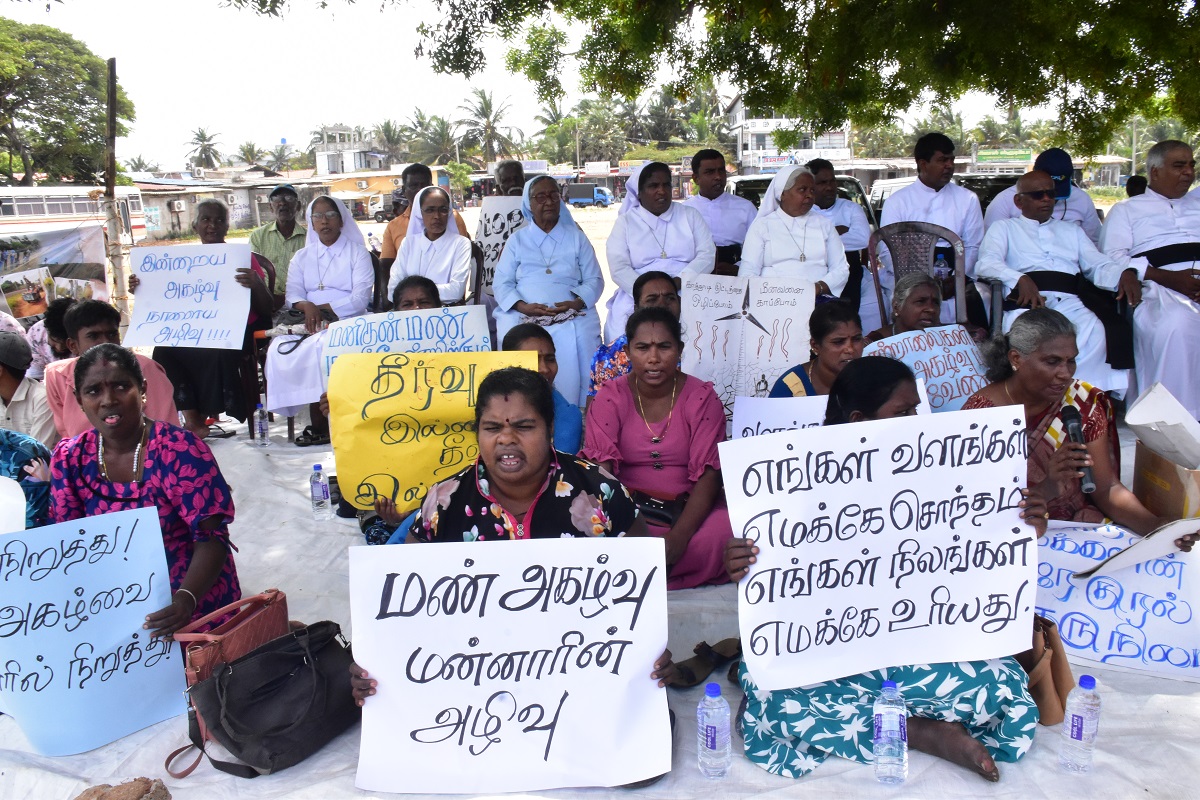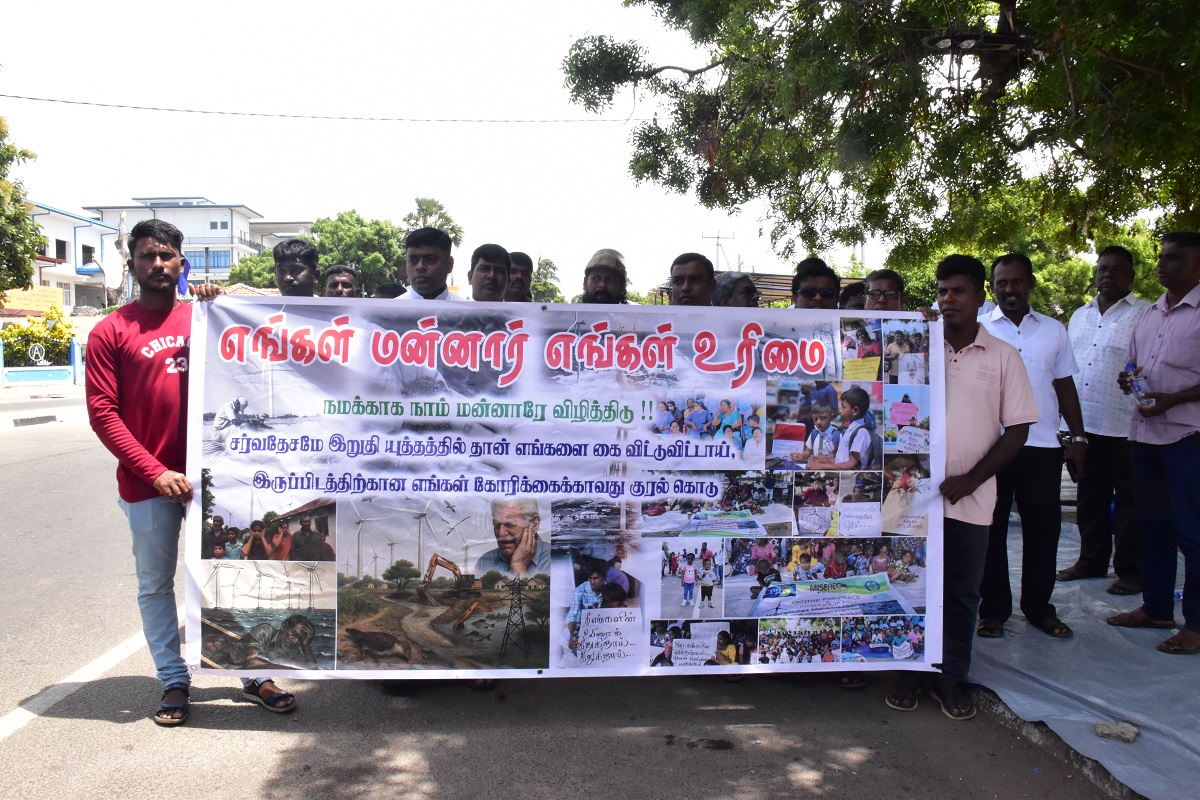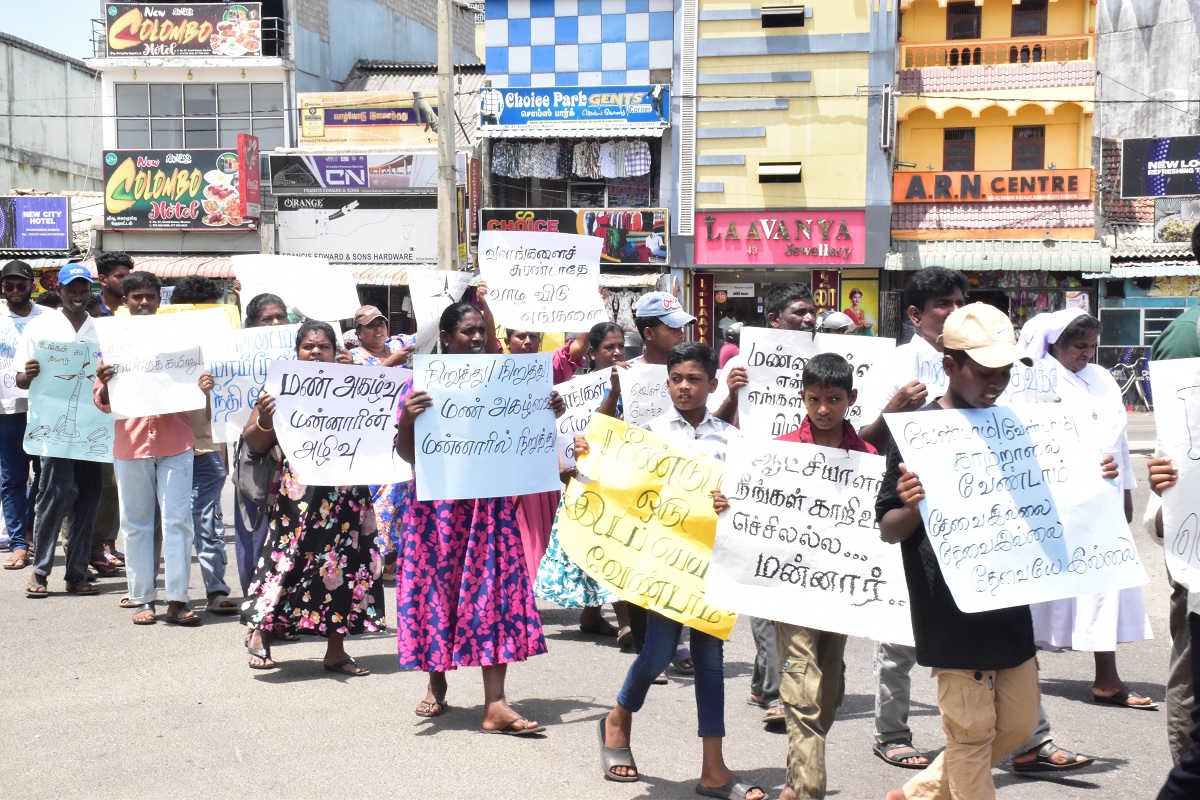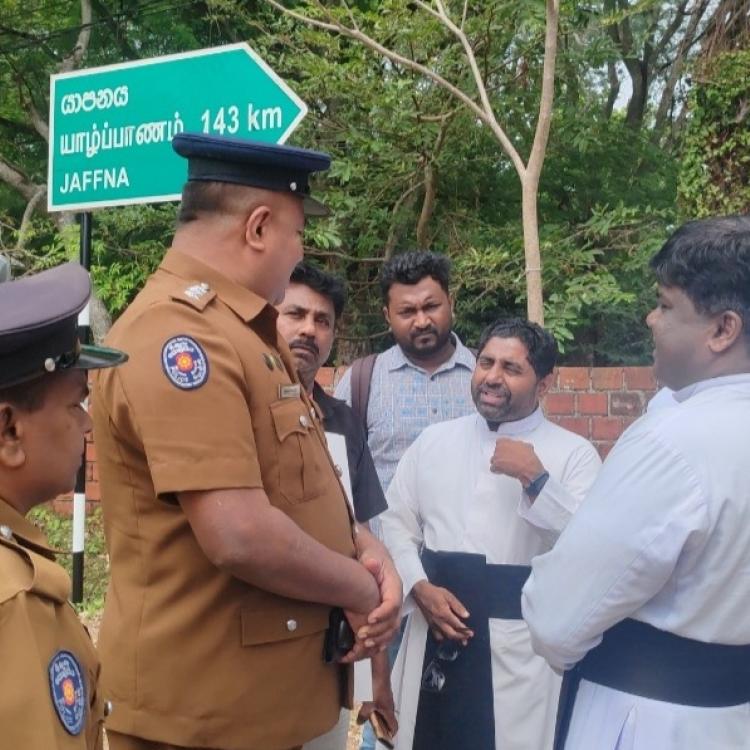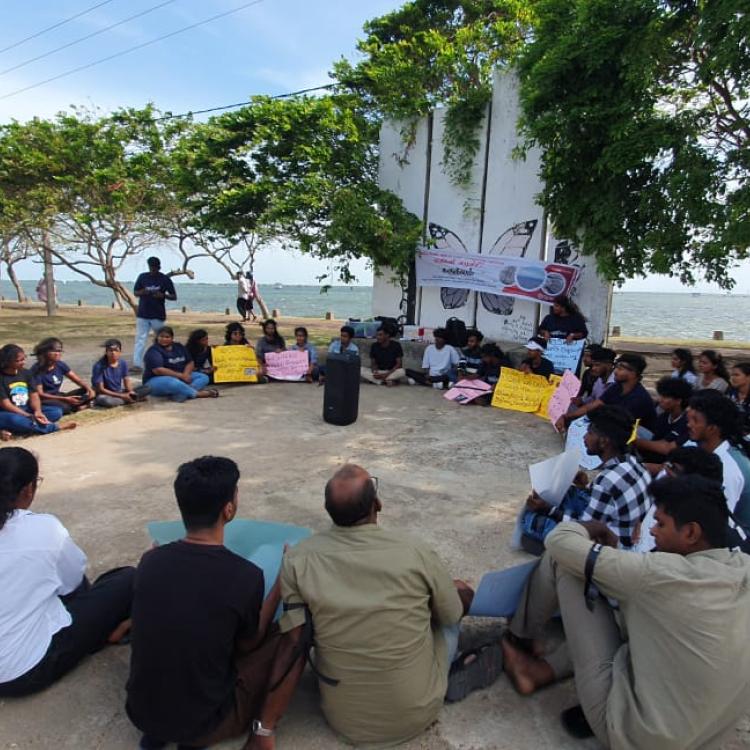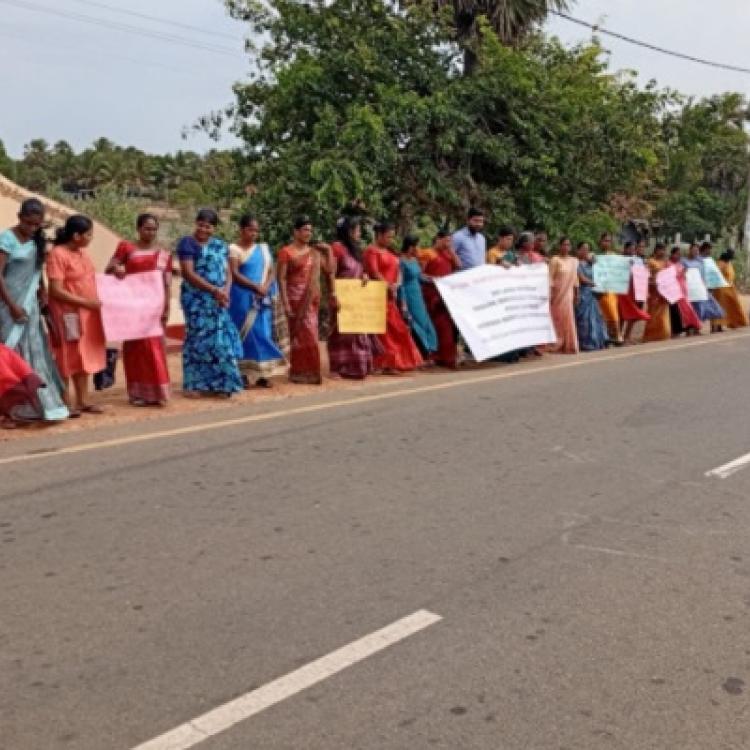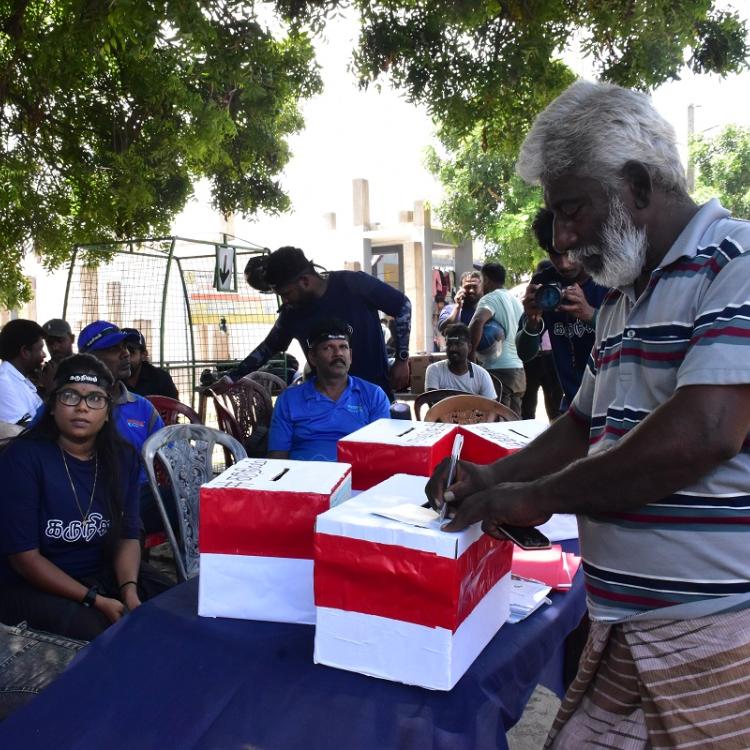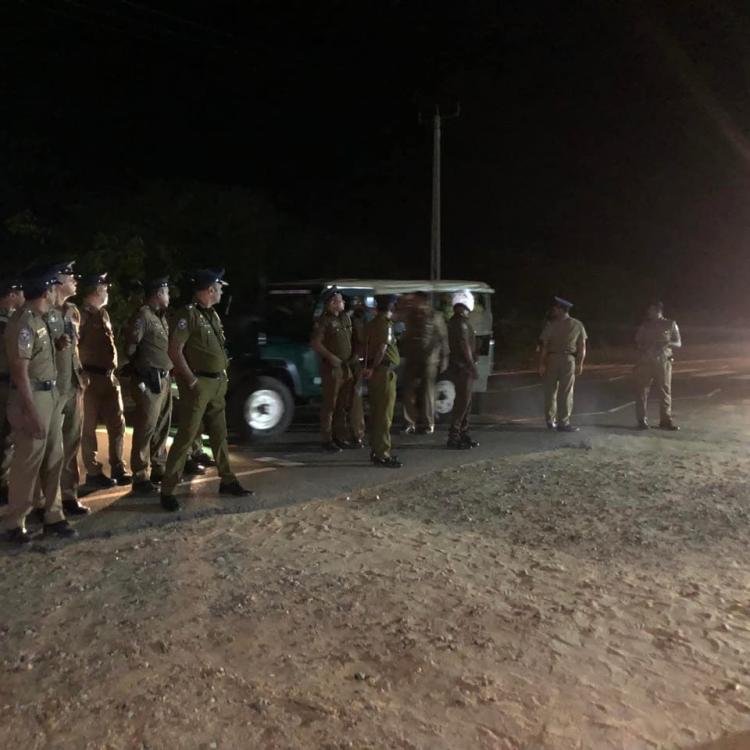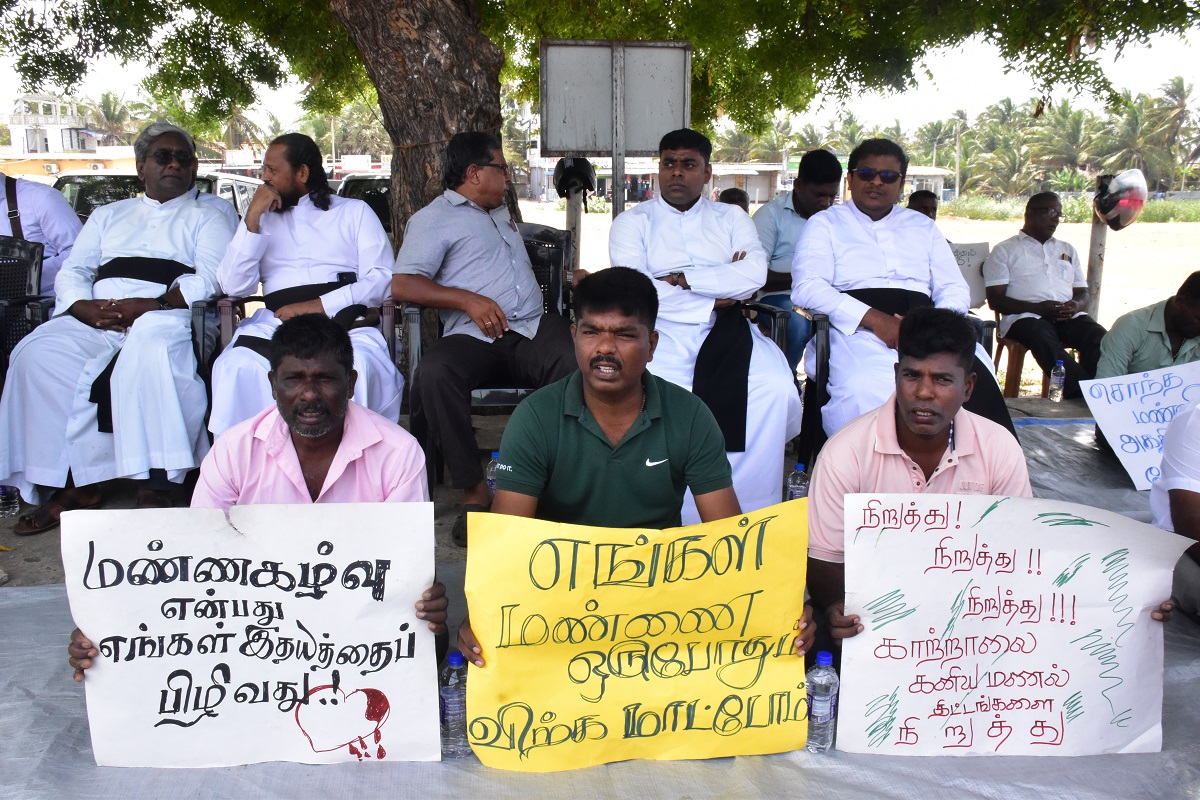
The people of Mannar scored a partial win this week with Sri Lankan president Anura Kumara Dissanayake agreeing to suspend construction of two wind power plans for a month, as protests continued across Mannar against controversial wind power and mineral sand extraction projects.
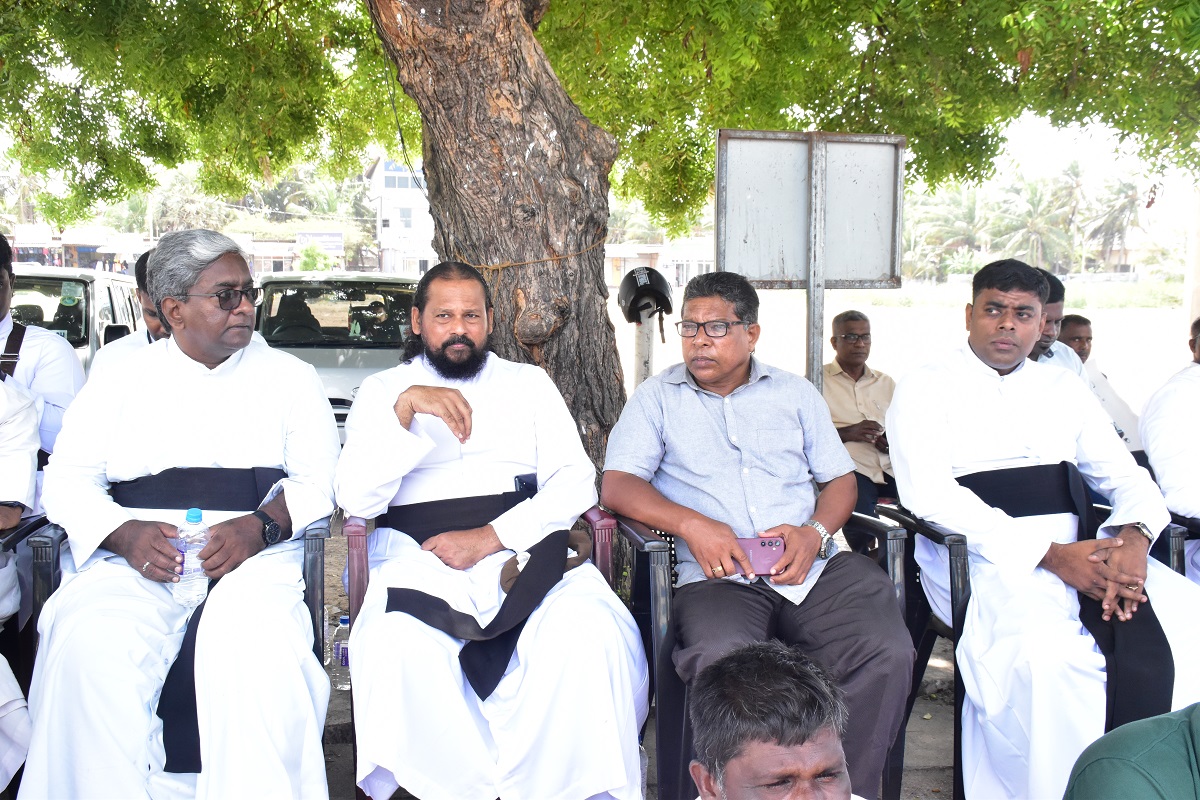
The announcement followed a meeting at the Presidential Secretariat on August 13, where representatives from the protest movement, along with local government officials, and religious leaders, confronted the president over what they described as destructive, exploitative, and imposed development schemes.
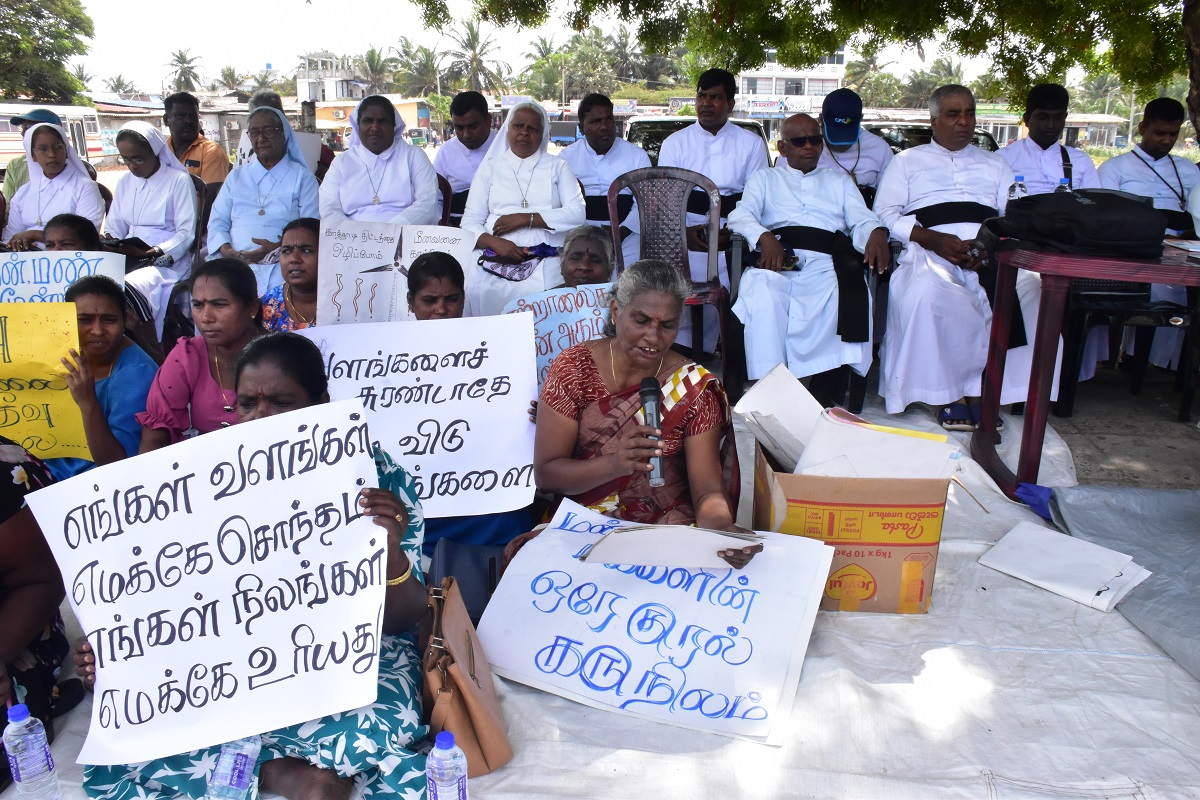
According to the president’s office, work on two wind power plants – a 20 MW project already underway and a proposed 50 MW plant – will be paused “despite tenders being called and contracts awarded.” The suspension is to allow for the creation of “a framework to identify and resolve the issues faced by local communities.”
Community representatives raised serious concerns about environmental destruction, displacement, and the violation of consent, as well as the impact of associated ilmenite mining operations. They accused authorities of failing to properly implement environmental recommendations and report findings from the Central Environmental Authority (CEA).
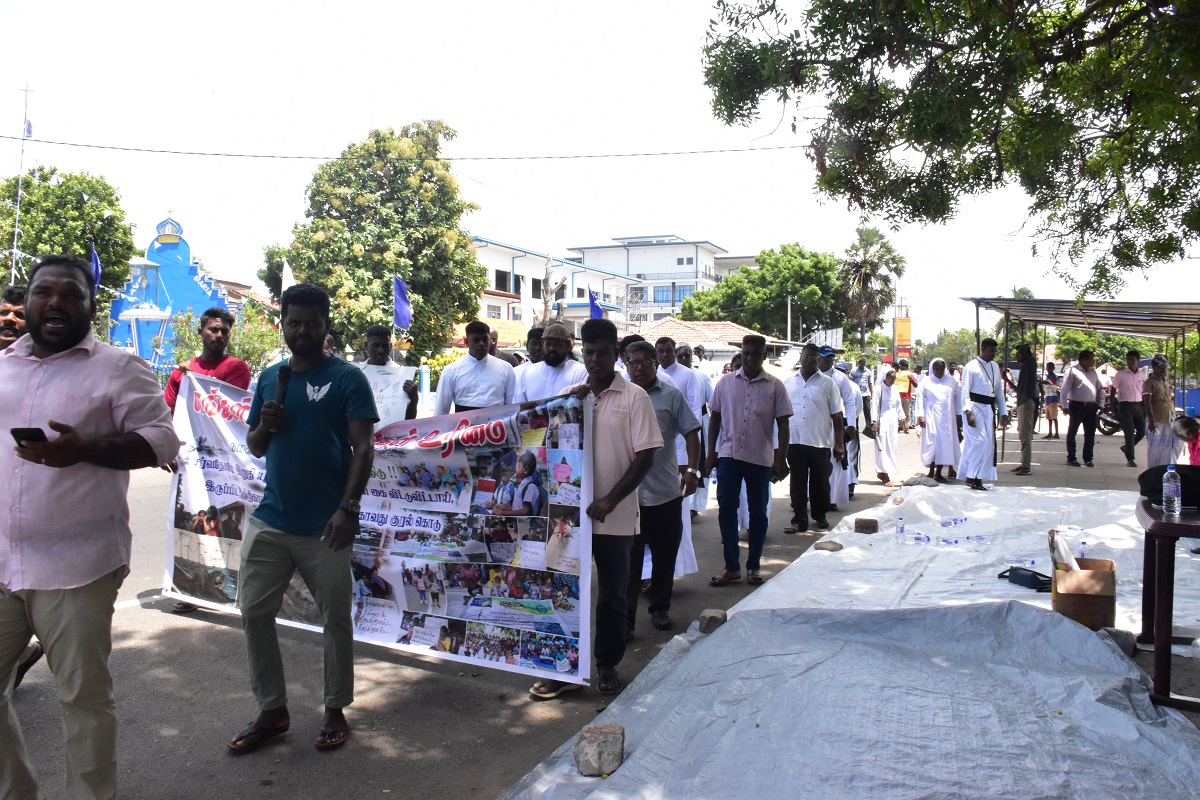
Dissanayake reportedly assured the meeting that the projects would not move forward without CEA assessment reports, acknowledging that there had been “a failure to properly implement” earlier recommendations. He stressed that energy was a national resource and delays in development risked “missing opportunities to uplift the national economy,” but claimed the government was prepared to engage in dialogue on livelihoods, economic impact, and community well-being.
The one-month halt marks a significant, but temporary, concession for Mannar’s protesters, who have vowed to keep up their rotational demonstrations until the projects are scrapped or radically altered with full local approval.
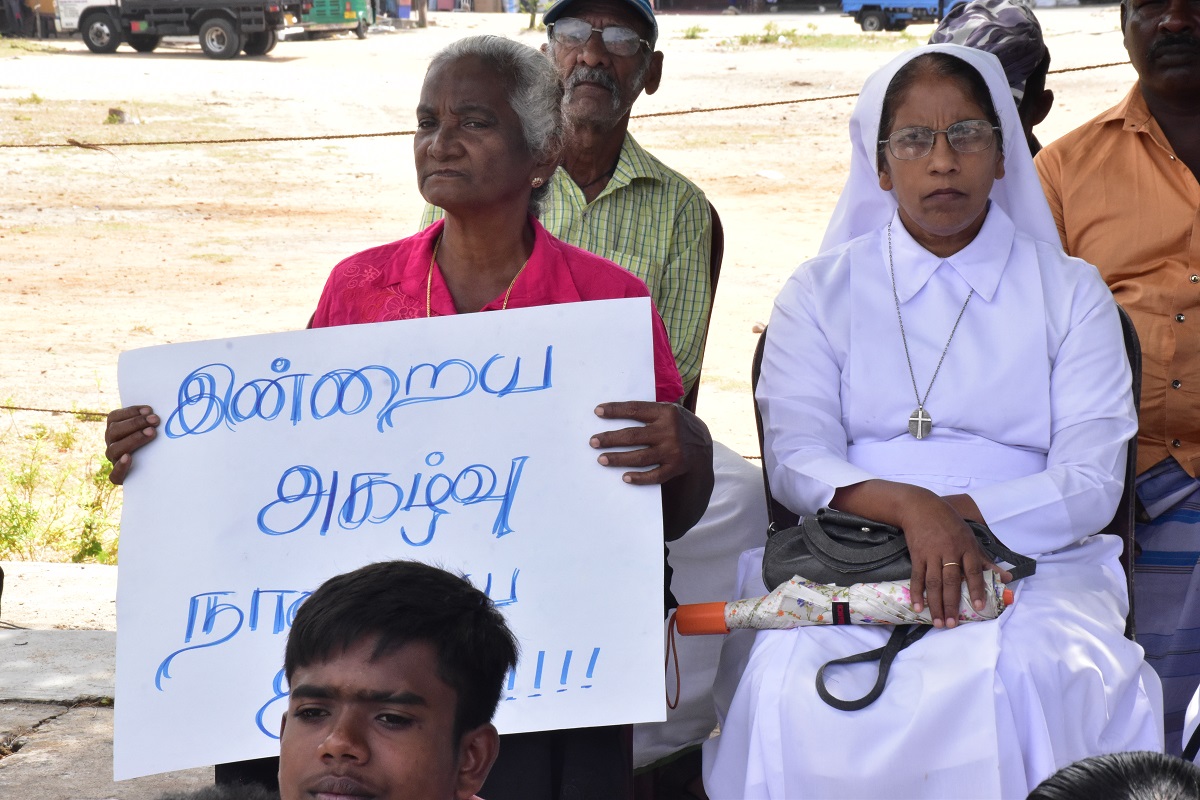
Since August 3, the bazaar area of Mannar has seen daily marches and blockades, most recently preventing the transport of large wind turbine components, with support from across the district, including fishermen, priests, nuns, and activists. Residents argue that turbines already installed have disrupted fishing grounds and harmed the health of those living nearby, especially children, the elderly, and pregnant women.