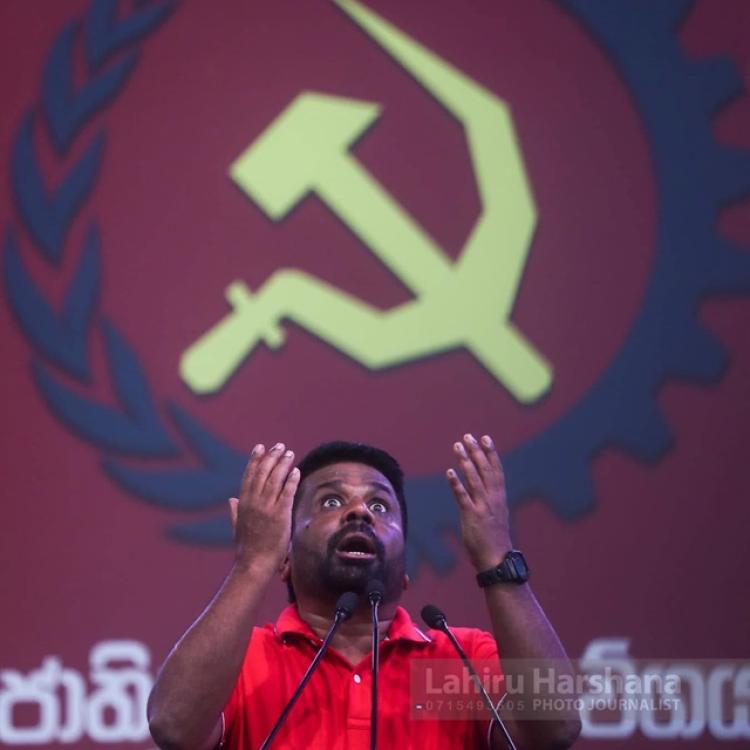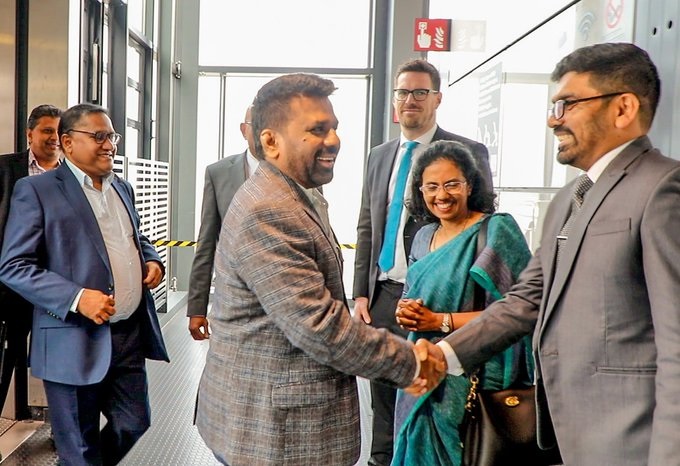
Dissanayake touches down in Germany earlier today.
As Sri Lankan president Anura Kumara Dissanayake arrived in Berlin today, Human Rights Watch has called on Germany to press for meaningful action on human rights and accountability for mass atrocities.
In a statement ahead of the June 11 meeting, Philipp Frisch, Director for Germany at Human Rights Watch, warned that longstanding rights concerns in Sri Lanka must not be ignored.
"Both Sri Lanka and Germany have newly elected leaders, but key human rights concerns that Chancellor Friedrich Merz should raise with visiting President Anura Kumar Dissanayake in Berlin on June 11 have lingered for decades," he said.
Tens of thousands of Tamils were massacred by the Sri Lankan state in 2009, in what is becoming increasingly recognised as a genocide. Hospitals were repeatedly bombed, there was widespread torture and sexual violence, and surrendering Tamils were executed on camera.
Since the Mullivaikkal genocide, the United Nations Human Rights Council has passed multiple resolutions calling for accountability and established an evidence-gathering process. However, Dissanayake’s administration has followed the path of previous governments, protecting former senior officials implicated in war crimes and rejecting the council’s resolutions.
Meanwhile, “Sri Lankan government agencies continue to discriminate” against Tamils and Muslims wrote Frisch. “In war-affected areas, hardline Buddhist monks and security forces have seized numerous Hindu temples and turned them into Buddhist monasteries,” he added, a strategy that many have deemed part of an ongoing pattern of Sinhala-Buddhist state expansion in the North-East.
Since 2017, Sri Lanka has benefitted from tariff-free access to European Union markets under the GSP+ trade agreement, which requires the ratification and implementation of 27 conventions on human rights, labour rights, and environmental standards. Yet Sri Lanka continues to fall short of its obligations.
Germany had previously played a leading role in sponsoring Human Rights Council resolutions on Sri Lanka but stepped back from that position around 2022. With the resolution due for renewal later this year, Human Rights Watch warned that maintaining pressure for accountability and continued evidence gathering is crucial.
"Merz should build on UN efforts and GSP+ ties to urge Dissanayake at their Berlin meeting to deliver on his pledges and obligations for accountability and human rights reforms. Such opportunities should not go to waste," said Frisch.