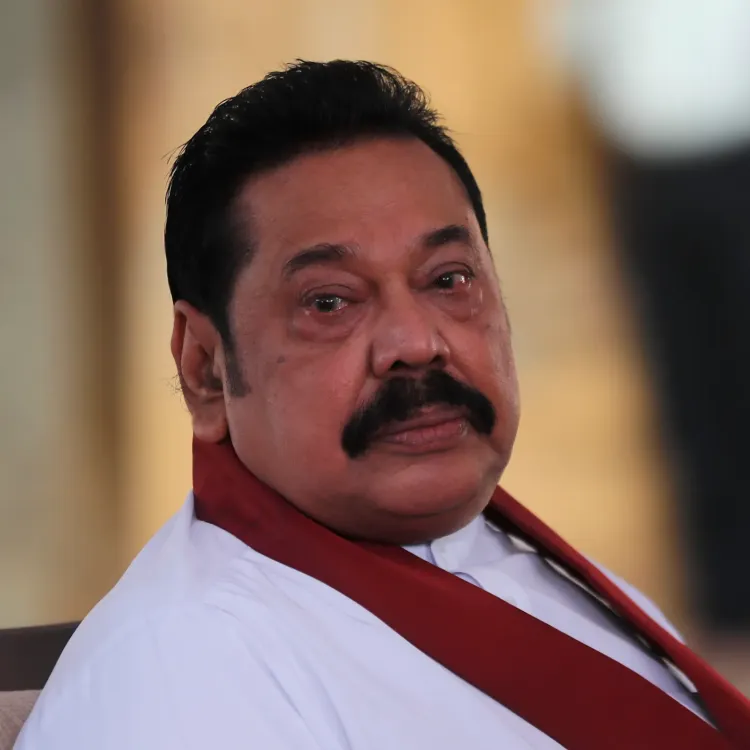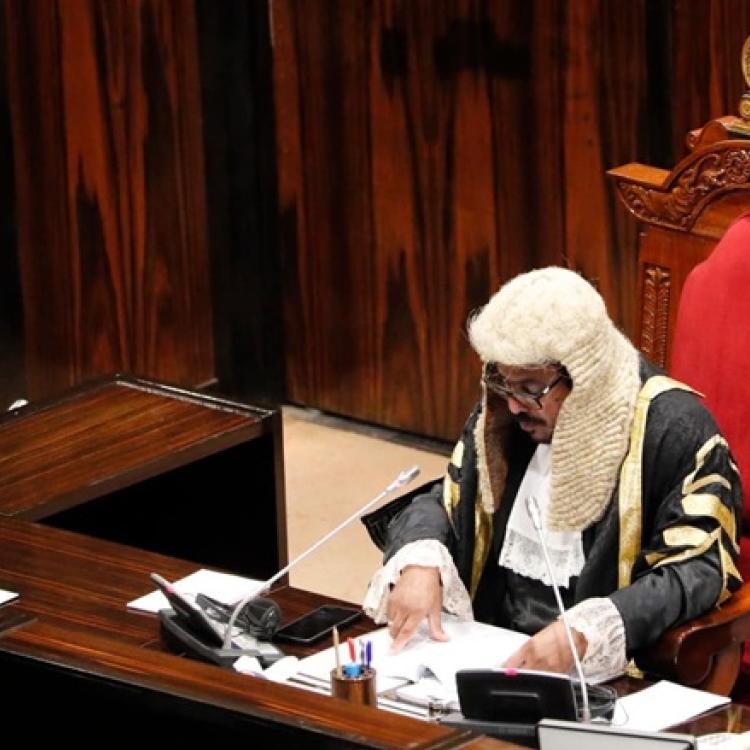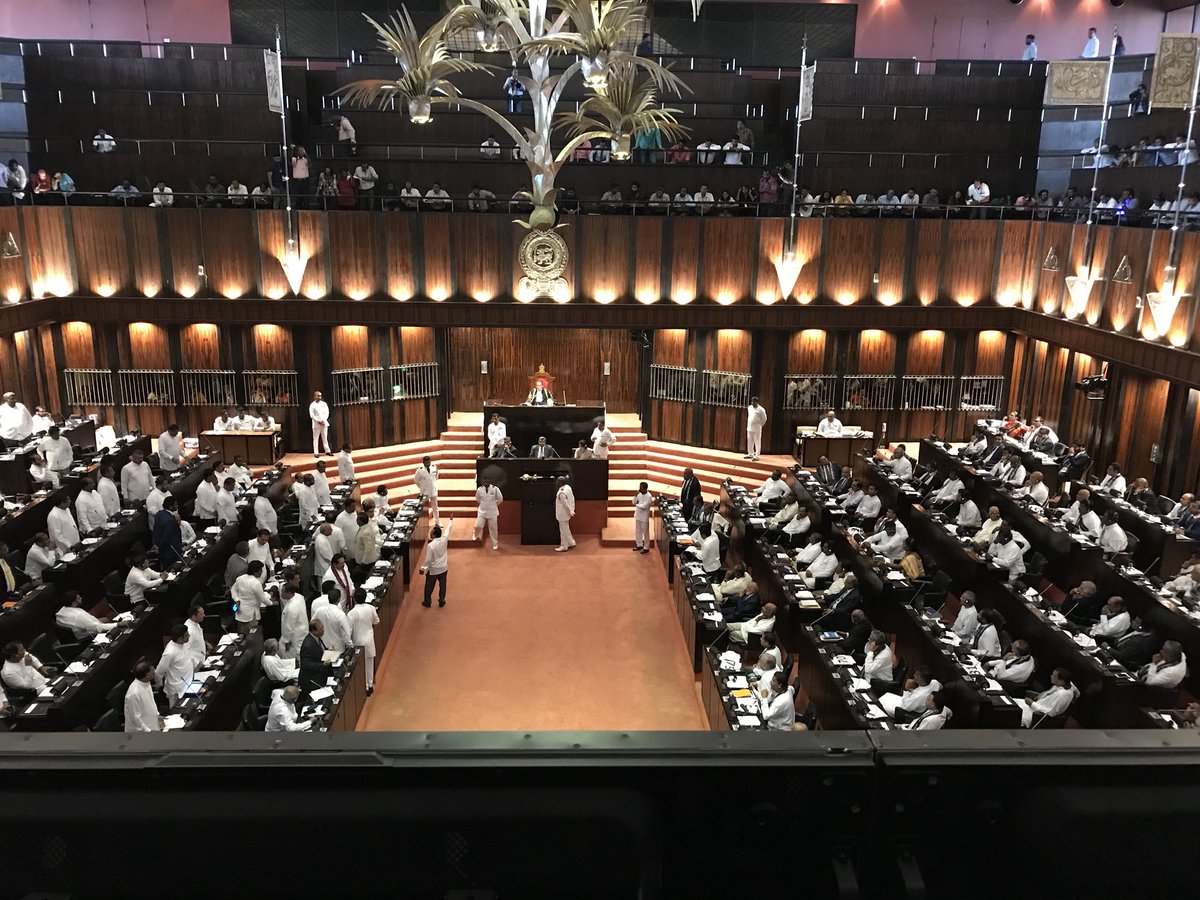
Sri Lanka’s Speaker of Parliament, Dr. Jagath Wickramaratne, is facing mounting political pressure after the Commission to Investigate Allegations of Bribery or Corruption (CIABOC) decided to initiate a formal investigation into complaints lodged against him, intensifying scrutiny of the head of the legislature and chair of the Constitutional Council.
The probe stems from a complaint filed on 2 February 2026 by suspended Deputy Secretary General of Parliament and Chief of Staff, attorney Chaminda Kularatne. After preliminary consideration, the Commission has instructed its Director General to proceed with an investigation. As part of the initial steps, CIABOC is expected to call for relevant documents from Parliament before recording statements from both Dr. Wickramaratne and Kularatne.
The ruling National People’s Power (NPP) government has indicated that any decision regarding the Speaker’s position would depend on the outcome of the investigation. NPP General Secretary and MP Dr. Nihal Abeysinghe told The Morning that what is currently before CIABOC is a complaint and that due process must be allowed to run its course. He emphasised that there is an established procedure for handling complaints against public officials and that any next steps would be determined only after the Commission concludes its inquiry.
The main opposition Samagi Jana Balawegaya (SJB), however, has questioned the propriety of Dr. Wickramaratne remaining in office while under investigation. SJB General Secretary and MP Ranjith Madduma Bandara said it was inappropriate for the Speaker to continue in his post amid an ongoing corruption probe, noting that the party was closely observing developments.
SJB MP Dayasiri Jayasekera went further, calling on the Constitutional Council (CC), which is chaired ex-officio by the Speaker, to ask Dr. Wickramaratne to step down temporarily pending the outcome of the CIABOC investigation. He argued that the CC responsible for recommending appointments to key independent commissions and approving high-level state appointments could not afford to have its head under investigation for corruption-related allegations.
“We have never experienced a similar situation since the establishment of the CC in 2000,” Jayasekera said, referring to the body introduced under the 17th Amendment, later abolished and reinstated through subsequent constitutional reforms, most recently under the 21st Amendment in 2022.
The Constitutional Council plays a central role in Sri Lanka’s governance architecture. It recommends nominees to the President for appointments to bodies including the Election Commission, Public Service Commission, National Police Commission, Human Rights Commission, Finance Commission, National Procurement Commission and CIABOC itself. It also approves or rejects presidential recommendations for appointments to the higher judiciary, the Attorney General, Auditor General, Inspector General of Police and other key posts.
Jayasekera questioned how Dr. Wickramaratne could continue to head a body that is involved in appointments to CIABOC, the very institution now investigating him. He said political parties represented in Parliament should intervene to ensure that the controversy does not undermine the credibility of the apex appointments body.
The current crisis is rooted in the suspension of Kularatne on 23 January by Parliament’s Staff Advisory Committee (SAC), chaired by Dr. Wickramaratne. The decision followed an internal inquiry conducted by S.K. Liyanage, a former senior administrative official, which reportedly concluded that Kularatne had not met the required criteria for appointment as Deputy Secretary General and that the procedure leading to his appointment was flawed.
Kularatne has disputed the process that led to his suspension and subsequently lodged a complaint with CIABOC accusing the Speaker of engaging in a series of corrupt acts. His complaint reportedly contains eight allegations, including the illegal obtaining of fuel allowances, misuse of official vehicles and parliamentary media equipment, obtaining meals from Parliament without payment, improper appointment and payment of an investigating officer using parliamentary funds, misuse of official residences, obstructing the release of information under the Right to Information Act, and unlawful interference in the administration of parliamentary staff.
Complicating matters further, CIABOC has also decided to investigate a separate complaint filed by an individual identified as R. Kannan, who alleges that Kularatne himself committed acts of corruption and that his appointment as Deputy Secretary General was irregular. Both complaints were taken up at a recent meeting of the Commission, which ordered parallel investigations.
Opposition concerns have deepened following a move by the Speaker’s Private Secretary, Chameera Gallage, who called for a report from Parliament’s Secretary General regarding information contained in Kularatne’s complaint. SJB MP Harshana Rajakaruna has lodged a separate complaint with CIABOC alleging that this action amounts to an attempt to interfere with the investigation.
In a written submission to CIABOC, Rajakaruna claimed that requesting internal reports about a complaint already under investigation could constitute undue influence and potentially compromise the integrity of the probe. He urged the Commission not to divulge any information related to the complaint and to ensure the investigation proceeds independently. Rajakaruna told the media that his party had confidence in CIABOC’s ability to act impartially and indicated that a no-confidence motion against the Speaker could be brought forward “at the right time.”
The controversy comes little over a year after Dr. Wickramaratne was appointed Speaker in December 2024, following the resignation of his predecessor Asoka Ranwala, who stepped down after allegations surfaced regarding false claims about his higher education qualifications. The current standoff therefore places renewed attention on standards of accountability at the highest levels of Parliament.
With two complaints now pending against the Speaker and a counter-complaint under investigation against his accuser, the outcome of the CIABOC probes is likely to have significant political and institutional ramifications. As scrutiny intensifies, the question confronting both the government and the Constitutional Council is whether the Speaker’s continued tenure strengthens or undermines public confidence in Sri Lanka’s governance institutions.