Udaya Gammanpila, a hardline Sinhala nationalist and former Sri Lankan minister, publicly celebrated the departure of outgoing United States Ambassador Julie Chung this week, describing her tenure as a “curse” on the country and staging a media spectacle to mark her exit.
Whilst other Sri Lankan politicians issued statements thanking Ambassador Chung and wishing her well, Gammanpila, leader of the Pivithuru Hela Urumaya (PHU), adopted a markedly different tone.
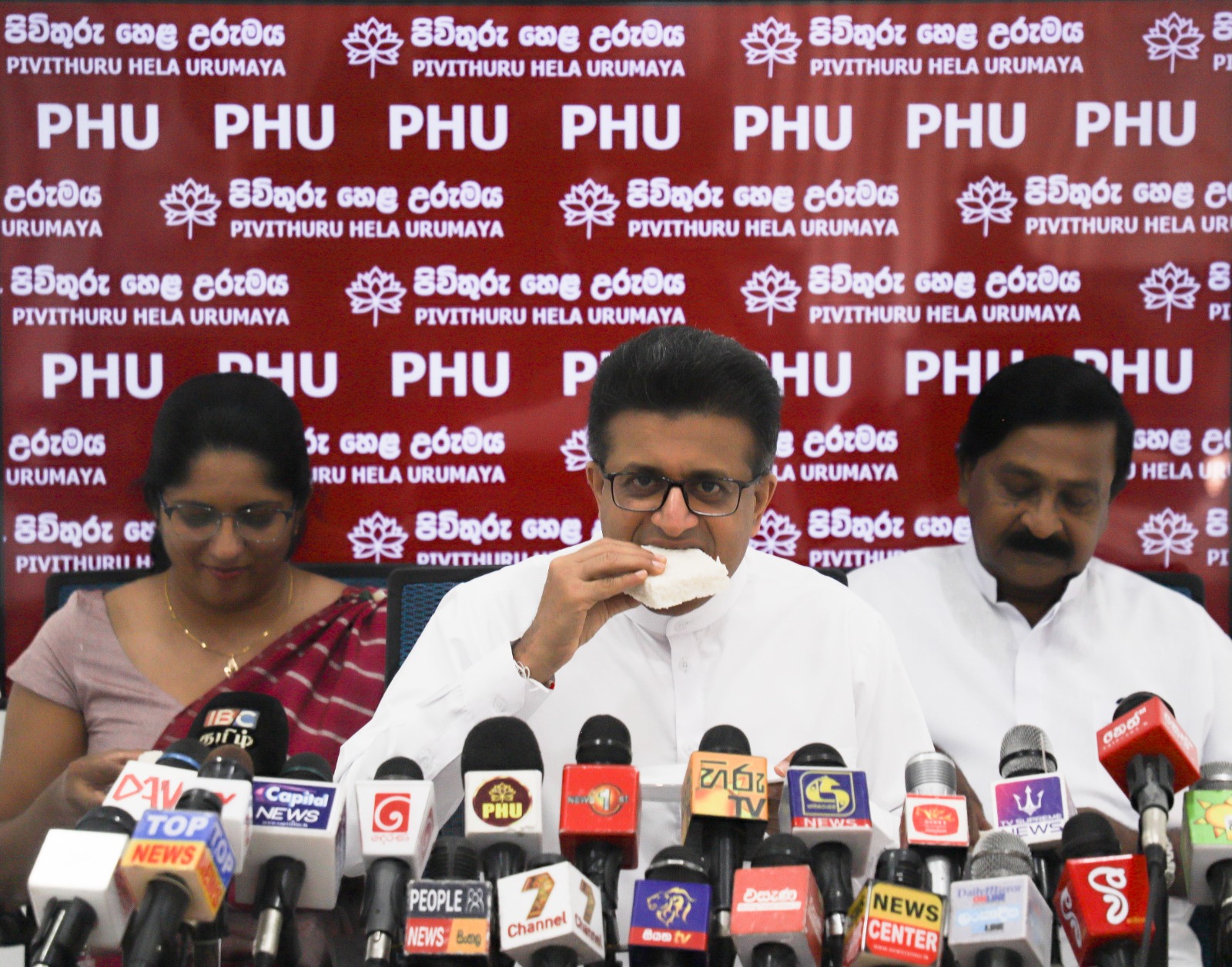
At a press conference held in Colombo, the Sinhala nationalist politician declared that the end of Chung’s tenure should be celebrated nationwide with traditional festivities.
“Julie Chung is set to end her tenure in Sri Lanka today. This is something the whole country must celebrate with drums and kiribath,” he said.
In a gesture for the cameras, Gammanpila then took a bite of milk rice, a food customarily prepared for auspicious occasions, symbolically marking what he described as a moment of national relief.
“The American Ambassador who was a curse to Sri Lanka is set to leave the country today. In fact, the joy of ending that curse is what we were trying to celebrate by eating milk rice,” he added.
He went further, insisting that the ambassador’s departure was not simply a routine diplomatic change but an event of national importance.
“If so, today the whole country should celebrate by eating milk rice and beating tambourines,” he said.
Gammanpila is a prominent figure in Sri Lanka’s extremist Sinhala nationalist movement, and has repeatedly opposed international scrutiny of Sri Lanka’s human rights record. He has been a vocal defender of successive governments accused of war crimes and repression.
As leader of the Pivithuru Hela Urumaya, a party known for its hardline Sinhala Buddhist ideology, Gammanpila has built his political career on opposing Tamil political rights, rejecting accountability for mass atrocities, and campaigning against what he portrays as foreign interference in Sri Lanka’s internal affairs.
He was an ardent supporter of former president Mahinda Rajapaksa and played a key role in promoting Sinhala nationalist narratives during and after the armed conflict. Over the years, he has also attacked international human rights mechanisms, United Nations resolutions, and diplomatic efforts aimed at securing justice for Tamil victims.