
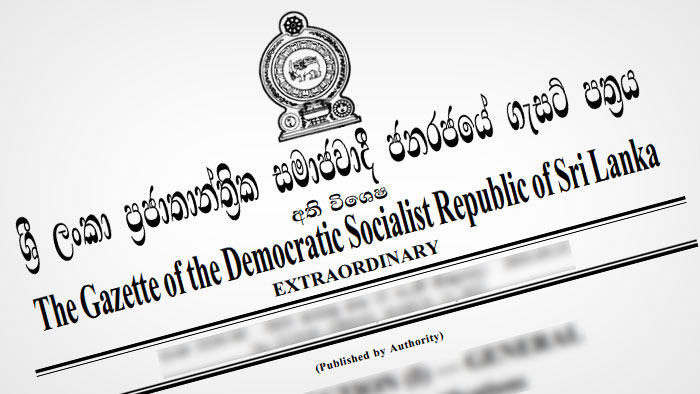
The Sri Lanka government has issued a new extraordinary gazette renewing and extending its long-running ban on several Tamil diaspora organisations and individuals, continuing to designate them as “terrorists”.
The gazette, published this week, replaces a previous gazette issued in May last year and reaffirms the proscription of a wide range of Tamil political and advocacy bodies operating around the world, alongside dozens of named individuals. The state claims both the organisations and individuals listed are involved in “terrorism-related activities”.
Among those again named are several prominent Tamil diaspora groups that have long been targeted by successive Sri Lankan administrations, including organisations involved in political advocacy, humanitarian work and mobilisation within the Tamil diaspora. The Liberation Tigers of Tamil Eelam remains listed, alongside bodies the state alleges function as overseas fronts or supporters.
The organisations blacklisted by the Sri Lankan government include:
• Liberation Tigers of Tamil Eelam (LTTE)
• Tamil Rehabilitation Organisation (TRO)
• Tamil Coordinating Committee (TCC)
• World Tamil Movement (WTM)
• Transnational Government of Tamil Eelam (TGTE)
• World Tamil Relief Fund (WTRF)
• National Council of Canadian Tamils (NCCT)
• Tamil Youth Organisation (TYO)
While the majority of the designations mirror those contained in the May 2025 gazette, the latest document updates identification details and addresses for a number of individuals and introduces at least one additional organisation to the list. All entries have been reissued under new reference numbers for 2026, though the underlying allegations and framing remain unchanged.
For years, various Sri Lankan regimes have maintained a sweeping proscription regime against Tamil diaspora groups and individuals. A ban can make it a criminal offence for Sri Lankan citizens to maintain contact with these organisations or their members, severely restricting political engagement and stifling links between the diaspora and the Tamil homeland.
The original mass listings were introduced in 2014 under the administration of Mahinda Rajapaksa, prompting widespread condemnation from Tamil organisations and human rights advocates, who warned the measures were designed to suppress legitimate political expression and transnational advocacy for Tamil rights. Despite repeated outcry, subsequent governments have continued to uphold and renew the proscription regime, even after the Rajapaksas were voted out of power.
Critics have long argued that the listings form part of a broader strategy by the Sri Lankan state to criminalise Tamil political mobilisation, particularly efforts by the diaspora to seek accountability for wartime atrocities and to assert the political rights of the Tamil nation.
See the full gazette here.