
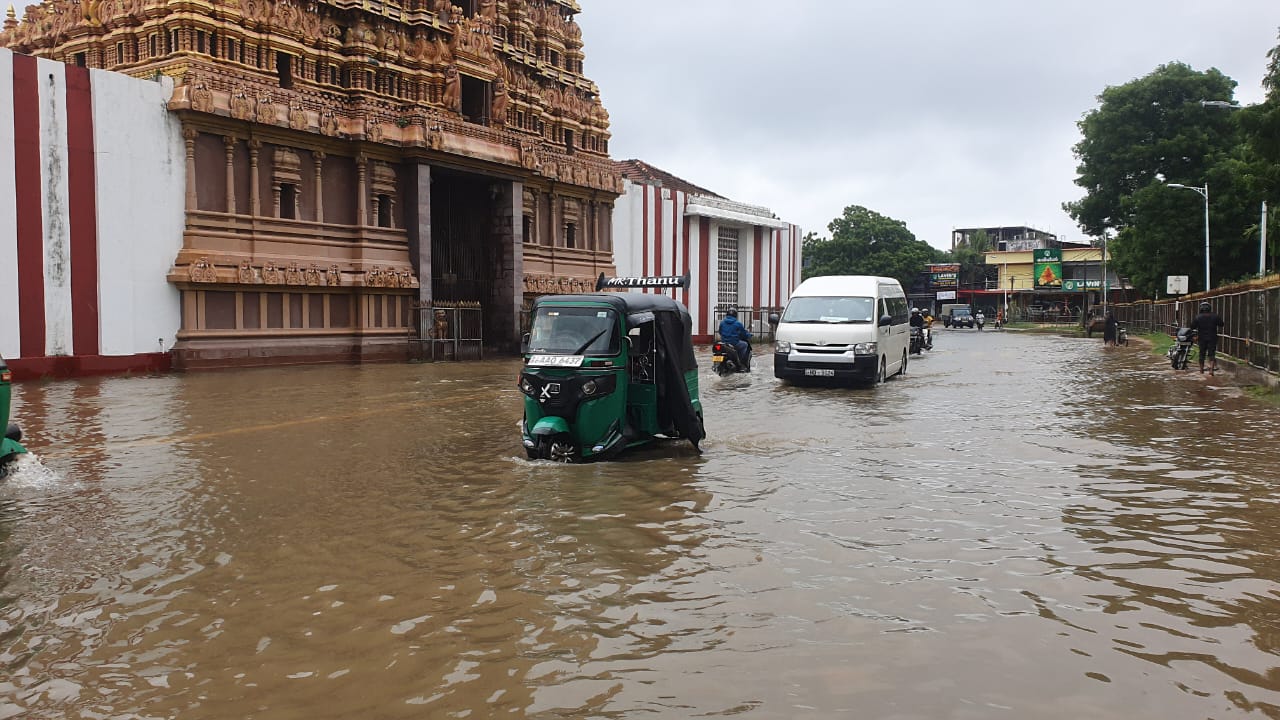
Sri Lanka’s response to Cyclone Ditwah has come under intense scrutiny, as the death toll climbs into the hundreds and survivors accuse the National People’s Power (NPP) government of failures in early warning, coordination and basic communication - particularly in Tamil.
As torrential rains lashed the island, Cyclone Ditwah, described as the worst cyclone to hit Sri Lanka since 2003, left a trail of devastation. There are officially 410 deaths, over 200,000 displaced, and 336 reported missing. Those numbers are set to change.
On November 28, Sundaram Thevapalan, 36, and his family were forced to wade through flood waters in Colombo to find shelter, according a report in the New Indian Express. They had received no alerts of 200 mm of rainfall or imminent flooding. The rising water itself was the only warning. “You read the crisis when water reached your doorstep,” he said.
Early warnings ignored, systems overwhelmed
Sri Lanka’s emergency response apparatus formally activated its disaster mechanisms as Ditwah intensified. Deputy Director at the Disaster Management Centre (DMC), Janaka Handunpathiraja, told the Sunday Times that systems were triggered under the National Disaster Management Act of 2005.
Under the Act, “the President appointed a special council… and everything operates within that, even the Army.” He said the National Emergency Operation Plan of 2017 is automatically triggered during declared crises, guiding coordination between the tri-forces, district administrations and first responders.
He insisted that preparations began well before the cyclone’s landfall. “Since the 22nd, we have been informing the public,” he said, adding that exam authorities had been alerted early, worst-case scenarios assessed and search-and-rescue deployments made in advance.
He pointed to three days of unprecedented rainfall, including 490 mm recorded in Kandy over 72 hours, and said landslide advisories and weather briefings were issued continuously. Daily press conferences, public notices and district-level alerts were used to warn communities to stock up ahead of the anticipated impact from November 26 to 28.
Evacuation communications, he said, were only initiated once scientific agencies issued red alerts. “Red alerts indicate evacuation,” he explained, noting that alerts were disseminated via fax and email to state stakeholders and through SMS, physical visits and local announcements to the public. “Kind requests and forced evacuation are different — in Sri Lanka, no forced evacuations yet.”
Yet on the ground, many residents told local media they only grasped the cyclone’s severity by Thursday night. In areas with early power cuts, such as parts of Kandy, households had received no prior advice to charge devices or prepare backup communications. Confusion over the location of “safety centres” and unclear evacuation procedures added to the chaos. Crowded buses travelled along declared at-risk roads and were later stranded, requiring air support to evacuate passengers as waters rose.
Even as Sri Lankan agencies insist that formal protocols were followed, questions remain over how quickly and effectively early warnings were translated into local action in high-risk districts.
Holiday chaos and slow declaration of emergency
Sri Lankan president Anura Kumara Dissanayake is now facing mounting public anger over the state’s handling of the disaster.
One of the most heavily criticised decisions was the declaration of a public sector holiday on Friday 28 November, as severe weather intensified. While the government announced that only essential services would remain in operation, there was no clear communication on which services were covered or how people could reach them.
In many areas, affected residents trying to contact their grama niladharis, divisional secretaries and staff for emergency support were told officials were at home on holiday, according to The Morning. In some of the worst-hit districts, divisional secretaries reportedly refused to authorise emergency purchases, citing fear of future corruption allegations because they were technically on leave. This was despite Dissanayake’s assurances that funds would be released for disaster relief “without any hindrance”.
The result, in several locations, was delayed evacuation and a vacuum of official support. The police and armed forces were overwhelmed by calls for assistance, while communities themselves began to organise relief: setting up community kitchens, collecting rations, offering free medical help and arranging transport for those stranded.
Dissanayake finally declared a state of emergency on 29 November after sustained pressure from the public and opposition parties, drawing comparisons to previous failures such as the Easter Sunday attacks in 2019, when authorities admitted they had advance intelligence but “did not anticipate” the scale of the destruction.
Tamils left without life-saving information
Alongside the operational failures, the cyclone response has spotlighted entrenched language discrimination against Tamils, particularly in the North-East and hill country.
Handunpathiraja acknowledged that “a lack of translators at the Disaster Management Centre hampered cyclone-related communications in Tamil at the national level,” though he said district offices had attempted to bridge gaps through WhatsApp, SMS, phone calls and localised Facebook posts.
A brief study published by researcher Sanjana Hattotuwa laid bare the scale of the discrimination. Examining 68 posts published on the Disaster Management Centre (DMC) Facebook page between 25 November and the morning of 29 November, he found that all key information on the homepage banner was in Sinhala only. Of the 68 posts issued during the peak of the storm, just twelve contained Tamil content, and all of these were limited to basic flood notices.
Read more: 'Who gets warned?’ - Tamil neglected in Sri Lanka’s disaster communication
Mounting economic and political fallout
Cyclone Ditwah struck a population already battered by Sri Lanka’s worst economic crisis in 2022. As highlighted by the 2023 Multidimensional Vulnerability Index (MVI) analysis by UNDP and the University of Oxford, 48 percent of households had limited or no capacity to adapt to disasters.
In Parliament, Deputy Minister of Finance and Planning Anil Jayantha Fernando disclosed that Sri Lanka’s total public debt had risen to Rs. 30.93 trillion as of 30 September, up from Rs. 29 trillion at the end of 2024. With vast stretches of paddy land and agricultural acreage destroyed, and widespread damage to roads, bridges and telecommunication infrastructure, the cost of rebuilding will run into tens of billions of rupees.
Opposition leader Sajith Premadasa has called on the International Monetary Fund (IMF) to ease conditions attached to Sri Lanka’s ongoing support programme, arguing that the country faces “an unprecedented tragedy” and needs urgent international support. He has appealed to foreign governments, financial institutions and multilateral organisations to expand assistance as the scale of devastation becomes clearer.
Tourism infrastructure has also been hit in several districts just as the high season begins. Images of submerged hotels and flooded industrial complexes, including large apparel factories, have raised concerns about knock-on effects on exports, jobs and foreign exchange earnings. With food production likely to be disrupted and thousands of hectares of rice fields damaged, the government may be forced to divert scarce reserves to food imports.
A climate and governance crisis
The cyclone laid bare several structural weaknesses and biases of the Sri Lankan state, from its inability to act decisively on early scientific warnings, its failure to coordinate basic relief, and its persistent refusal to treat the Tamil language as equal.
As the waters recede, the political storm is only beginning