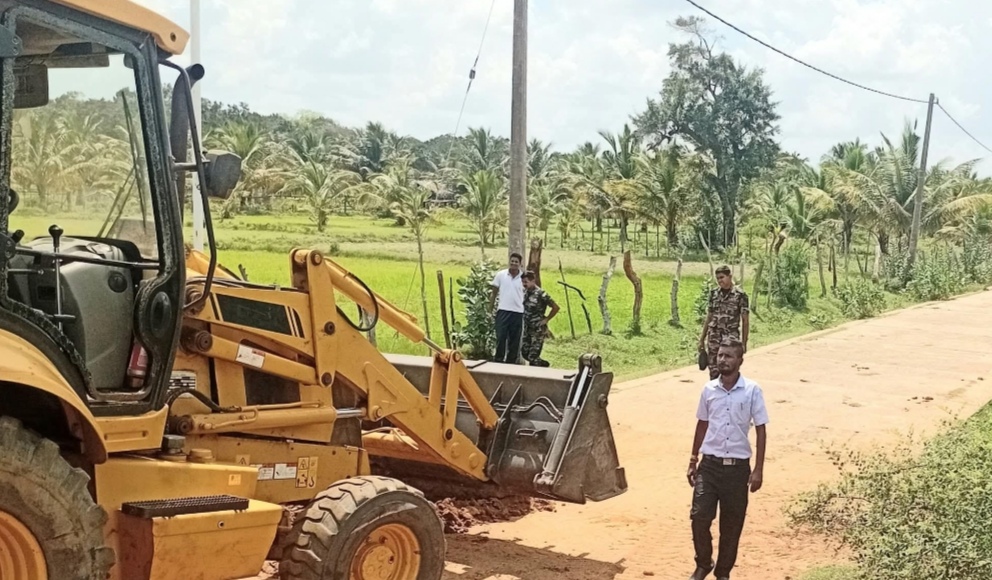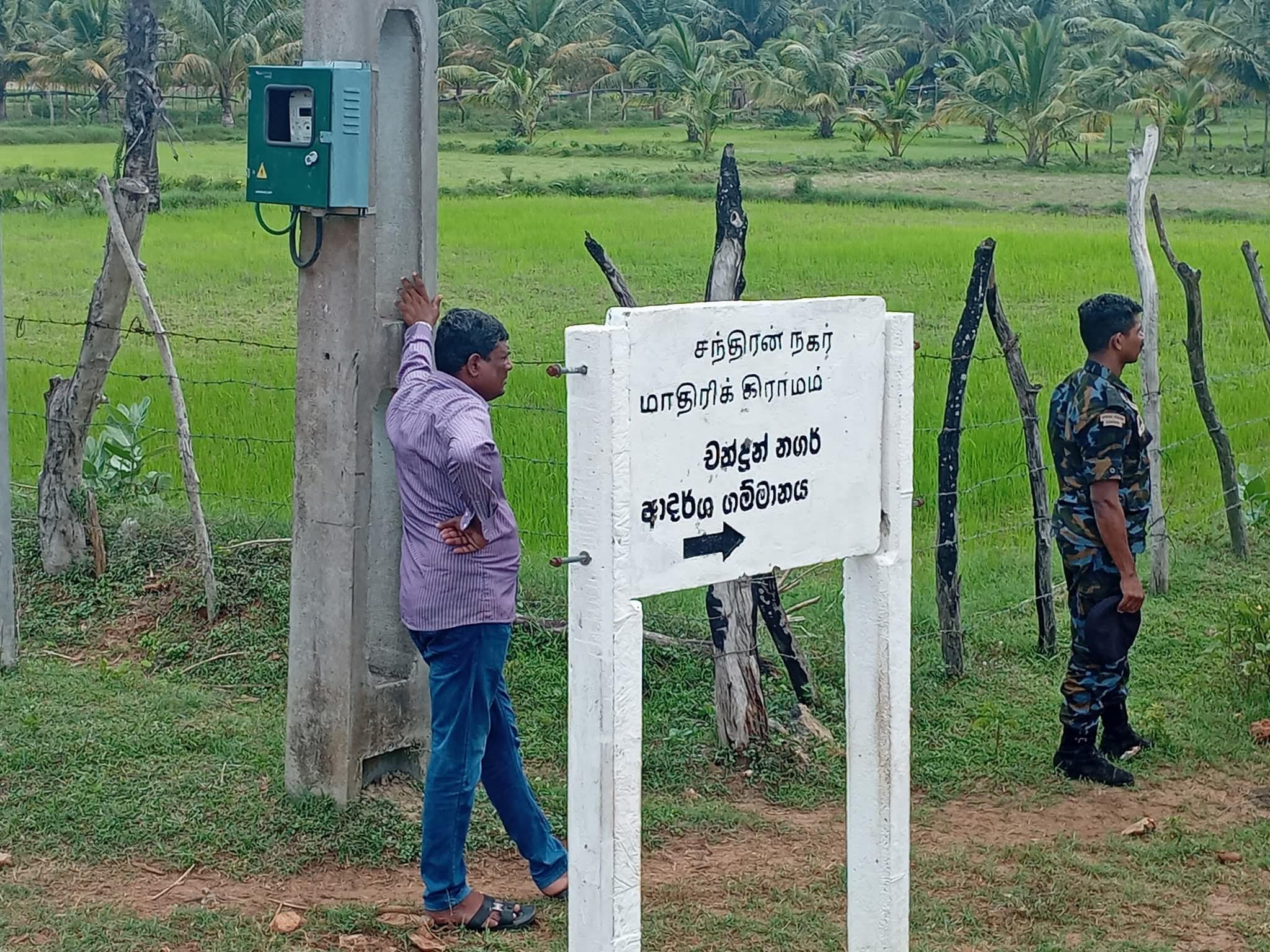
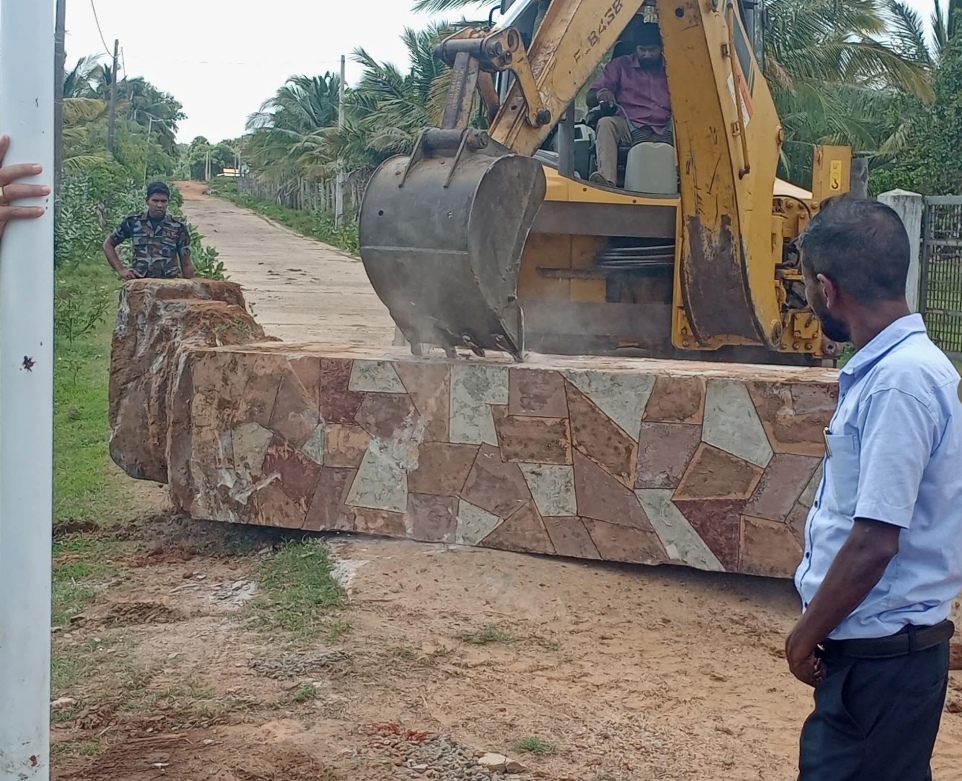
Two large concrete pillars erected by the Sri Lankan Air Force at the entrance of the Pilavu Settlement in Keppapulavu, Mullaitivu, were removed last week by local authorities following complaints from residents that they obstructed public movement.
The Karaithuraipattru Pradeshiya Sabha dismantled the structures on the 30th, deploying heavy machinery to clear the area after villagers reported that the pillars, installed during the period of Air Force occupation, continued to block vehicles even years after their return.
The pillars stood as a stark reminder of the military’s grip over Keppapulavu — a village located within the Karaithuraipattru Divisional Secretariat and Mulliyavalai Police Division, where Tamil residents had long struggled to reclaim their lands from the Sri Lankan armed forces.
In 2017, residents of Keppapulavu launched a month-long protest demanding the release of their lands from military occupation. Following weeks of demonstrations and growing pressure, the state eventually allowed limited resettlement. However, the Air Force continues to occupy large tracts of surrounding land, including the Keppapulavu base, which remains in operation.
Despite the removal of the pillars, villagers say the continued presence of the military base symbolises the ongoing occupation and militarisation of civilian areas across the Tamil homeland. Tamils have repeatedly called for the full release of their lands, stressing that true resettlement and reconciliation cannot occur while the Sri Lankan military maintains a heavy presence in the region.
Keppapulavu remains one of several villages in Mullaitivu where displaced Tamil families are still waiting for the return of their property more than 16 years after the Mullivaikkal genocide.