
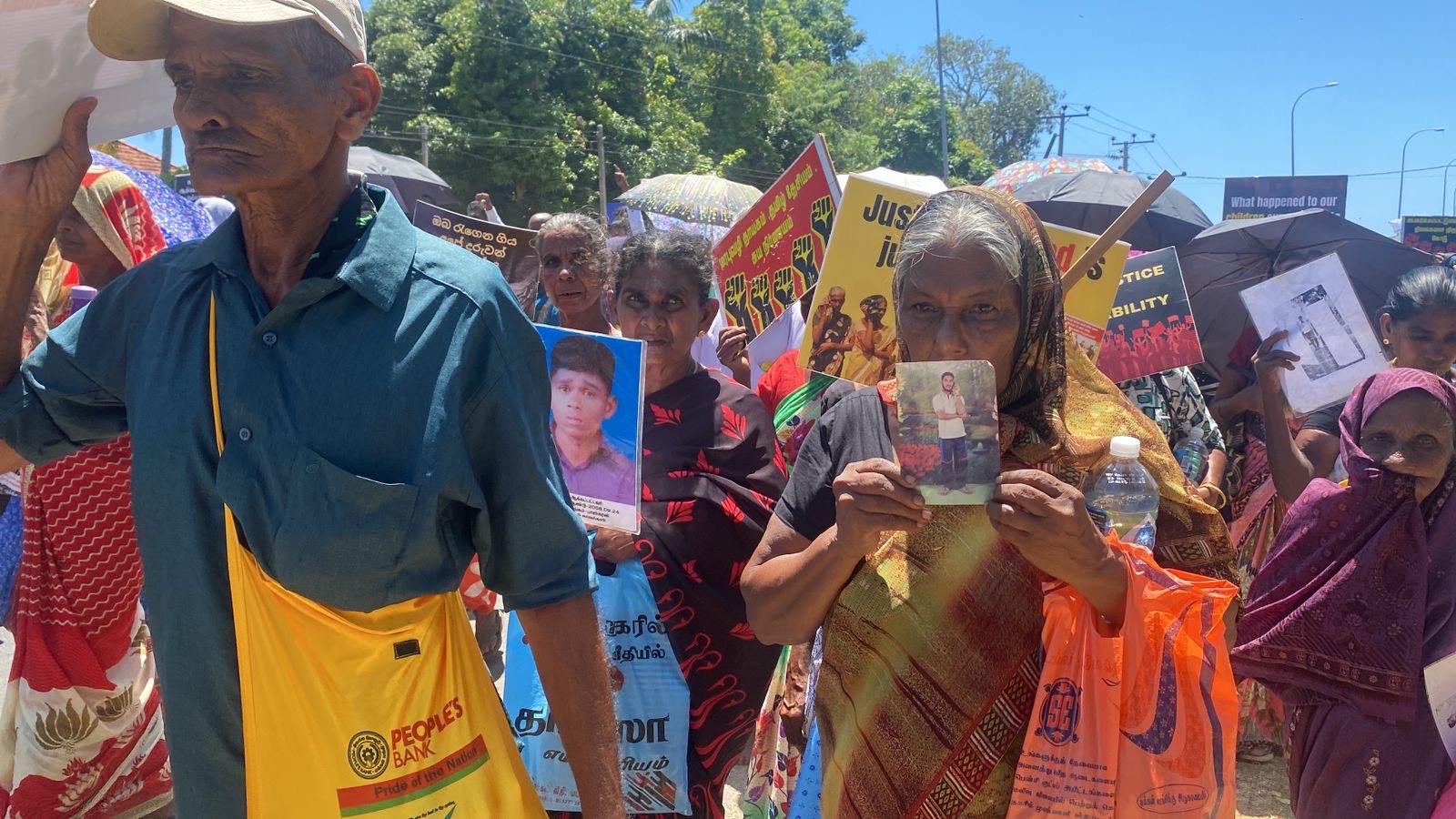
Tamil protestors in Batticaloa, demanding an international investigation into enforced disappearances.
Sri Lanka’s Minister Bimal Rathnayake has come under criticism after remarks he made at an event to mark the International Day of the Disappeared at Temple Trees on Friday, where he referred to victims’ campaigns as “dramas” staged around September to coincide with the UN Human Rights Council (UNHRC) sessions in Geneva.
“I have visited many mass graves in the country. In May, I visited Chemmani (mass grave site), but there was not even a security guard there. There are certain dramas that get enacted close to September. While it is important to bring the perpetrator to book, enacting dramas using the names of those who are victims should also be denounced,” the minister said, speaking under the auspices of the Office of Missing Persons (OMP).
“Minister must understand raising human rights issues at UN Human Rights Council is right of victims and civil society,” tweeted Ambika Satkunanathan, the former head of the Human Rights Commission of Sri Lanka. “Calling it ‘drama’ belittles the only forum that to date has platformed victims’ concerns.”
“Claiming victims raise these issues or take it to the Council only because they are being “used” treats them as puppets and not as people with agency.”
The Chemmani site, which Rathnayake referenced, has been described as one of the largest mass graves in Sri Lanka. Excavations this year alone have uncovered more than 200 sets of skeletal remains.
Tamil families of the disappeared have long used the UNHRC sessions in Geneva as an opportunity to push for international accountability and justice — a space largely denied to them by the Sri Lankan state.
Campaigners marking International Day of the Disappeared have consistently highlighted that Sri Lanka’s domestic mechanisms, including the OMP, have failed to deliver justice and called for Sri Lanka to be referred to the International Criminal Court (ICC) and a fully internationalised accountability mechanism be put in place.