
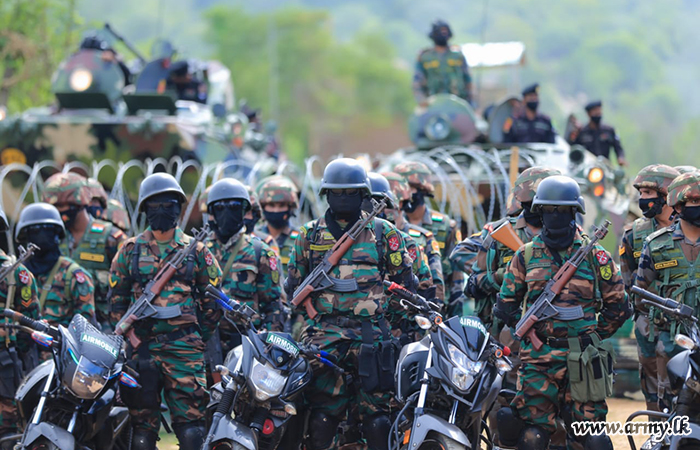
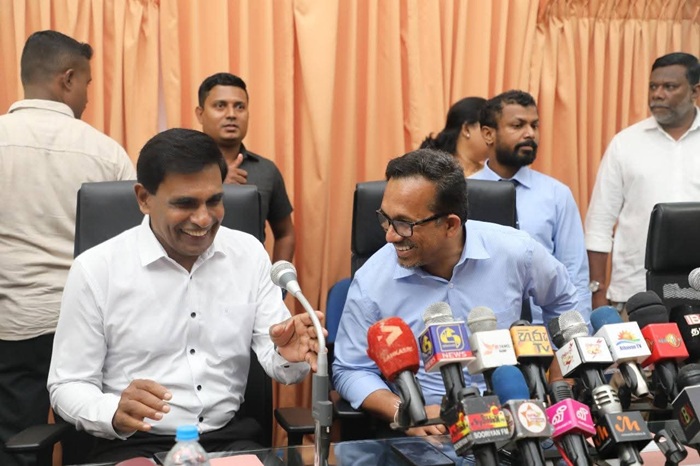
A series of decisions that will further entrench militarisation in the Batticaloa District were announced following a District Coordinating Committee meeting on 13 August, chaired by committee head Sunil Handunneththi.
The meeting, attended by Public Security and Parliamentary Affairs Minister Ananda Wijepala, local MPs, council chairpersons, and senior state officials, focused on policing measures that will see an increased security presence across the district.
Among the measures agreed was the immediate deployment of 50 additional police officers to Batticaloa within the week, ostensibly to address staffing shortages until new recruits are appointed. The decision comes alongside an expansion of joint security operations, involving the Sri Lanka Police, the Police Special Task Force (STF), and the Sri Lankan armed forces, to target what authorities describe as the distribution of illicit liquor and drugs.
The inclusion of the military in routine policing activities has raised long-standing concerns among Tamil civil society, who have repeatedly warned that such measures blur the line between civilian law enforcement and military occupation. In the North-East, the occupying armed forces, almost entirely Sinhalese, have a decades-long record of harassment, intimidation, and rights abuses against Tamils.
The meeting also addressed illegal sand mining, with instructions to strictly enforce the law and ensure local councils and police are informed when permits are issued. In addition, police were tasked with identifying “vulnerable” children, as part of a programme to oversee their safety, health, sanitation, and education - another initiative locals fear could be used to expand surveillance over Tamils.
Since the end of the armed conflict in 2009, Batticaloa and the wider Eastern Province have remained heavily militarised, with the armed forces embedded in civilian administration, land use, and even development projects.