.jpeg)
A commemoration was held in Karaitivu, Amparai this week to mark 42 years since the 1983 Black July pogrom, with local officials and residents paying tribute to the thousands of Tamils who were killed during the state-orchestrated violence.
The event, which took place on Wednesday evening, was organised under the leadership of Karaitivu Pradeshiya Sabha Chairman S. Baskaran. Members of the Pradeshiya Sabha and local residents gathered to remember the victims and reaffirm their demands for justice.
Speaking at the event, Baskaran described Black July as an “unforgettable scar that carries the pain of 42 years of the genocide of Eelam Tamils”.
This day, 23 July 1983, which marked the beginning of a brutal campaign of violence, can never be forgotten or forgiven, he said. “The genocide, the mass killings of Tamils, was carried out in the most brutal manner. During that week alone, at least three thousand Tamils were killed. We stand here today, against this genocide.”
.jpeg)
His remarks underscored the enduring trauma carried by survivors and their families, and the continued failure of the Sri Lankan state to deliver truth, justice or accountability.
Karaitivu Pradeshiya Sabha member Gopikanth also addressed the gathering, drawing connections between the Black July pogrom and other episodes of anti-Tamil violence.
“This Black July 1983 event, which we commemorate today under the leadership of our Chairman and the Karaitivu Tamil Arasu Party, took place not in isolation, but in a country where Tamils and their traditions have long existed,” he said.
.jpeg)
He recalled previous waves of violence, including the pogroms of 1958 and 1977, as part of a pattern of genocidal attacks aimed at erasing the Tamil people.
“In 1983, the worst violence took place in Colombo, Nuwara Eliya and Kandy. On that day, 23 July, many innocent Tamil youth - even children - were burned and tarred. It was a calculated campaign to destroy the Tamil nation. Sinhalese leaders of the time were complicit. It is a truly unforgettable and painful chapter of our history.”
Gopikanth also drew parallels between Black July and the 2009 massacre at Mullivaikkal, including the deaths of Tamil journalists and political figures such as Isai Priya and Thamilselvan, lamenting the continued impunity for Sri Lanka’s crimes.
.jpeg)
“We must remember that Black July was not the end,” he said. “We must find a way for our Tamil nation to live with dignity and equality.”
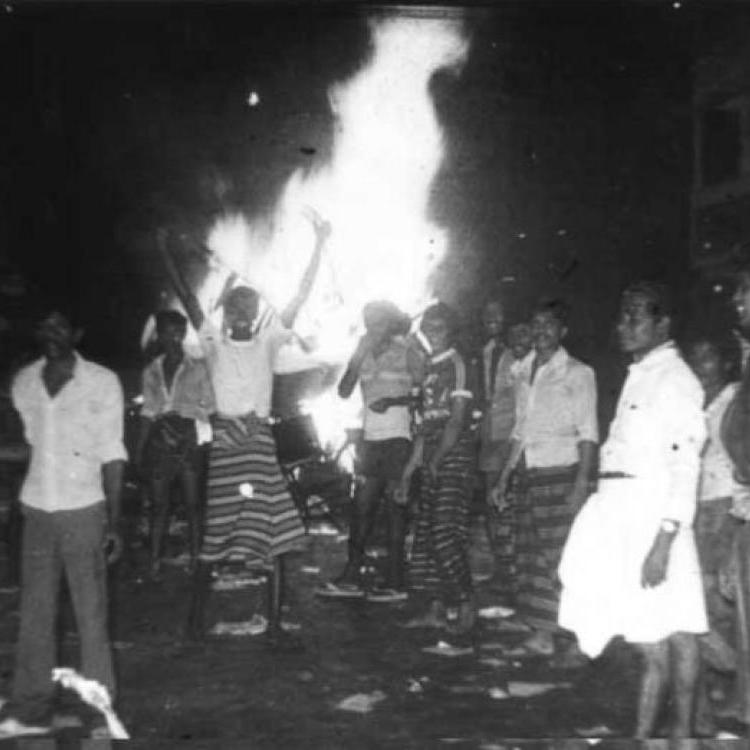
The Black July pogrom, which erupted on 23 July 1983, saw state-backed mobs target Tamil homes, businesses and lives, with the complicity of Sri Lankan police and military forces. The violence claimed thousands of lives and displaced many more.
Each year, Tamils across the North-East and the diaspora mark Black July with commemorations and renewed calls for international recognition of the genocide. Despite the passage of more than four decades, justice remains elusive and survivors continue to demand accountability.
.jpeg)