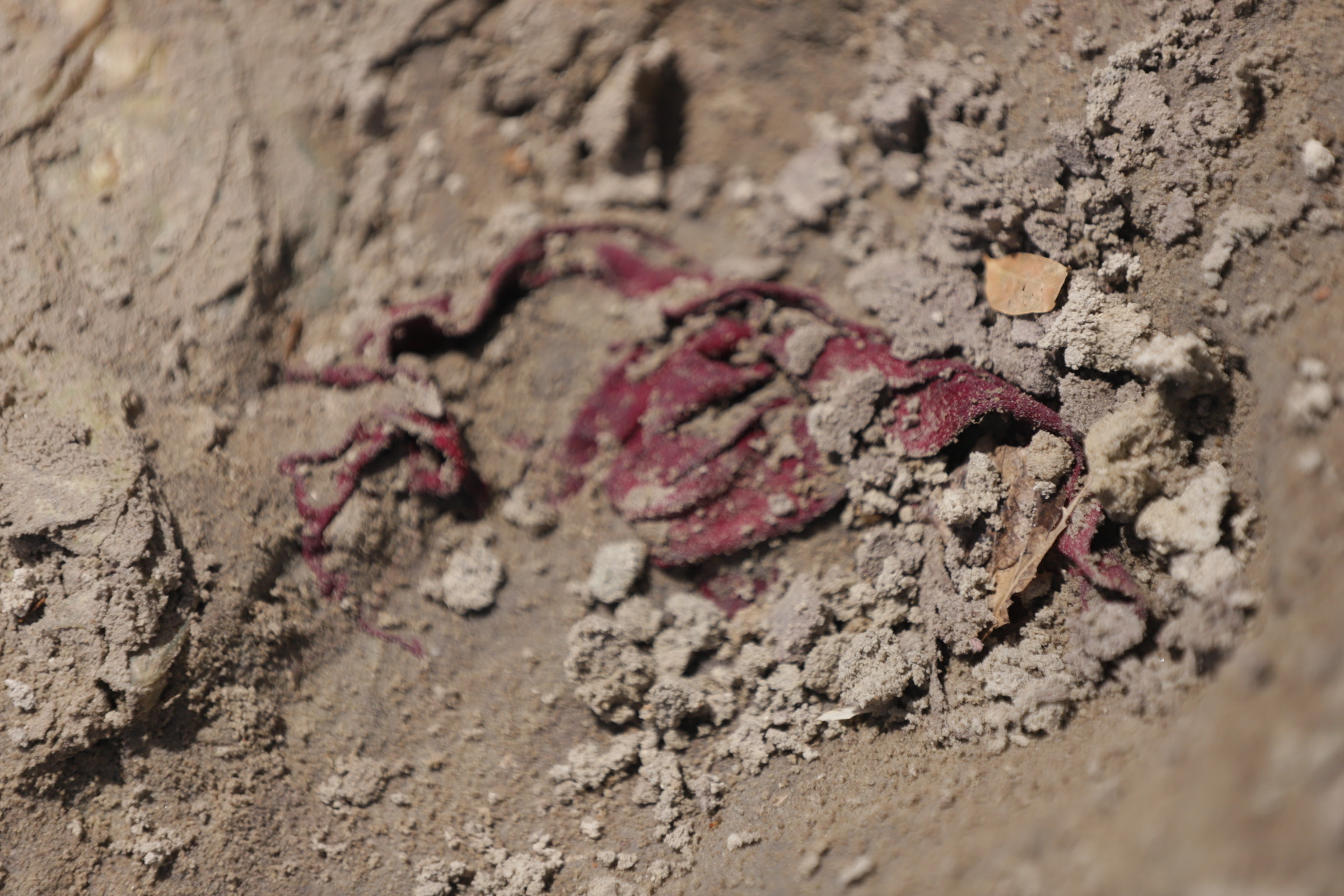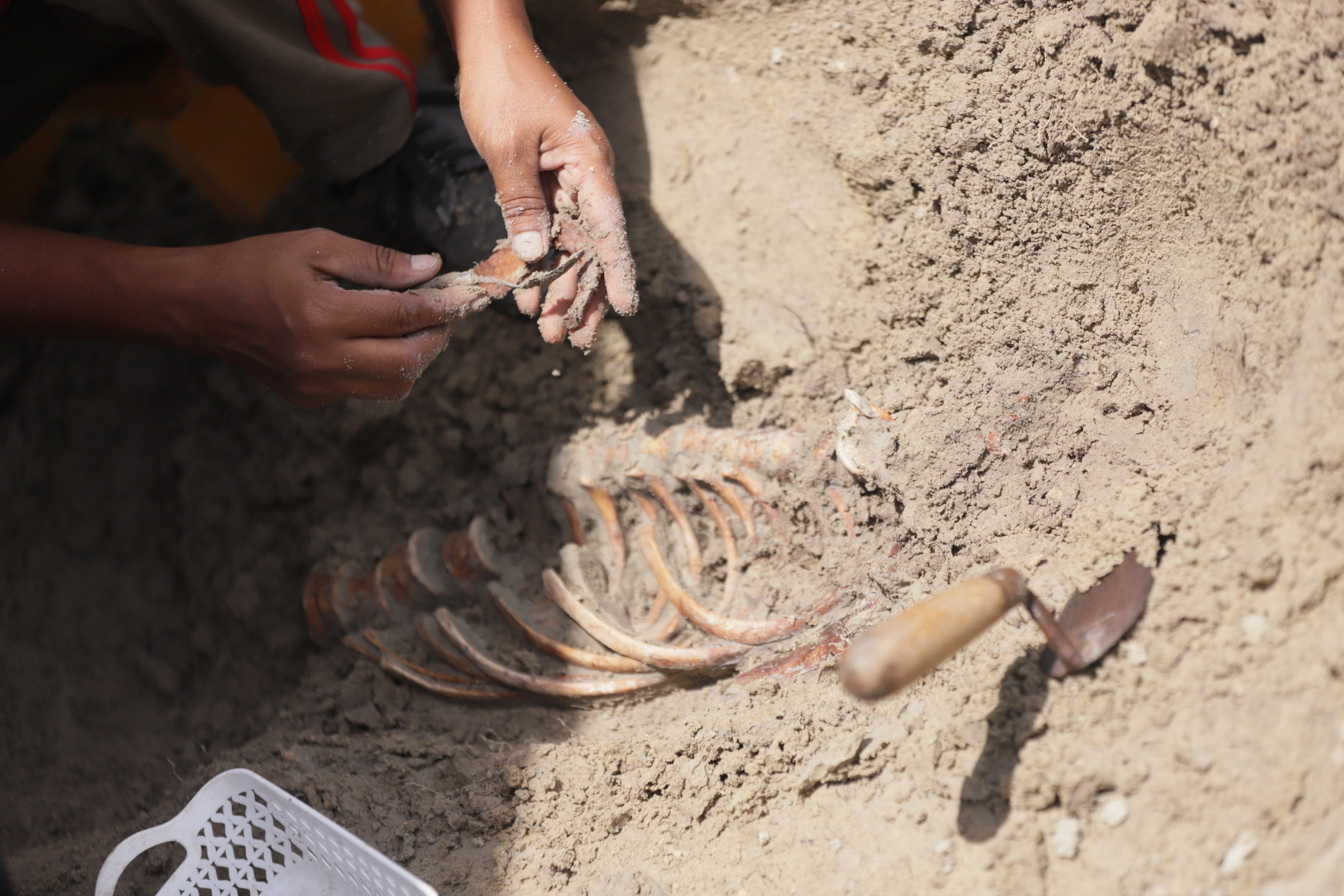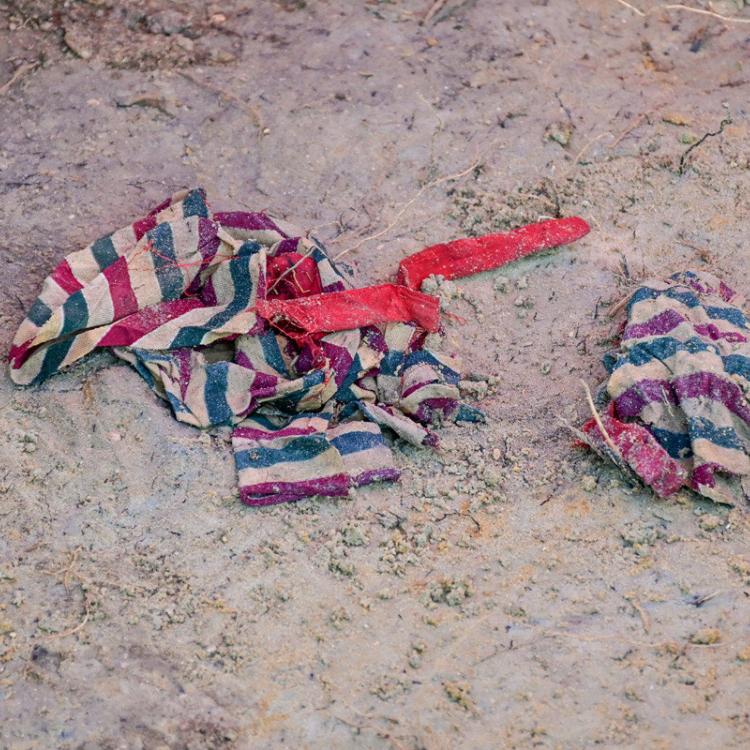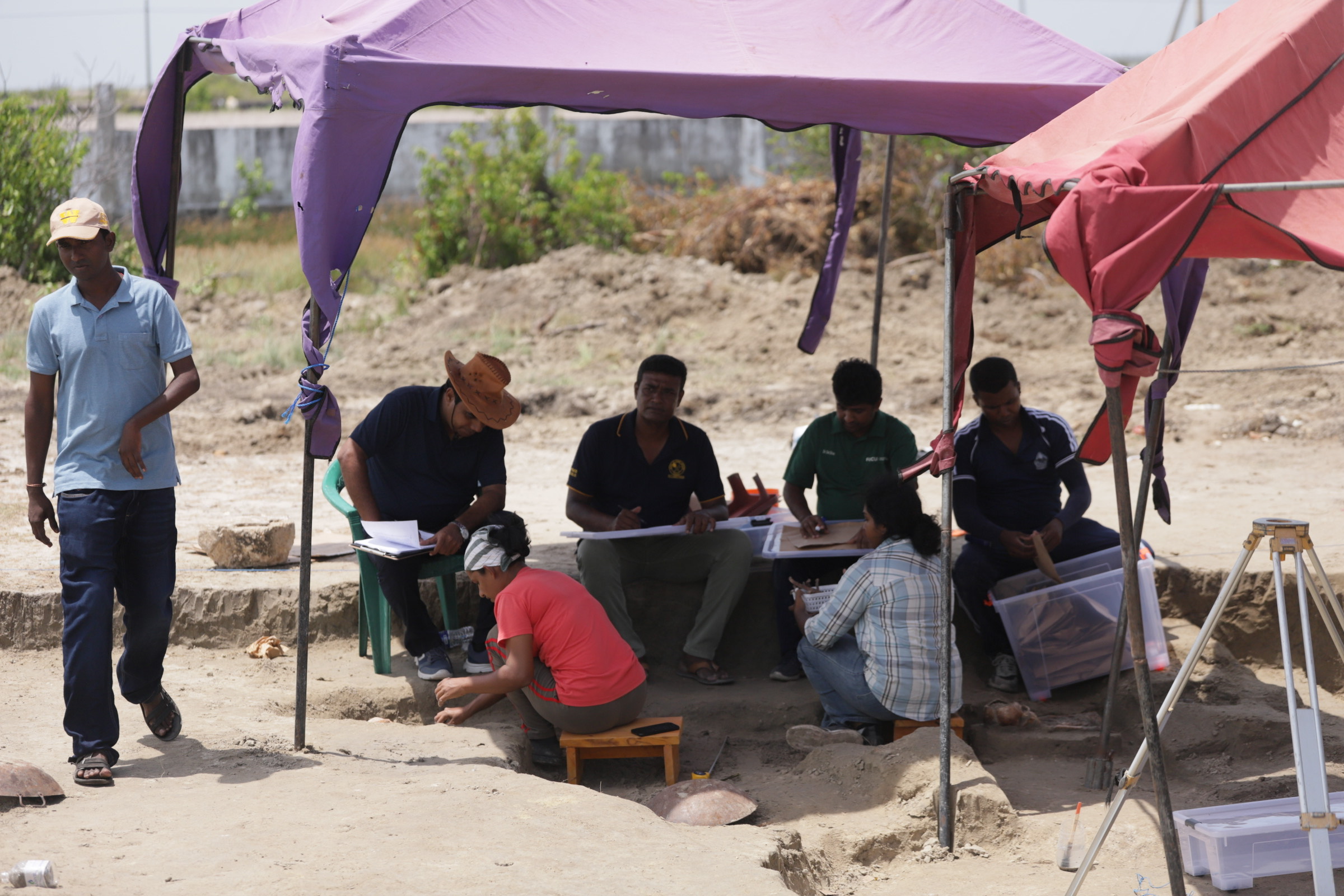
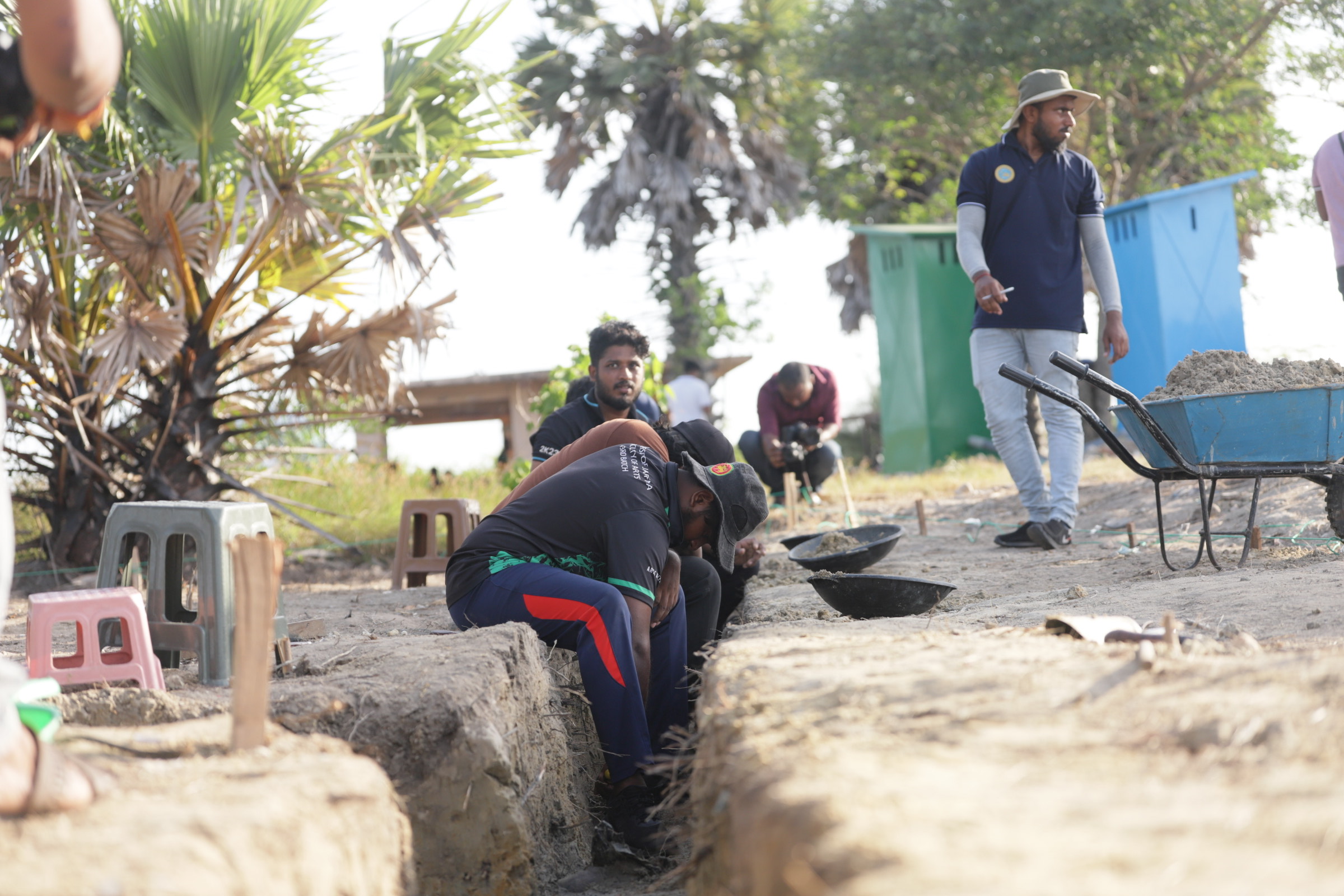
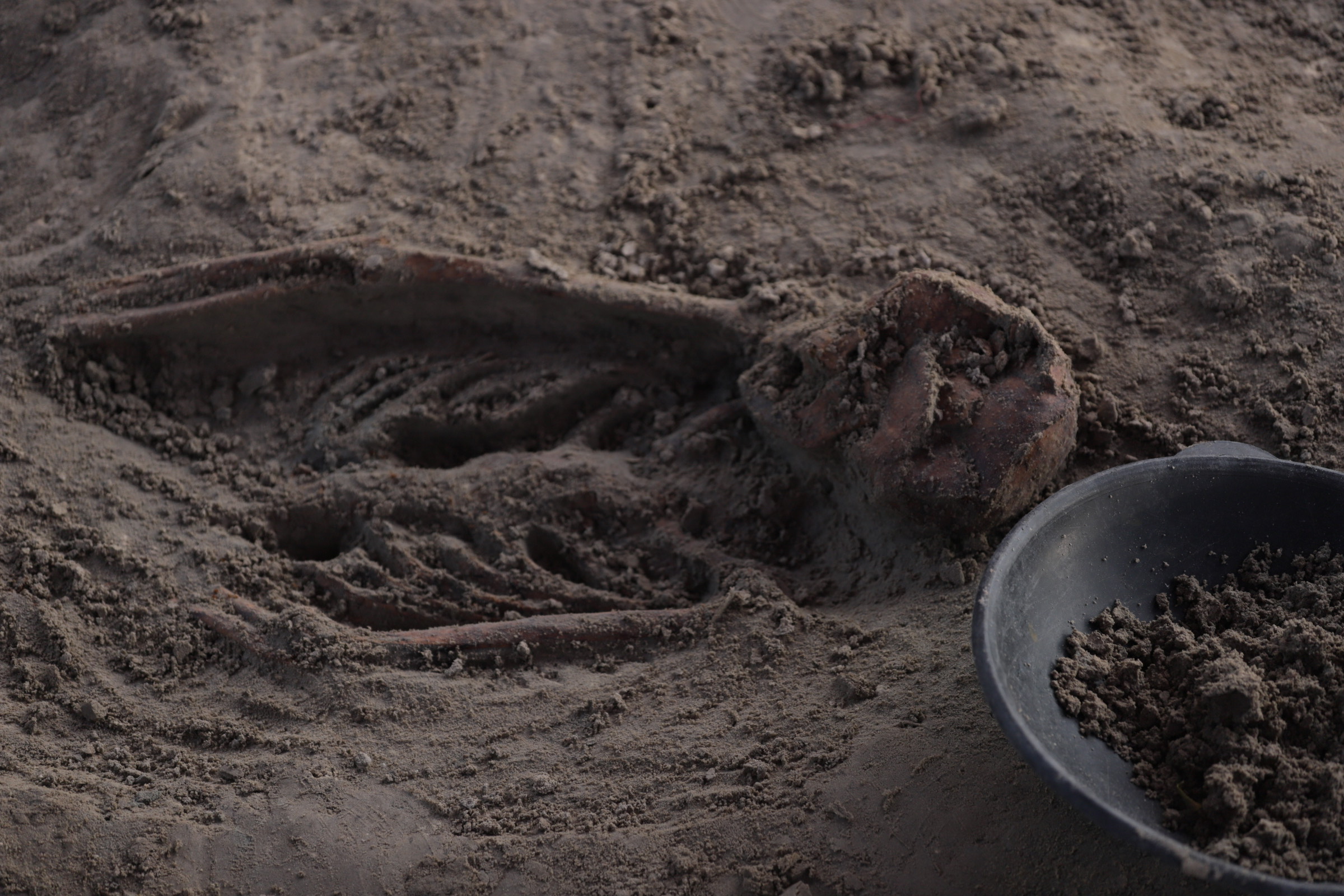
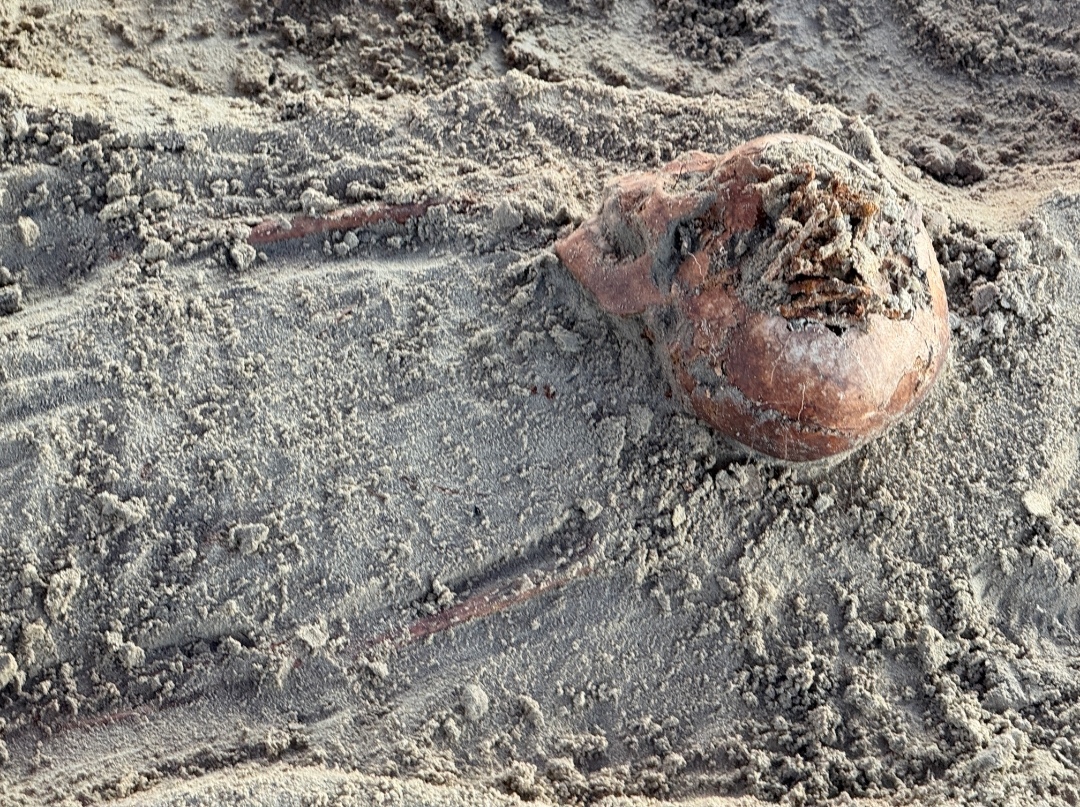
More sets of human skeletal remains were unearthed at the Chemmani mass grave site in Jaffna, bringing the total number of remains discovered during the ongoing excavation to 47.
Of these, 44 remains have now been fully exhumed, according to officials overseeing the excavation. Work at the site was temporarily halted by midday today, due to cremation activities scheduled to take place at the burial grounds.
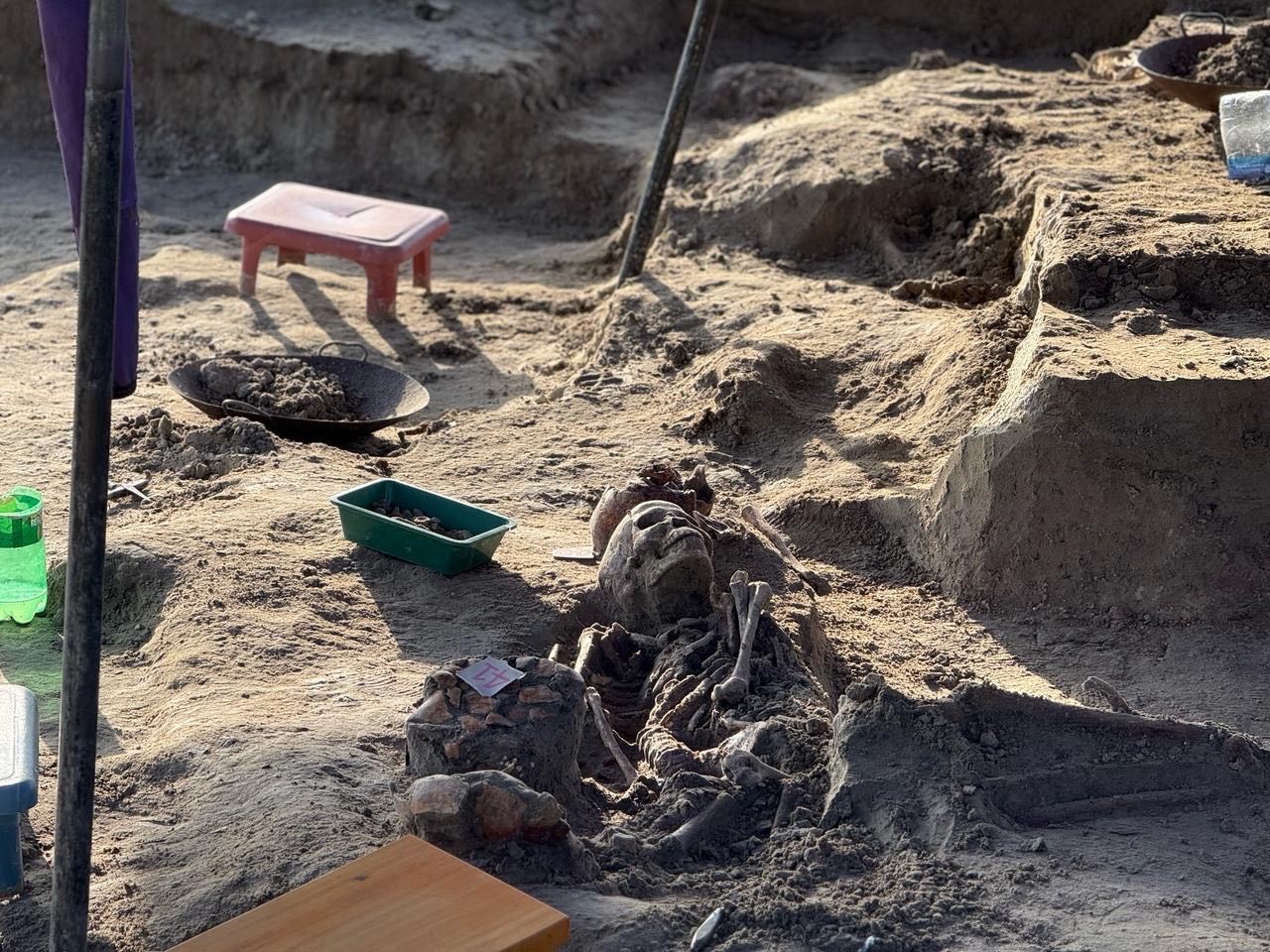
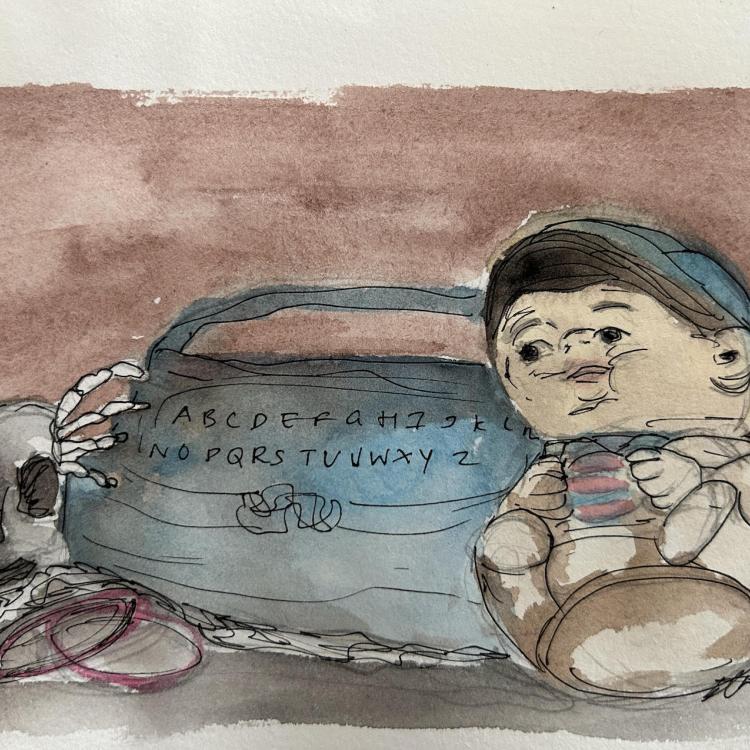
The mass grave at Chemmani, first brought to international attention in 1998 following a soldier’s testimony, has long been linked to enforced disappearances and extrajudicial killings of Tamils during the Sri Lankan military’s occupation of the North-East. The ongoing excavations have uncovered remains of men, women and children, as well as personal items such as a child’s toy, a sandal, and a blue UNICEF-issued schoolbag.
In addition to the human remains, excavation teams today also recovered a suspected part of a weapon, believed to be the barrel of a machine gun. The item has been handed over to the Explosives and Bomb Disposal Unit in Jaffna for further forensic analysis.
Separate excavation work is also being conducted at a nearby location, which was identified through satellite imagery and drone surveys by Professor of Archaeology Raj Somadeva. Investigators believe that this adjacent site may contain further burial pits or evidence of mass interments.
The discovery of a suspected weapon part marks a significant development in the investigation, potentially offering further insight into the nature of the killings and strengthening calls for an independent, internationally monitored forensic investigation.
The Sri Lankan state, which remains implicated in the crimes linked to Chemmani, has so far resisted international calls for an independent investigation.
Meanwhile, pressure continues to mount globally, with lawmakers in the UK and the United States recently calling for international accountability and justice for those buried in Chemmani.