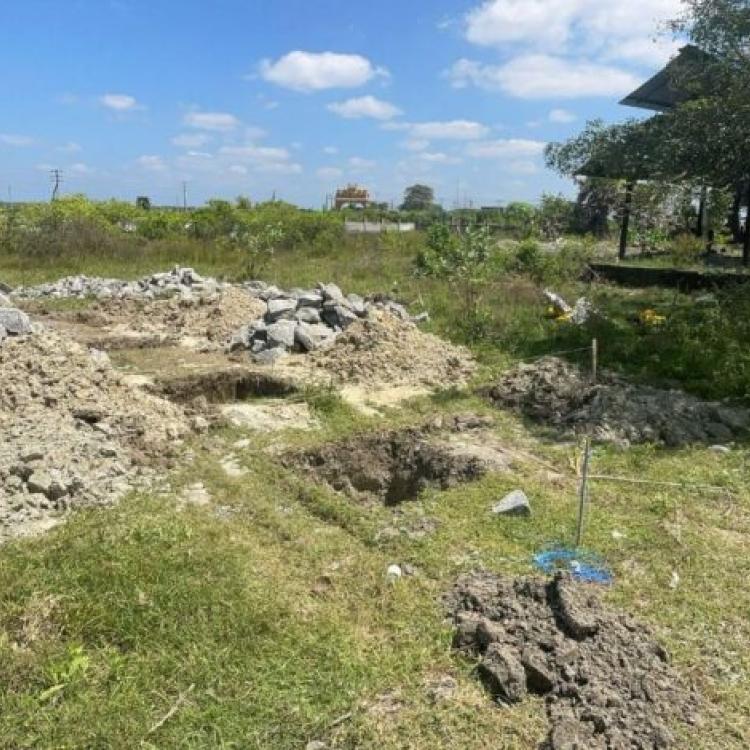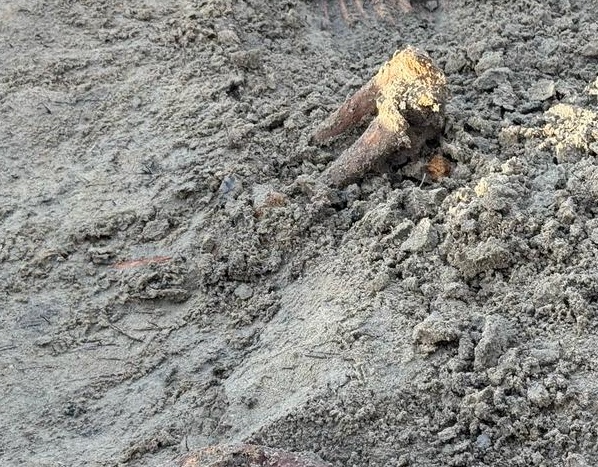
Excavation work at the Chemmani-Sindubathi burial site in Jaffna’s Nallur division has led to the recovery of human remains believed to belong to an infant under the age of one, fuelling calls for international oversight into excavating mass graves on the island.
Court-ordered excavation efforts, currently in their second week, have so far uncovered 13 human bone fragments from the temple grounds. Forensic experts identified one fragment as belonging to an infant, based on its facial structure. Five of the fragments have been fully exhumed, while excavation continues on the rest. No clothing or personal effects were found with the remains, raising further questions about the victims’ identities and the circumstances of their deaths.
There are fears that more infants could have been buried in the mass grave.
The Chemmani-Sindubathi site, long associated with Sri Lankan state atrocities under its military occupation of the region, gained renewed attention in February this year when skeletal remains were discovered during routine digging by the Nallur Pradeshiya Sabha. That discovery triggered a court-mandated forensic excavation at the cremation grounds, which has now exposed what many believe to be further evidence of extrajudicial killings and mass burials of Tamils during and after the armed conflict.
Chemmani is a symbol of longstanding impunity. In 1998, a Sri Lankan soldier testified to the existence of mass graves in the area, alleging they contained the bodies of Tamils killed in custody. An initial excavation confirmed the presence of several skeletons. However, the Sri Lankan state failed to pursue further investigations, allowing key evidence and leads to fade into silence.
The recent unearthing of infant remains has once again spotlighted Sri Lanka’s grim record on mass graves and massacres. It joins a long list of mass burial sites discovered in the Tamil homeland.
As forensic teams continue work at Chemmani, Tamil families, human rights organisations, and civil society activists are once again calling for international oversight, expressing their distrust in Sri Lankan institutions.